
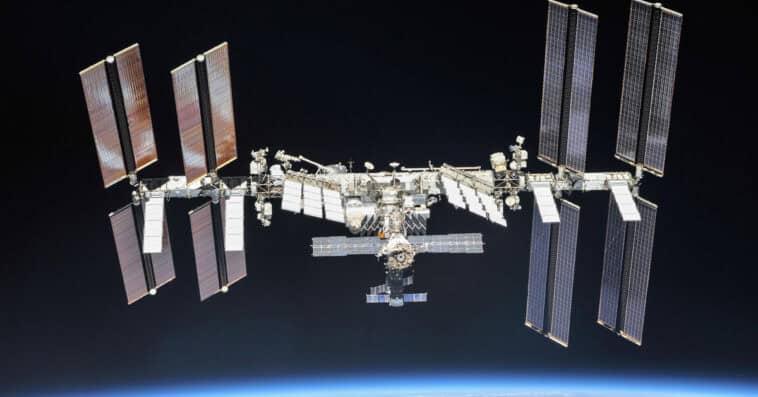
A landmark chapter in human space exploration is edging toward a controversial ending, as NASA moves forward with plans to bring the aging International Space Station (ISS) out of orbit and send it on a controlled plunge into the ocean. While the decision is framed as a necessary step in managing the station’s eventual retirement, it has quickly ignited backlash from scientists and environmental experts who warn that the proposed “ocean reentry” could carry unforeseen risks for marine ecosystems and set a troubling precedent for future spacecraft disposal. As debates intensify over safety, accountability, and the long-term impact of space hardware returning to Earth, questions are mounting over whether this dramatic finale is truly the safest path forward — or a gamble with consequences we don’t yet fully understand.
How NASA plans to sink the ISS
To understand the growing controversy, it helps to look at the sheer mechanics of how NASA intends to bring down the largest human-made structure in space. The retirement of the ISS is a carefully timed, multi-year process set to begin in early to mid-2028.
Initially, the station will slowly lose altitude. This happens through a mix of Earth’s natural atmospheric drag —where the friction of the thin upper atmosphere naturally slows the station down — and controlled braking maneuvers executed by the station’s Russian segment.
The critical phase begins in mid-2029. NASA plans to launch a specialized U.S. Deorbit Vehicle (USDV). Developed by SpaceX and funded by the American government, this craft will dock with the ISS. When the final moment arrives at the end of 2030 or early 2031, the USDV will fire its 46 Draco thrusters in a massive reentry burn. This final burst of power will intentionally shove the massive laboratory out of low Earth orbit and force it into a terminal dive toward the ocean.
Target: ‘Point Nemo’
NASA’s destination for the space station is Point Nemo, a vast stretch of water in the South Pacific known as the oceanic pole of inaccessibility. This is quite literally the middle of nowhere — the point on Earth farthest from any human civilization.
A recent U.S. Government Accountability Office (GAO) report shed light on the agency’s primary concern: managing the “gap” in maintaining a continuous human presence in space as we transition from the ISS to private, commercial space stations. When it comes to the crash itself, the GAO report notes that a watery graveyard is the safest bet for humanity: “As part of the reentry process, NASA expects portions of the ISS and deorbit vehicle to break up and fall into the remote part of the ocean to minimize the risk to populated areas.”
Yet, while aiming for the open ocean keeps land-dwellers safe, environmentalists argue that it treats the sea as a convenient, invisible garbage dump.
A troubling legal loophole
The planned crash has drawn fierce pushback from The Ocean Foundation, a Washington, D.C.-based conservation group. Mark Spalding, the foundation’s president, warns that the plan “raises serious concerns for ocean health that the space community has not adequately grappled with.”
The core of the issue is a stark double standard in space law. Under the Space Liability Convention of 1972, if a rogue piece of space junk crashes into a city or damages property on land, the nation that launched it is entirely responsible for paying compensation, regardless of whether it was an accident.
But according to Spalding, “no equivalent protection exists for the ocean.” Because international waters belong to no single country, space agencies face a massive legal loophole.
“As a result, when space agencies have control over where debris falls, they aim for the high seas, and in doing so, they incur no legal obligation to pay for cleanup or environmental remediation,” Spalding told Space.com.
Spalding emphasizes that while he understands the safety logic behind targeting the remote waters of Point Nemo, out of sight should not mean out of mind. “The ocean’s remoteness from human infrastructure should not be mistaken for a lack of value or vulnerability,” Spalding urged. “The ocean and its creatures deserve the same protection that international law affords to national territories.”
Into the deep unknown
The biggest concern for marine biologists is the sheer size of the debris field. The ISS is roughly the size of a football field, and it will not dissolve completely into ash during its fiery plunge.
What happens to the underwater creatures and fragile ecosystems when tons of twisted metal smash into the seafloor?
“The honest answer is, we don’t fully know,” Spalding admitted. “That is deeply troubling for a structure the size of a football field. We do know that not everything burns up on reentry. Denser components will survive and reach the seafloor.”
Drawing a line in the high seas
To prevent the Pacific from becoming an unregulated junkyard for retired spacecraft, The Ocean Foundation is demanding that NASA and the international community pause to answer critical environmental questions. Before the ISS is brought down, the foundation is calling for:
A comprehensive environmental audit: A full assessment detailing the exact atmospheric effects of the burn-up and the long-term impact on the seafloor debris field.
Full public transparency: A complete, unrestricted disclosure of every material and chemical compound that will survive reentry and sink to the ocean floor.
Rigorous legal accountability: A strict analysis of how this plan squares with existing marine treaties, including the UN Convention on the Law of the Sea (UNCLOS), the BBNJ Agreement (the High Seas Treaty), and the 1996 London Protocol, which bans countries from collectively polluting our oceans by dumping waste.
Without these measures, conservationists fear the world is setting a dangerous precedent for future space exploration.
Source:
Space.com