
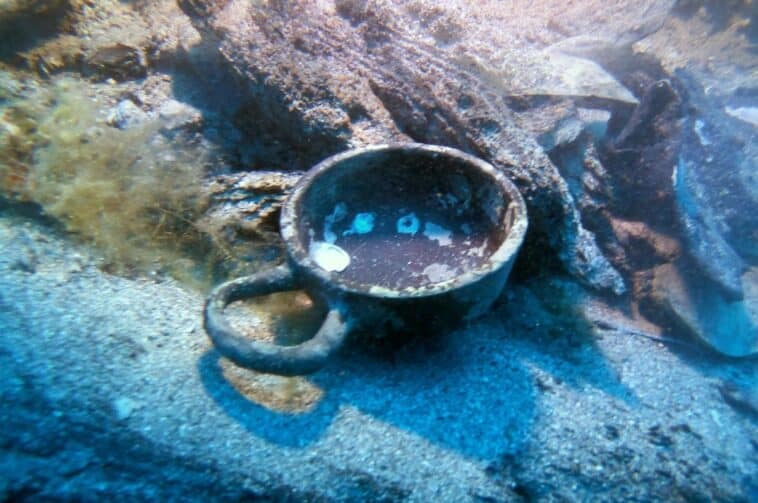
A sailor scratched a mark into their drinking cup more than 2,000 years ago, probably so nobody else on the ship would use it.
A joint expedition, comprising Croatian Conservation Institute (HRZ) archaeologists led by Jurica Bezak of the underwater archaeology department and local divers from Vis, has now recovered that cup from a shipwreck in Gnjilna Bay, near the town of Komiža on the island of Vis.
Researchers had known about the spot for years, but only a few broken pieces of ancient storage jars had ever turned up there.
Following the multi-year excavations between 2023 and 2025, the Institute announced recently that divers had uncovered the remains of a 2,300-year-old shipwreck (dating the wreck to the fourth or third century B.C.) buried beneath the sand.
Several black-coated pots carry short inscriptions scratched in after they were made. The team thinks these could represent abbreviated personal names or tentative ownership marks, though their exact significance regarding the owner’s identity remains unclear.
Plenty more was found. Divers recovered drinking cups, plates, and bowls, along with small jugs for pouring, some of them tied to wine drinking. The wreck also contained larger jars called Corinthian type B amphorae, used to haul wine and oil. A bronze coin came up as well, along with animal bones and pieces of the ship’s gear.
HRZ says the Greek pottery stands out for how rare it is, how well it was made, and how well it held up underwater. Wrecks carrying this type of amphora cargo are scarce along Croatia’s stretch of the Adriatic, with only two others known in the area.
Some of the ship managed to survive as well, including part of the keel and roughly 20 feet of wooden planking. That gives researchers a rare look at how a vessel working the Adriatic was put together more than two millennia ago.
The vessel was initially dated through typological markers on the amphora fragments and a lead anchor piece. A coin from Pharos, an ancient Greek settlement on the nearby island of Hvar, turned up later and backed it up.
HRZ notes that the finds are filling in what’s known about trade, navigation, and daily life on board during the years Greek colonies flourished on Vis and Hvar.
Sources: Hrvatski Restauratorski Zavod, Arkeonews, People