
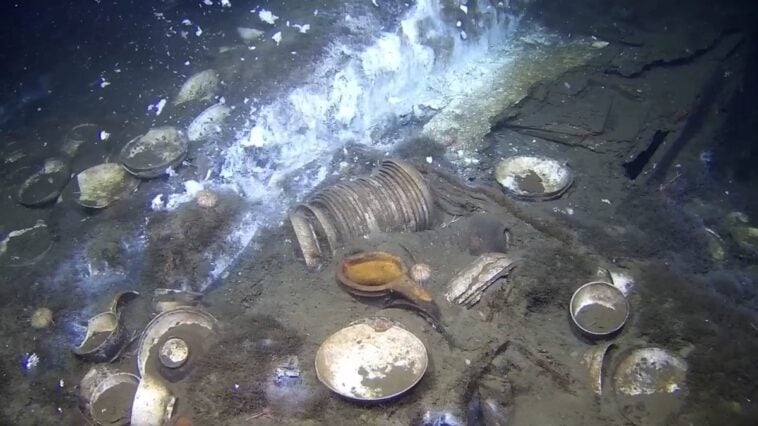
A watch designer with a robot submarine found an 18th-century shipwreck sitting under nearly 2,000 feet of water off Norway, and the cargo is in better shape than anything else like it in Northern Europe.
Espen Saastad, who runs a small ROV (Remotely operated underwater vehicle)
and survey operation on the side, located the wreck in the Skagerrak Strait. The Norwegian Directorate for Cultural Heritage (also known as Riksantikvaren) announced the discovery in June.
“I had to pinch myself when I realised the scale of the find – it was hard to believe. I’m now looking forward to learning more about the ship’s history,” said Director General Hanna Geiran in a statement.
What lies on the seabed is mostly Chinese porcelain, stacked in rows, undamaged. Alongside it are pieces of chandeliers, goblets, bottles, and barrels of grain. Photos from the ROV show plates sitting more or less where they were when the ship went down, which is not how most 18th-century wrecks tend to look after a couple of centuries of saltwater and currents.
Then there are the crates that have yet to be opened and inspected, which is the kind of thing that might make an archaeologist lose sleep. One of them looks like it holds textiles while another appears to contain organic material that might turn out to be tea, herbs, or medicine. Nobody’s opened them yet.
The Lübeck connection
Interestingly, researchers still don’t know where the ship was heading, or where it left from. The clues offered so far are small but promising, including a brick from the ship’s galley stamped by Lübecker Ratsziegelei, a brickworks in Lübeck that operated from the 15th century until 1772.
That’s a fairly specific window to work with. Riksantikvaren noted that non-porcelain luxury goods likely come from England or Germany, which narrows the trade route guessing game somewhat.
Modern trawlers have chewed up parts of the wreck, which is a common problem for anything sitting on a working seabed. Despite that, the Directorate called the cargo “very well-preserved, considering how old it is.”
Porcelain was a luxury item in the mid-1700s, though it had begun reaching Europe’s growing merchant class. No estimates have been made on what the cargo would have been worth originally, however.
Riksantikvaren says that the wreck’s real value now is as a protected cultural monument and not as treasure.
More investigation is underway, with researchers already poring over the seabed photos and spotting additional items they want to get a closer look at, including a spectacular porcelain lotus plant still resting on the ocean floor.
Sources: Riksantikvaren, New York Post