
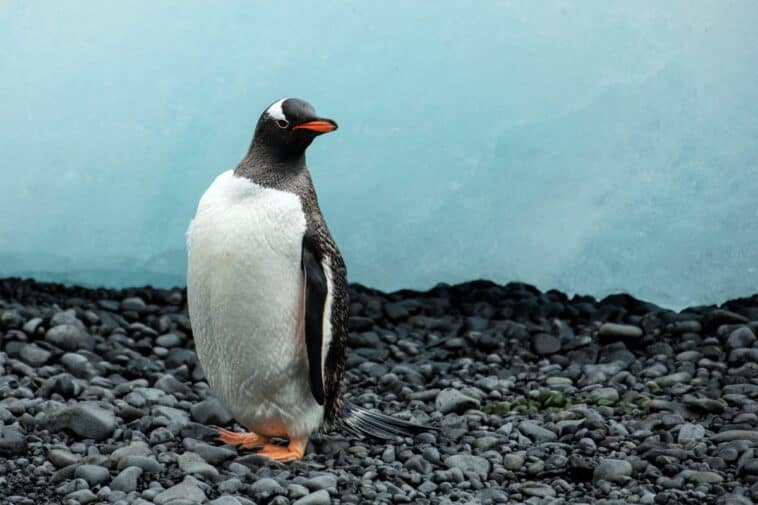
Scientists have identified a new species of penguin, the first to be named in more than 100 years.
The bird, called the southeastern gentoo penguin (Pygoscelis kerguelensis), lives on the Kerguelen and Heard Islands in the southern Indian Ocean.
It was recognized as a separate species after an international team of 22 researchers, led from Chile and the University of California, Berkeley, studied gentoo populations in detail, looking at their genetics, their physical measurements, and their ecology.
The findings were published in the journal Communications Biology.
A long-overdue taxonomic shakeup
For generations, gentoo penguins were treated as a single species. The new study concludes that they are actually four, elevating three previously recognized subspecies, the northern gentoo (P. papua), the southern gentoo (P. ellsworthi), and the eastern gentoo (P. taeniata), to full species status, alongside the newly named southeastern gentoo.
The southeastern gentoo looks the same as the others, and the differences only become clear through genetic and ecological analysis.
The revision also settles a taxonomic debate that made the 100-year milestone possible. A 2020 study had previously named a “new” species from South Georgia (Pygoscelis poncetii), but the team’s expanded genomic data determined it is actually a subspecies of the southern gentoo, effectively demoting it and leaving P. kerguelensis as the only newly described species to stand the test.
“There’s probably no species of penguin where the taxonomy has been more debated than the gentoo penguin,” said Rauri Bowie, a curator and professor at UC Berkeley’s Museum of Vertebrate Zoology. “For over 100 years it’s been controversial as to how many species or how many subspecies there are. What this paper does is try to address that question using cutting-edge integrative approaches.”
The researchers believe the gentoo’s flexible diet played an indirect role in the split. Because the birds will eat whatever prey is available nearby, including fish, krill, and squid, they have little need to migrate and tend to return to the same nesting sites every year.
That habit kept island populations largely separate from one another. Over time, each group developed its own behaviors and ecological patterns, and those differences became fixed in their genes. Geographic isolation and the Antarctic Polar Front, which acts as a barrier in the Southern Ocean, reinforced the separation.
According to the team, the four species emerged over the past 300,000 to 500,000 years.
Sources: Communications Biology, Tyler et al. 2020, Ecology and Evolution, iNaturalist, UC Berkeley News, NYP