
Just when you thought biology had its rules completely figured out, science goes ahead and throws the ultimate curveball. We’ve always been taught that things are either alive or dead, black or white, binary code and no in-between. Well, think again. Scientists have officially discovered a mysterious “third state” of existence that sits right on the border of life and death, and it honestly sounds like a real-life zombie sci-fi movie.
Here is the mind-bending breakdown of how researchers are redefining what it means to be alive.
What exactly is a third state?
Traditionally, when an organism passes away, that’s usually the end of the road. Its cells stop working, things break down, and nature takes its course.
But a team of biologists led by Dr. Alex Pozhitkov, a bioinformatics researcher at the City of Hope Cancer Center, and Dr. Peter Noble, a microbiologist from the University of Alabama at Birmingham, decided to look closer at what happens after a creature officially dies.
What they found blew their minds. Certain cells don’t just survive the death of the organism, they also transform into entirely new, functioning multicellular beings.
Imagine a creature dying, but its individual cells getting together, throwing a rebranding party, and deciding to keep living a completely different life. That is the third state.
Meet the Xenobots and Anthrobots
To figure this out, researchers took skin cells from deceased frog embryos and put them in a lab dish. Left to their own devices, these cells didn’t just wither away. Instead, they spontaneously organized themselves into multicellular organisms called Xenobots.
These Xenobots used tiny, hair-like structures called cilia to move around their environment. Not only did these cells navigate their surroundings, they were able to kinematically replicate, meaning they could reproduce their structure without growing the way a normal animal does.
Human cells do it too
Scientists also looked at human lung cells. When those cells were isolated, they self-assembled into tiny multicellular units dubbed Anthrobots. These little guys could not only move around, but they actually started repairing themselves and fixing damaged nerve cells nearby.
“Taken together, these findings…challenge the idea that cells and organisms can evolve only in predetermined ways,” the authors of the study told The Conversation. “The third state suggests that an organism’s death may play a significant role in how life transforms over time.”
How is this even possible?
Scientists think there’s a hidden “electrical toolkit” inside cells. When the main organism dies and the usual chemical instructions stop, the cells tap into this hidden backup system. It allows them to rewrite their own programming, figure out a new way to communicate with neighboring cells, and keep the engine running under a new identity.
Why some cells cheat death
At this point you must be wondering how and why some cells keep the party going after an organism officially dies. Well, it turns out that death isn’t a sudden shutoff for everyone. It’s actually a staggered end determined by a few key factors.
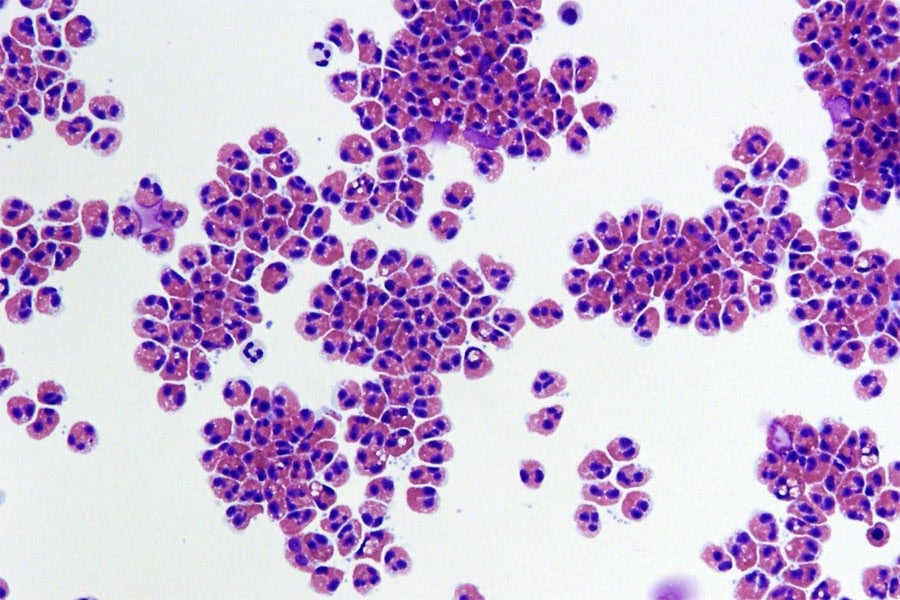
First up, it’s all about how high-maintenance the cells are. High-energy, stressed-out cells (like the ones in your pancreas) crash quickly, while low-energy cells can coast for a surprisingly long time. In fact, human white blood cells can stay active for up to 86 hours, and some sheep cells can literally keep going for a whole month!
Environment, age, and health also play huge roles, but cells have a built-in survival instinct too. The moment things go south, their stress and immune genes actually spike to fight off the chaos and stay alive. Throw in some high-tech preservation tricks like deep-freezing, and these postmortem cells can function just like they came from a living donor!
A massive deal for the future of medicine
Aside from being a fantastic conversation starter for your next nerdy trivia night, this discovery could completely change medicine.
Because Anthrobots can be made from a patient’s own living or recently deceased tissue, doctors could theoretically engineer these little cellular bots to cruise through the human body and deliver targeted drugs, clear out dangerous arterial plaque, or even regrow damaged tissues without triggering an immune response.
We might still be a long way off from having little cellular doctors swimming in our veins, but one thing is for sure: the boundary between life and death is way blurrier than we ever imagined.
Sources: GOOD, The Conversation