
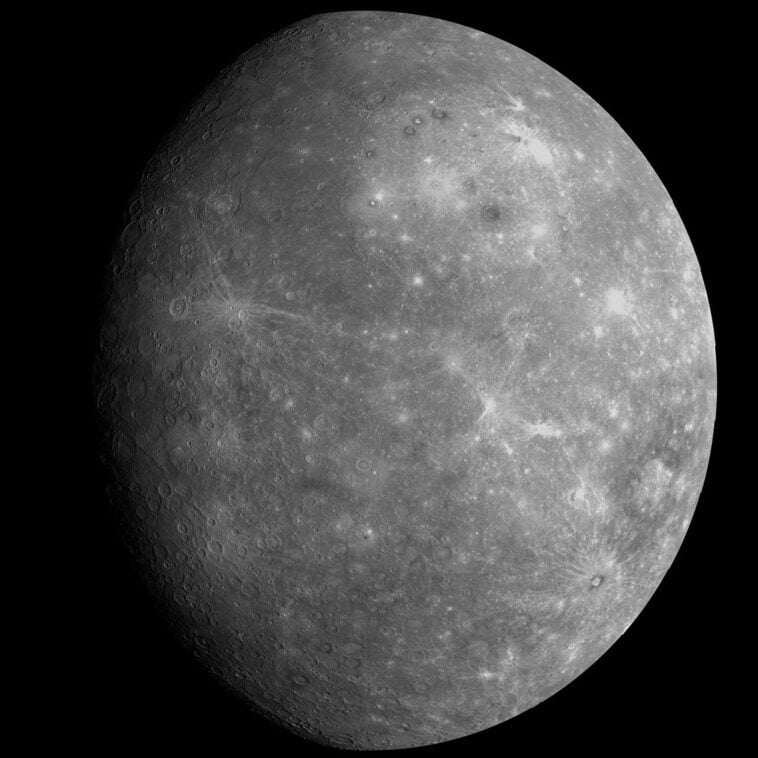
The smallest planet in our solar system has been going through a massive cosmic shrinkage phase, and according to a new study, it is losing size way faster than researchers even knew. In fact, scientists have discovered that Mercury has reduced by up to 30 percent more than they previously estimated.
A massive 14.5-mile reduction
Previous estimates placed total diameter reduction at 2.5 to 10 miles (4 to 16 km). However, a new study published in Geophysical Research Letters reveals that Mercury has actually lost up to 14.5 miles (23 kilometers) of its total diameter.
Now, that may seem like a small and insignificant loss for a planet. But the significance of that loss becomes even more astonishing if you factor in that Mercury is actually only 3,000 miles wide in total, compared to Earth’s 7,926 miles.
The case of the missing wrinkles
So, how does a whole planet shrink? It all comes down to a classic case of cooling off. Since its formation around 4.5 billion years ago, when violent collisions between rocks and asteroids generated huge amounts of heat, the tiny rocky planet orbiting closest to the Sun has been continuously leaking heat out into space. As its heavy iron core cools down, the entire planet shrinks in on itself, much like a grape transforming into a raisin in the sun or a balloon left out in the cold.
As the interior contracts, the outermost rocky layers have to compensate. The crust buckles, crumples, and cracks, creating tectonic features like giant scarps, mountainous ridges, and massive cliffs across the surface.
How scientists missed it
So, why did planetary scientists miss this massive cosmic shrinkage for so long? It turns out Mercury’s extremely rough terrain was hiding the evidence.
For billions of years, space rocks have pounded Mercury’s surface, carving out craters and blasting shattered rubble across the landscape. This impact debris spread a fresh layer of gravel across the terrain, concealing the planet’s shrinkage wrinkles much like gravel fills and hides ruts in a dirt road.
Lead author Gaku Nishiyama, a planetary scientist at the German Aerospace Center (DLR) Institute of Space Research, teamed up with researchers to compare global maps of Mercury’s surface roughness with maps of its contraction structures. They spotted a clear trend:
- The roughest regions on Mercury contained the fewest visible wrinkles.
- Tectonic cracks vanished almost entirely under thick layers of impact debris, especially around huge impact zones like the Rachmaninoff crater.
By analyzing how much contraction was needed to create ridges in smoother, less disrupted areas, the team recalculated the shrinkage across the entire planet. Instead of the older estimate of 2.5 to 10 miles (4 to 16 kilometers), they found Mercury has actually lost up to 14.5 miles of diameter.
“Thirty percent is a little bit surprising, but the corrected amount of contraction actually makes sense to me,” said Nishiyama.
Rewriting planetary history
This updated math solves a major headache for astronomers, as older estimates suggested far less shrinking than physical cooling models predicted.
A faster shrinkage rate changes what scientists know about Mercury’s inner workings and provides four new important details about the planet:
- Higher starting temperature: The planet may have started out significantly hotter than scientists originally assumed.
- A larger metal core: Mercury could hold a much bigger iron core with fewer light elements, such as silicon, mixed in.
- Ancient catastrophic collision: A massive metal core strongly hints that a young Mercury survived a giant impact in its early history. This huge impact must have stripped away most of its original rocky crust.
- Internal magnetic field: A larger core helps explain how such a small world kept its interior churning enough to power a global magnetic field.
Fresh answers are right around the corner
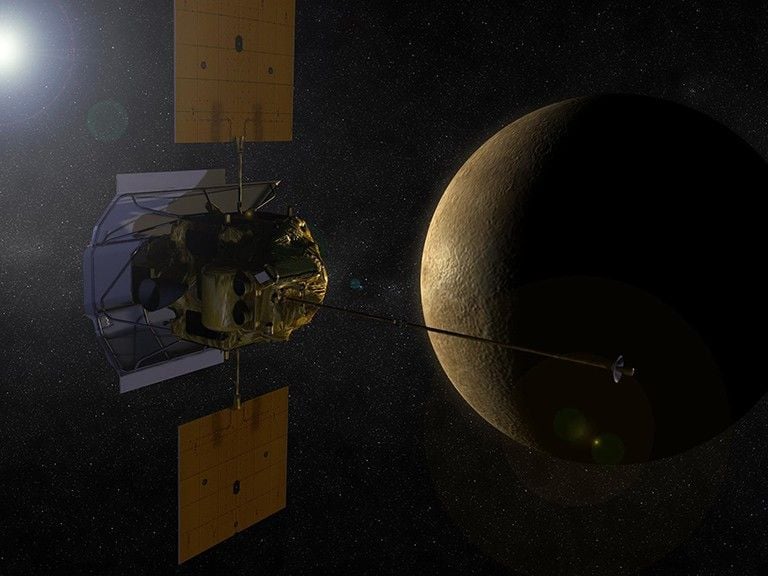
Nishiyama notes that these updated numbers could still be an underestimate because existing data from NASA’s MESSENGER mission (which ended in 2015) can only measure features larger than about 3 miles (5 kilometers) across.
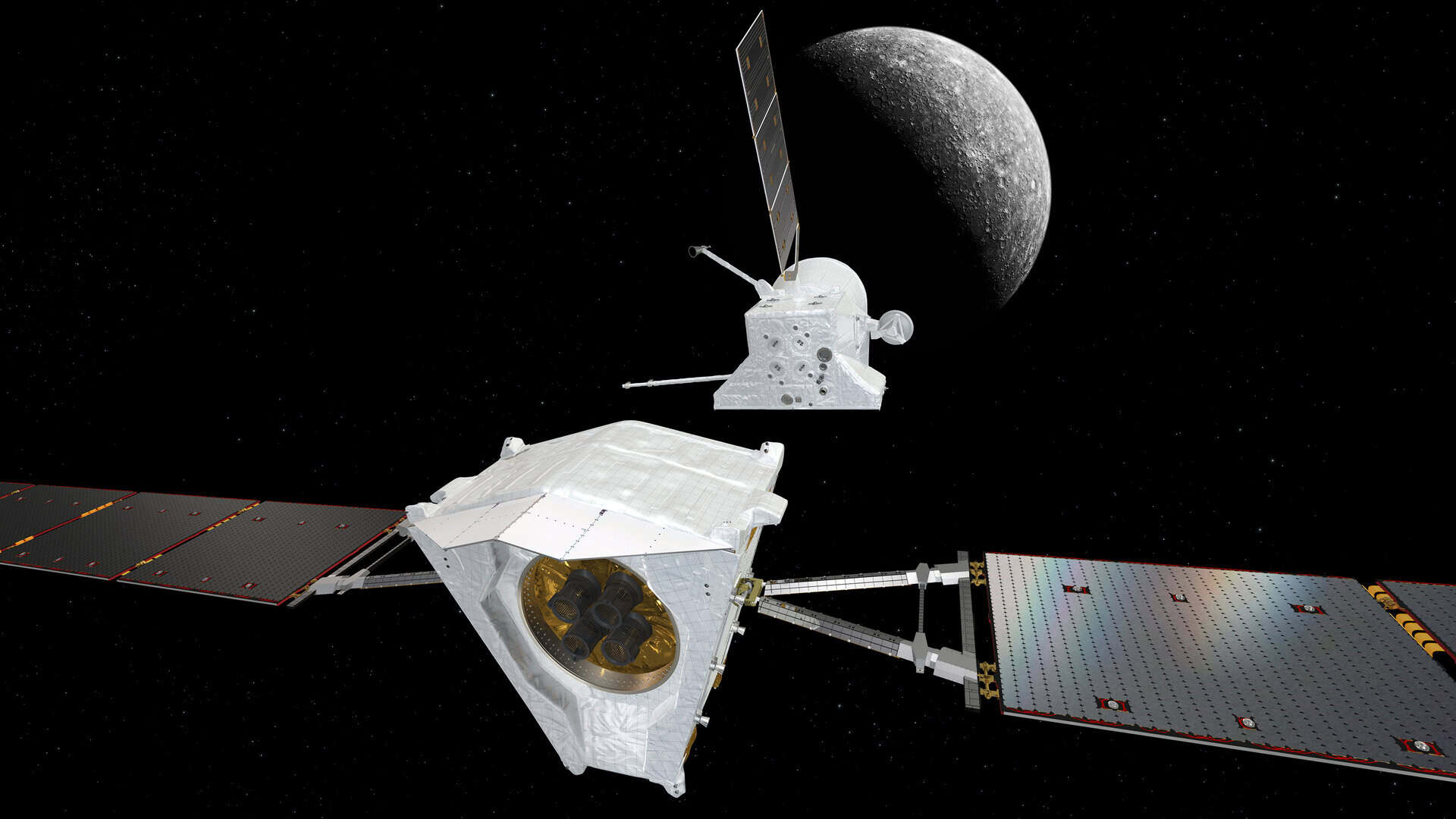
Fortunately, better views are on the way. The BepiColombo spacecraft, a joint mission between the European Space Agency and Japan’s JAXA, is on the final stretch of its journey. Set to enter orbit around Mercury in November 2026, BepiColombo will use high-resolution lasers to spot tiny scarps and ridges that earlier missions missed.
Only two spacecraft (NASA’s Mariner 10 and MESSENGER) have ever visited Mercury before. Soon, BepiColombo will help scientists verify the math on our solar system’s shrinking world.
Sources: Mashable, AGU