
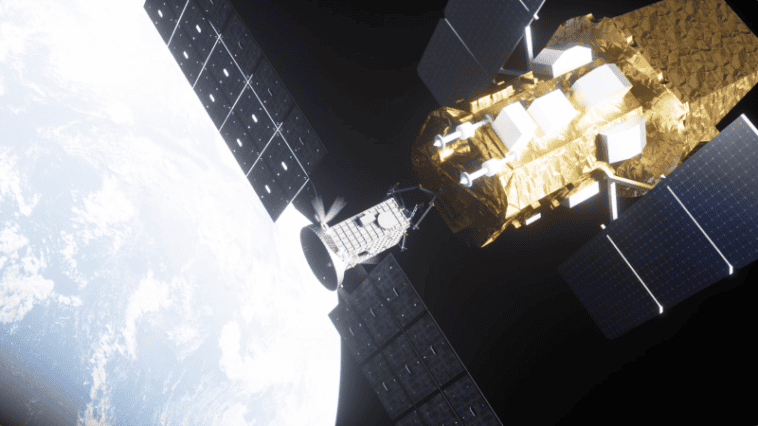
The Neil Gehrels Swift Observatory has been hunting gamma-ray bursts from orbit since 2004. But atmospheric drag is now pulling it downward, and without intervention, it will burn up later this year. In response, NASA turned to a small Arizona startup, Katalyst Space Technologies, about nine months ago, awarding roughly $30 million to build and fly a robotic servicer called LINK.
NASA provided the latest details on the high-stakes mission during a media preview teleconference recently, just days before the planned launch.
“I have to be honest, no one thought it was going to be possible. No one thought we would get as far as we’ve already gotten today,” said Shawn Domagal-Goldman, director of NASA’s astrophysics division, at the briefing
The plan is simple in concept, and much like most space programs, audacious in its execution. It involves launching LINK on June 27 (weather permitting), rendezvousing with Swift, capturing the aging telescope, and subsequently pushing the telescope into a higher orbit.
“It’s only been about seven months since NASA awarded Katalyst a contract to attempt to boost Swift with the company’s LINK satellite,” said Brad Cenko, who leads the SWIFT mission, in an earlier NASA statement. “Combined with our changes to science operations, the teams are creating the best opportunity possible to extend Swift’s lifetime and continue its legacy of cosmic exploration,” he added.
Why Swift is slipping
The sun ultimately triggered the crisis. Intense solar storms in 2024 hammered Earth’s upper atmosphere, causing it to expand and puff outward. The same storms produced auroras visible as far south as Texas, beautiful from the ground but disastrous for Swift, as the heated, denser atmosphere increased the spacecraft’s drag far more than usual.
Launched in 2004 at an altitude of about 370 miles, where the air is nearly a vacuum, the observatory has slowly lost altitude over 20 years of accumulated drag. It now sits at roughly 230 miles and is still descending.
The Swift team has patched the problem where it can. In February, operators tilted the spacecraft to reduce its cross-section and cut atmospheric drag. In April, they took the more drastic step of shutting down the wide-angle Burst Alert Telescope, which happens to be the instrument that detects gamma-ray bursts. Although the move has helped stabilize the orbit, it happened at the expense of science.
Dozens of cosmic events have gone uncaught while Swift has been muzzled per the team’s tally. These include exploding stars, black holes shredding nearby stars, flares from the supermassive black hole at the center of our galaxy, and comets warping as they swing through the inner solar system.
How to catch a satellite that wasn’t built to be caught
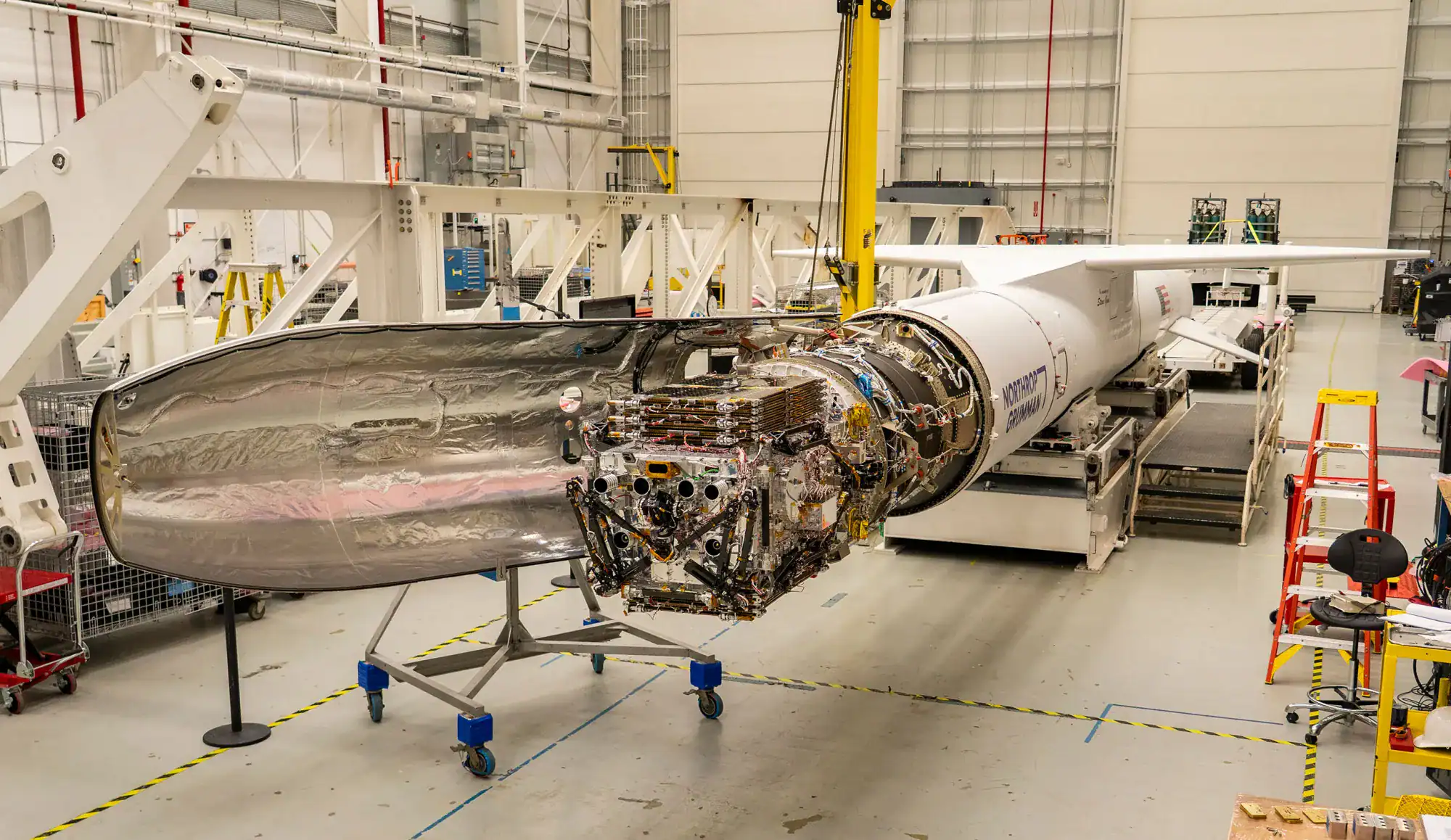
Money is part of what makes the rescue worthwhile. The original Swift mission cost about $160 million when it launched. A comparable replacement today would run $250 million to $300 million, after inflation. As such, extending the life of the existing observatory for about $30 million makes clear financial sense.
The bigger challenge is that this will be a private robot saving a piece of government hardware that was never meant to be serviced. Hubble benefited from astronaut visits, but Swift has no docking interfaces, no handles, and no clamping rings, just twenty years of heat-degraded insulation.
Once in orbit, LINK will take its time. Over days, or even weeks, the robotic servicer will fine-tune its trajectory until it’s flying alongside Swift at virtually the same velocity. Only then will it capture close-up photos of the telescope.
This is where things get murky. After twenty years in the harsh vacuum of space, Swift’s insulation may be peeling, and its grip points may no longer match the original blueprints. Katalyst’s team has been candid and said that this is the part where they cannot plan every detail in advance. They will simply have to see what’s there.
The final approach cannot be controlled from the ground. Both spacecraft will be hurtling around Earth at 17,000 mph, far too fast for radio signals to keep up with in real time. LINK, therefore, must operate autonomously, capturing rapid photos, comparing them against its models, firing tiny thruster bursts, to close the gap inch by inch.
Once close enough, LINK will extend three clamping arms. Swift will then give up control of its own orientation, and the servicer will take the wheel. At this point, the slow climb to a higher orbit begins. The boost could take anywhere between a month and several more, depending on Swift’s altitude at capture, solar activity, and whether the engine plays nice.
Kieran Wilson, Katalyst’s principal investigator on LINK, highlighted the mission’s tight timeline in a statement: “The clock is ticking on Swift’s descent, so we have to find a balance between testing and problem-solving that gives the mission the best chance of success.”
Meanwhile, NASA’s Swift mission director John Van Eepoel described the overall effort as “a fast, high-risk, high-reward mission.”
If NASA manages to pull this off, the next round of satellites might come built for visitors. Handles in obvious spots. Rings where a robot can clamp. Parts you can swap. The whole idea is that nothing in orbit has to stay locked into how it left the launch pad.
Sources: NASA, Katalyst, NASA YouTube, Mashable, NASA Contract Award, NASA Science Blog