
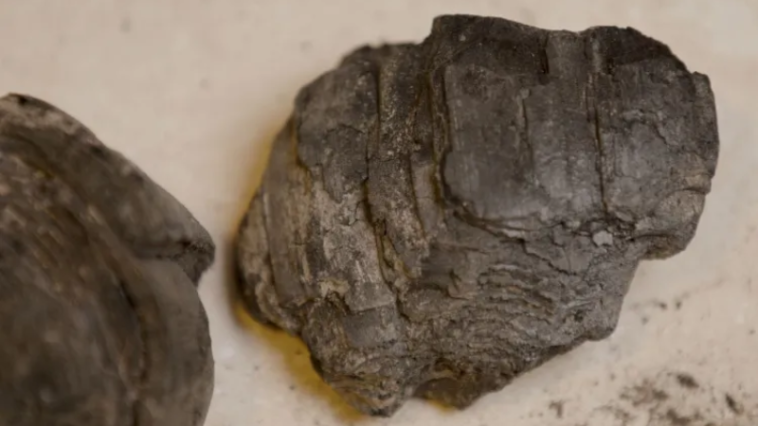
Archaeologists examining a controversial formation in eastern Turkey have recovered fragments of blackened wood from about 30 feet (9 meters) underground, reigniting debate over decades-old claims surrounding Noah’s Ark.
Cenker Atila, an archaeologist at Sivas Cumhuriyet University, is leading the core-drilling project at the Durupınar Formation, a long, ship-shaped ridge not far from Mount Ararat that researchers and ark hunters have visited for years.
According to project statements, Atila concluded the material was ancient based on its depth and physical appearance: “I believe this piece of wood was worked by human hands. The shaping marks, surface details, and certain unnatural features suggest that it may have been deliberately shaped by someone for a specific purpose.”
Now his team has a number to go with the wood. Andrew Jones, founder of the U.S.-based research group Noah’s Ark Scans, told Fox News over the weekend that initial laboratory testing dated the samples to roughly 4,300 years ago, a timeline some believers associate with the biblical flood.
Still, Jones acknowledged the team has unanswered questions: “What we don’t know is how the wood got there.”
Geologists studied the same ridge 30 years ago and came to a different conclusion. A 1996 paper co-written by David Fasold, a man who had once been sure it was the ark, called it “a completely natural rock formation.” The paper was titled ‘Bogus “Noah’s Ark” from Turkey Exposed as a Common Geologic Structure.’
Jones’s group disputes those findings, arguing that ground radar can see things earlier researchers could not detect. In a preliminary report, the team notes that its scans show rooms and corridors under the surface.
The claims have not been independently verified by outside experts; however, the research team says it plans to publish a comprehensive report next spring.
Sources: GlobeNewswire, Fox News, California State University, Northridge, Newsweek