
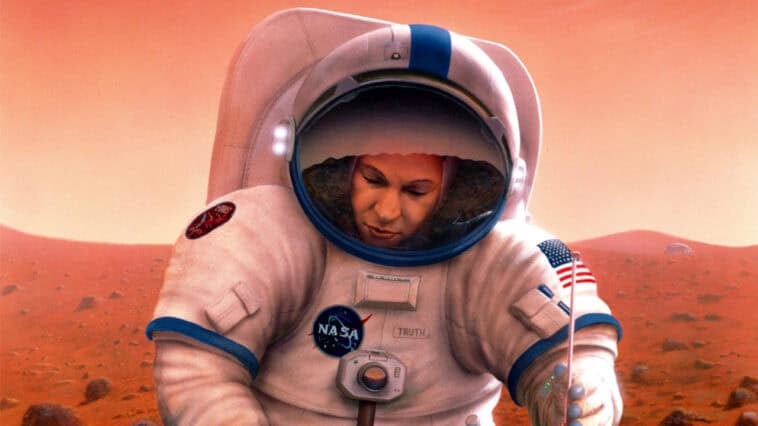
A trip to Mars could be one of humanity’s greatest achievements, but the journey may come with a hidden danger that threatens astronauts long after they return home. Scientists are warning that exposure to deep-space radiation could cause lasting damage to the human heart, raising new concerns about the health risks of sending people to the Red Planet. With future Mars missions expected to keep astronauts away from Earth for months or even years, could the journey permanently weaken their hearts? Read on to learn what researchers found and why it could change how we prepare for human exploration of Mars.
Deep-space radiation may leave lasting scars on the heart
Traveling beyond Earth’s protective environment exposes astronauts to two major hazards: cosmic radiation and microgravity, the condition in which people experience apparent weightlessness. Although scientists know both can affect human health, the long-term consequences remain unclear.
A study by researchers at the Medical College of Wisconsin, published in PLOS One, investigated how these conditions could affect the body over time. The findings suggest that deep-space radiation may cause progressive damage to the heart, weaken immune defenses, and trigger genetic changes associated with serious cardiovascular problems.
How scientists simulated a journey to Mars
Because researchers cannot yet conduct long-term experiments in deep space, they must recreate important aspects of the environment on Earth. Testing prolonged radiation exposure on humans would also be impractical and unethical, so the team used rats to investigate the potential risks.
To simulate weightlessness, the researchers used a NASA-developed technique called hindlimb unloading. Middle-aged male rats had their hind legs suspended at a 30-degree angle for 30 days. This shifted bodily fluids toward their heads and reduced the weight placed on their lower bodies, approximating certain effects of microgravity.
The team recreated cosmic radiation at NASA’s Space Radiation Laboratory at Brookhaven National Laboratory. Using a specialized simulator called simGCRsim, researchers exposed the animals to high-energy particles, including protons and heavier ions such as silicon and iron. Similar particles can penetrate spacecraft shielding during deep-space missions.
The rats spent five days in the weightlessness simulation before receiving a brief, intense radiation exposure. They then remained suspended for another 25 days. Researchers monitored them for approximately one year, allowing them to examine delayed effects.
Heart damage continued to worsen after radiation exposure
One of the study’s most concerning findings involved perivascular fibrosis, a condition in which scar tissue develops around blood vessels. In the heart, this tissue can interfere with the vessels that supply the heart muscle with blood.
Rats exposed to a radiation dose of 1.5 gray, a unit measuring absorbed radiation, developed this type of scarring. By 270 days after exposure, the amount of scar tissue had doubled, potentially restricting blood flow and increasing the risk of a heart attack.
The simulated weightlessness did not appear to significantly contribute to this particular outcome. Radiation was the primary factor associated with the damage.
Even the lower radiation dose, intended to approximate the cumulative exposure from a three-year Mars mission, produced worrying results. Although heart scarring was not immediately apparent, 83% of the rats had developed it within a year.
This raises concerns that radiation-related cardiovascular damage could emerge years or decades after astronauts return to Earth. However, the findings in rats do not establish that humans would experience the same effects or timeline.
Radiation also weakened immune defenses
The researchers found that radiation exposure had lasting consequences for the animals’ immune systems. Months after the experiment, their spleens had lost approximately two-thirds of their natural killer (NK) cells.
These immune cells help destroy virus-infected cells and abnormal cells, including some cancer cells. A substantial decline in their numbers could weaken the body’s ability to defend itself against disease.
Microgravity alone did not produce the same lasting effect. Rats exposed to simulated weightlessness eventually recovered normal cellular levels, but recovery was more limited when radiation was also involved.
The researchers suggested that cosmic radiation might interfere with the bone marrow’s ability to respond to physiological stress. Bone marrow produces blood cells, including many of the cells essential for immune function.
Genetic changes raised further cardiovascular concerns
Another troubling discovery emerged when scientists examined the rats’ white blood cells. At 235 days after radiation exposure, they identified persistent mutations in several genes associated with clonal hematopoiesis of indeterminate potential (CHIP).
CHIP occurs when blood cells acquire mutations that allow them to multiply more successfully than other cells. Although it becomes more common with age, it is associated with a higher risk of blood cancers, heart attacks, and strokes.
The findings suggest that radiation could accelerate biological changes linked to aging and cardiovascular disease. However, the experiment cannot establish how these mutations would affect astronauts over their lifetimes.
More research is needed before human Mars missions
The study has important limitations. Researchers delivered the radiation in a single, intense exposure rather than spreading it over the months or years of a real space mission. It remains uncertain whether the body’s repair mechanisms would respond differently to prolonged exposure.
The experiment also involved only male rats, meaning the results may not reflect how females or humans would respond.
Nevertheless, the findings highlight a major challenge for future Mars exploration. Protecting astronauts from radiation will require more than ensuring their immediate survival during a mission. Scientists must also understand and reduce health risks that could develop long after their return.
Source:
Universe Today