
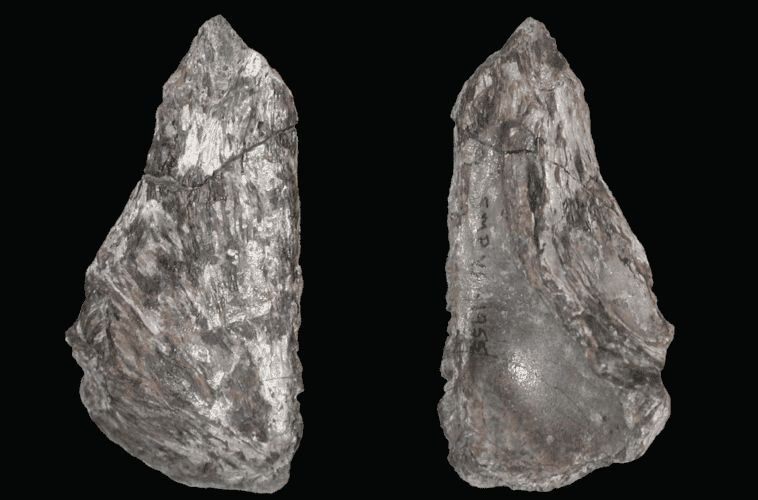
In 2005, research associate Robert Sullivan pulled out a lone piece of skull, specifically a frontal bone from the San Juan Basin’s Kirtland Formation.
It would take another twenty-one years of careful study before scientists at the New Mexico Museum of Natural History & Science could finally identify it as a new genus and species, Dinevenator Robustus. It was part of the troodontid group of two-legged, bird-like dinosaurs that were closer to birds in their build than any other known theropods from around 73 million years ago, some 8 million years shy of the asteroid.
A study detailing this discovery, authored by researchers from the museum, was recently published in the journal Fossil Studies.
A case of mistaken identity
The fossil was initially misidentified as a Dromaeosaurid, the raptor family that Velociraptor belongs to.
It was only through years of careful comparison that Sullivan and the museum’s curator of paleontology, Steven Jasinski, reclassified it as a unique troodontid. Their breakthrough relied on identifying specific features that did not match any troodontid in scientific literature, a discovery made possible mostly by examining the left frontal bone alongside a vast array of other remains.
Comparisons with related species put Dinevenator robustus at 8 to 10 feet long, about 3 feet tall at the hip, and weighing somewhere between 150 and 300 pounds, making it one of the larger troodontids known.
Like other meat-eaters in its group, it likely ate whatever was available, including small mammals, lizards, birds, insects, plants, and fruit. Its large claws would have worked for catching prey and for keeping tyrannosaurs at a distance.
In the Late Cretaceous, about eight million years before the asteroid impact that ended the age of dinosaurs, New Mexico looked nothing like it does now. The area was a wet and subtropical floodplain, with forests, open ground, and large coniferous trees.
The fossil stayed in the museum collection while the scientists caught up with its true identity, which is the argument museums have made for years about their storage rooms. As executive director Anthony Fiorillo noted, the institution holds one of the Southwest’s largest fossil repositories (more than 90,000 specimens), many of which are too fragile or oversized to transport and display.
Volunteers prepared the specimen, and artists and museum staff handled its full reconstruction and public outreach. Future scans should reveal even more.
Sources: New Mexico Museum of Natural History & Science, KRQE Now, Source New Mexico, MDPI, Koat