
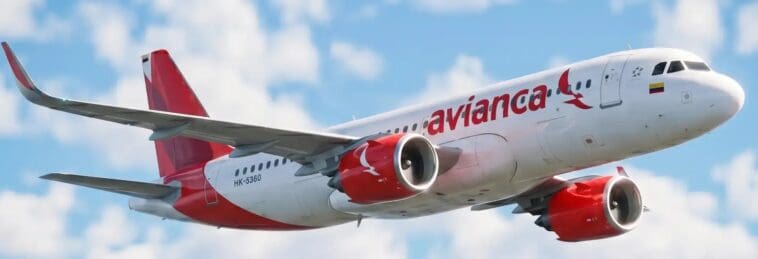
Avianca Flight 42 was headed for New York recently when severe turbulence hit.
Flight tracking data showed the Airbus A320 descending about 25,000 feet in a matter of minutes (consistent with a rapid diversion for medical reasons), and nine people were affected, with eight taken to the hospital after the plane diverted to Miami.
Rough air like that is getting more common, and the reason is fairly simple. Warmer air driven by carbon emissions is strengthening the vertical wind shear inside jet streams, the fast-moving currents that airliners ride at cruising altitude.
Research from the University of Reading found that severe clear-air turbulence over the North Atlantic rose 55% between 1979 and 2020. A decade of studies had projected that climate change would make it worse; the researchers say the evidence now shows it already has.
A handful of companies think they can fix it or at least work around it.
Turbulence Solutions is building computer-controlled “flaplets” that bolt onto a plane’s wings. The system reads the wind as it comes and changes the wing’s shape to roll with the bumps rather than fight them. Even the slowest aircraft the company works with fly above 100 mph, which leaves the wings about two milliseconds to react.
SkyPath, a turbulence-forecasting app for pilots, takes a different route. It started out like the traffic app Waze, crowdsourcing weather reports, and now uses the sensors inside the iPads nearly every pilot carries to measure vibration. That data, plus more than 100 weather variables, goes into an AI model the company says predicts turbulence with 90% accuracy. Some 130,000 pilots subscribe, and the app runs on about 40,000 flights a day for airlines including American, Southwest, Singapore, and Emirates.
SkyPath says the app has cut encounters with moderate turbulence by nearly 50%.
Airlines have tried simpler fixes too. In 2024, Singapore Airlines stopped serving hot drinks and meals whenever the seatbelt sign is on. Southwest, meanwhile, started preparing cabins for landing at 18,000 feet instead of 10,000.
NASA may have had the strangest idea. In the late 1990s, researchers Qamar Shams and Allan Zuckerwar built a microphone for infrasound, noise far too quiet for human ears, originally meant to pick up tornadoes and earthquakes from far away. Scientists later turned it toward clear-air turbulence, which shows up in cloudless skies and is almost impossible to forecast. Versions have been tested at high altitude, though none are standard on airliners yet.
Sources: University of Reading, Simple Flying, SkyPath, NASA, Miami Herald, New York Post