
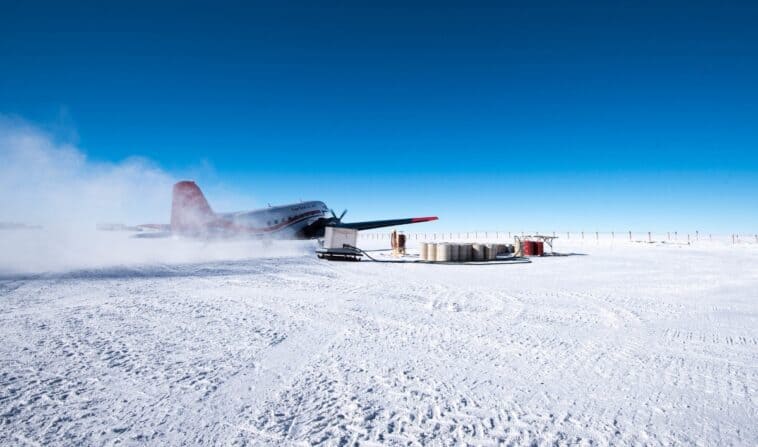
On July 18, Antarctica’s Concordia station, a remote research base home to a small winter-over crew (run by a joint French-Italian research facility), recorded a temperature of –119.4°F twice that morning at 6:25 a.m. and nine minutes later.
No place on Earth has documented a colder official ground temperature in 14 years.
You’d have to go back to 2012 for a similar recording, when Vostok Station, which Russia runs in East Antarctica, bottomed out at –119.6°F.
Conditions at the end of the world
Concordia, which is located in the East Antarctic plateau, is designed for the cold. It sits 600 miles inland on an ice cap 10,800 feet high, and winter readings there fall under -112°F without anyone reaching for a superlative. July got past even that.
Gabriele Carugati, the station leader for Italy’s National Antarctic Research Program (PNRA), told Live Science that anything under minus 84°C stands out even at a place where extreme cold is expected and that the reading shows how much Antarctic weather still swings.
“During winter, there is no sunlight for months, the atmosphere is extremely dry and stable, and under clear skies, heat continuously escapes to space because there are no clouds, allowing temperatures to fall to extraordinary levels,” Carugati explained.
Isolation is the other constant at Concordia. No planes fly in or out during the brutal winter, and with Vostok Station being the nearest human outpost, more than 370 miles off, the Concordia crew is technically further from help than astronauts on the International Space Station (ISS), which orbits about 250 miles up.
Even so, July’s reading was no all-time record. Concordia itself reached –120.5°F in the winter of 2010, while Vostok’s –128.6°F in July 1983 remains unmatched. Satellite readings indicate that even deeper freezes, down to -144°F, are possible in the plunging dips near the top of the ice sheet.
While Concordia endures the extreme cold of the high-altitude interior, the rest of the continent has seen contrasting climate trends. Argentina’s Esperanza base, for instance, located on the much milder Trinity Peninsula (the extreme northeast portion of the Antarctic Peninsula), recorded its warmest winter temperature ever last month at 59.7°F.
Concordia is also not immune to occasional extremes in the other direction. The research station hit 15.1°F in March of the year prior, its highest reading on record and 32 degrees above the same period the year before.
Researchers note that such regional variation is expected. While the ice shelves on the coast are thinning due to warming ocean water, the high-altitude interior plateau remains a distinct environment where conditions like those seen at Concordia can still reach historic lows.
Sources: IAMCO, Institut Polaire Français, PNRA, Live Science, New York Post