
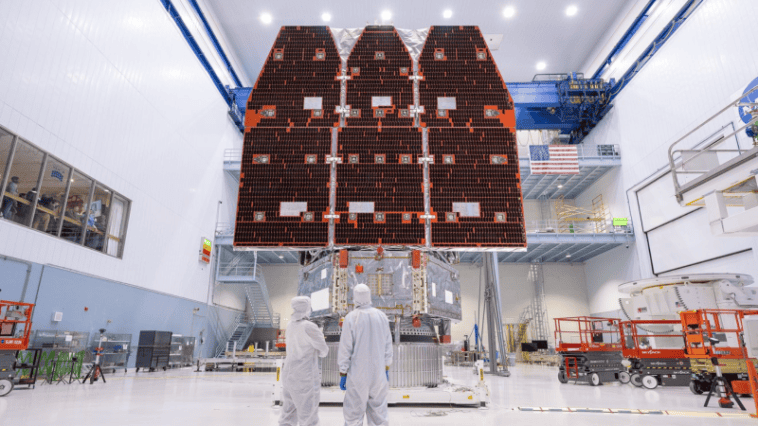
NASA’s next big planet hunter is designed to explore regions of the galaxy that almost no one has looked at or studied.
The Nancy Grace Roman Space Telescope, now fully assembled (after construction was completed in late 2025), is set to survey vast stretches of the Milky Way, with a launch scheduled for August 2026.
Models predict that the Galactic Bulge Time-Domain Survey (GBTDS) could turn up something in the likes of 100,000 new worlds (with some estimates ranging from roughly 60,000 to 200,000 transiting planets), a figure that would dwarf the roughly 6,300 exoplanets found beyond our solar system so far.
The trouble with this count is how little of the galaxy it actually covers, as nearly all of those planets sit within a few thousand light-years of Earth, in our own quiet corner.
“Our galaxy is home to a variety of different environments, but when it comes to hunting for exoplanets, we’ve really only explored one: our own neighborhood,” said Elisa Quintana, an exoplanet researcher at NASA’s Goddard Space Flight Center, in a statement. She leads a team developing the software to process Roman’s transit data.
Expanding the cosmic map
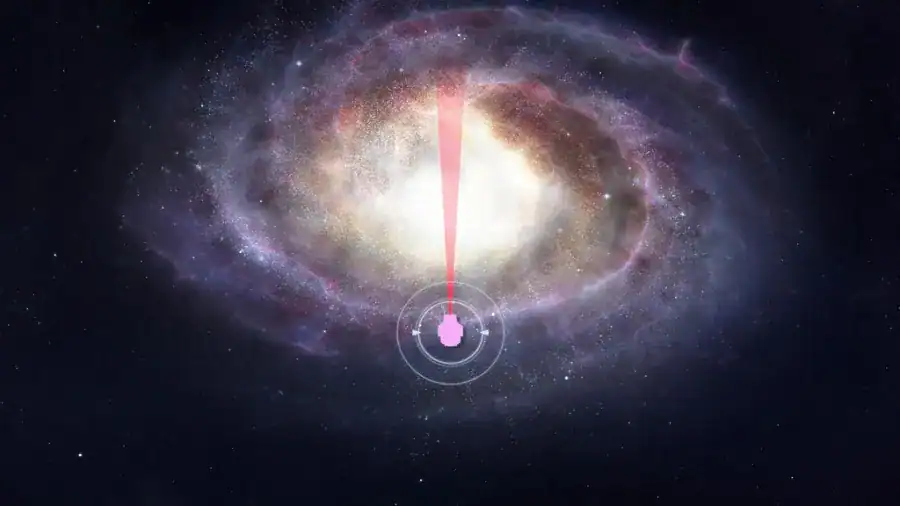
Roman will push the search inward, toward the crowded star fields of the galactic bulge, and outward to the galaxy’s far side. But the mission’s ambition isn’t just about the numbers. Scientists want to know whether planets form differently depending on where they sit in the galaxy.
And there’s good reason to think they might, as evidenced by clear differences in stellar environments. Stars near the galactic center are older and richer in heavy elements such as silicon and oxygen, essentially the raw material from which planets are built, while stars out on the galactic fringes have far less of these elements.
“Stars with more heavy elements tend to host more planets, especially giant ones,” said Robby Wilson, a postdoctoral fellow at Goddard who modeled what Roman is likely to find, in a statement.
To make these discoveries, the telescope will rely on two powerful techniques. One will watch for the faint dimming of starlight as planets cross in front of their host stars, this being the transit method. The NASA observatory will also catch the brief brightening that occurs when a star’s gravity acts as a lens, thereby magnifying the light of a background star, an occurrence scientists call microlensing.
This second method is sensitive enough that it could flag worlds as small as Mars, sitting in orbits much like the ones in our own solar system.
All the data Roman gathers will be public, available to professional astronomers and citizen scientists alike.
In terms of scale, this mission dwarfs NASA’s earlier Kepler one, which monitored about 100,000 stars and proved that planets outnumber the stars they orbit. Roman, however, will only observe around 100 million.
Source: NASA’s Roman Mission, IPAC, Cornell University, SciTechDaily, Building Roman, NASA Exoplanet Archive