
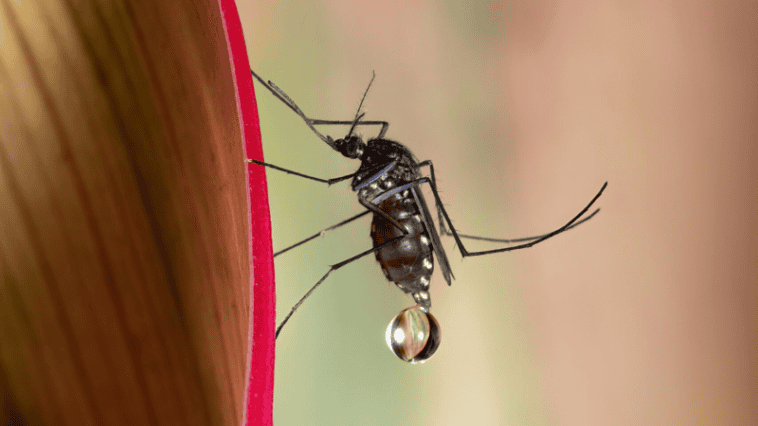
Just days after Google announced plans to release millions of lab-grown mosquitoes across California and Florida as part of its Project Debug, another mosquito-related bombshell has dropped.
According to a new study led by French researcher Claudio Lazzari and published in the Journal of Experimental Biology, our most trusted defense is failing: the bug spray might be working against you. Eventually, anyway.
DEET, the active ingredient in many popular insect repellents, is the stuff everyone reaches for and the one the U.S. Environmental Protection Agency (EPA) has long called the gold standard for keeping mosquitoes away. And the new study says the bugs might learn to like it.
Conditioning the ultimate pest
The researchers discovered this by letting mosquitoes feed a few times while sitting in a cloud of DEET. Before long, the repellent no longer bothered them; instead, the bugs began steering toward the smell. Lazzari called it “a significant change in our understanding of repellents.”
Previously, the assumption was that DEET simply worked on its own. Perhaps it was the smell that put them off, or that the repellent scrambled the mosquitoes’ senses about where the humans were. Pick your reason. Nobody figured that the bug’s reaction could shift with a little practice.
The lab runs revealed just how dramatic the shift could be. Mosquitoes that had fed in the presence of DEET started coming back once they caught a whiff of it on their own. One test had the trained ones making a beeline for a researcher’s DEET-covered hand and leaving the clean one be.
Mosquitoes are already known for what chemical ecologist Dr. Nina Stanczyk at Switzerland’s ETH Zürich called their “impressive learning abilities.” Even so, she told the Guardian that a bug flipping one of the strongest repellents around into a dinner cue struck her as “remarkable.”
Before anyone throws out the bottle, though, it’s worth noting that none of this showed up outdoors. It only turns up under controlled lab conditions designed to pick the effect apart. DEET still does its job on a normal summer evening.
That said, what nobody’s pinned down yet is how long the lesson sticks. Mosquitoes feed every few days, and Francesca Romana Dani, an entomologist at the University of Florence, figures the real question is whether the memory of a DEET-laced meal even lasts that long.
Sources: Journal of Experimental Biology, NYP, EurekAlert, The Guardian