
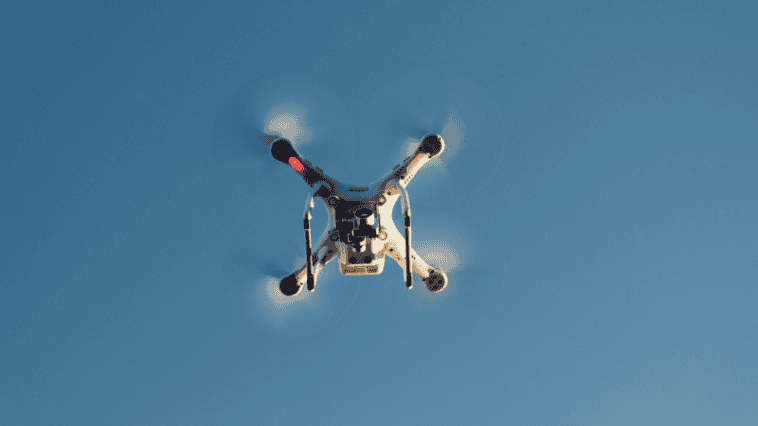
NASA wants to fly human organs around by drone. Fresh off the success of the Artemis II moon flyby mission, the space agency is now turning some of its aviation expertise toward the field of transplant medicine.
The numbers explain the interest with the HRSA (Health Resources and Services Administration) counting a whopping 103,000 Americans on the transplant waitlist as of early 2026. Part of what makes this enormous backlog so hard to clear is logistics. Getting an organ from one place to another is genuinely difficult.
NASA’s Langley Research Center (LaRC) in Virginia recently announced the project, through a partnership with nonprofit United Network for Organ Sharing (UNOS). The goal is to figure out whether drones can move human organs safely, efficiently, and quickly enough to bring about a real difference.
The research covers a lot of ground, including drone models, flight planning, sensing technology, and safety design. The teams also want to know how well a drone handles something as fragile and irreplaceable as a human organ.
“This is a chance to apply NASA Langley technology to a real-world problem that can save people’s lives who are waiting for transplants,” said John Koelling, director of the Aeronautics Research Directorate at NASA Langley, in a statement.
Solving the first and last-mile problem
So why drones? Organs already travel by commercial flight, chartered flight, and ground vehicles. According to Kaitlin Swanner, a senior policy analyst at UNOS, drones aren’t meant to replace all of that. They’d be most useful at the very beginning and very end of an organ’s trip, the first and last mile, where traffic, water, and city congestion slow everything down.
The Manhattan-at-rush-hour scenario is the easiest way to picture the problem.
NASA has already run early tests using simulated organs. The next step is to test using research or animal organs. That trial will show how the drone handles the specific weight of an organ in its packaging, while the team tracks temperature, vibration, and altitude. They’ll analyze the organ before and after the flight to check whether the trip caused any damage.
Hospitals have apparently already shown interest.
The NASA involvement makes more sense than it first seems. The agency is famous for space, but it does plenty of work in aeronautics and aviation too. The trickiest part of organ drone delivery is the airspace. A drone flying without a pilot has to share the sky safely with military and commercial aircraft. That’s squarely in NASA’s wheelhouse, and it’s literally the first “A” in the acronym.
If the research pans out, the long-term picture could look pretty different.
Sources: NASA, UNOS, Healthcare Brew, Organ Donor