
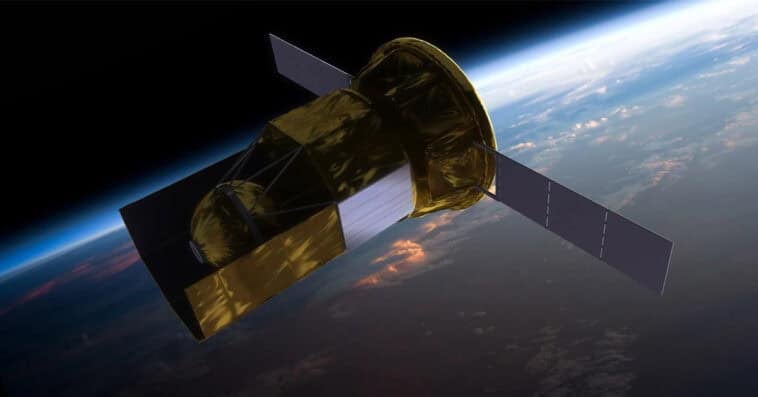
Imagine setting out on a cross-country road trip with no gas stations anywhere along the way — that is the same challenge NASA faces in the vast expanse of space. To help solve this problem, the agency is launching a groundbreaking mission this summer to test technology that will pave the way for orbital gas stations, allowing spacecraft to top off their tanks mid-journey to the Moon, Mars, and beyond.
NASA’s upcoming LOXSAT launch could transform future space travel
NASA is preparing to launch a new satellite designed to test how we store and transfer super-chilled rocket fuel in zero gravity — a crucial step toward landing astronauts on the Moon and eventually Mars.
This summer, the Liquid Oxygen Flight Demonstration (LOXSAT) will head into Earth’s orbit to tackle the unique, messy challenges of managing cryogenic liquids in space. Because these specialized fuels require freezing temperatures to stay usable, keeping them stable in microgravity is incredibly difficult. If successful, NASA noted in a statement that these orbital fuel depots could eventually serve as “essentially gas stations in space that could support long-term exploration.”
The nine-month mission is scheduled to blast off no earlier than July 17 from Rocket Lab’s launch site in New Zealand, riding aboard an Electron rocket. Once in orbit, LOXSAT will put 11 different high-tech components through their paces, gathering the vital data needed to build larger, fully operational cosmic fuel stations in the future.
Why cryogenic fuel in space is the key to NASA’s Artemis and Mars ambitions
Keeping rocket fuel super-chilled is a massive headache, whether you are on Earth or floating in the void of space. Cryogenic fuels require strict, freezing temperature controls; if they get even a little too warm, they simply boil away into useless gas. This extreme sensitivity makes storing and transferring the liquids incredibly difficult. Mastering this high-stakes cosmic plumbing is the key to unlocking deep-space exploration, including NASA’s Artemis missions to the Moon and future crewed voyages to Mars.
To tackle this challenge, NASA teamed up with Florida-based Eta Space through its Tipping Point initiative — a program that funds commercial tech to help establish a permanent human presence on the Moon. The LOXSAT mission is a collaborative effort managed under NASA’s Cryogenic Fluid Management Portfolio, bringing together top minds from the Marshall, Glenn, and Kennedy space centers.
The stakes couldn’t be higher. Both of the lunar landers selected by NASA to carry astronauts to the Moon’s surface — SpaceX’s Starship and Blue Origin’s Blue Moon — rely heavily on these temperamental fuels. Starship burns a mix of liquid oxygen and liquid methane, while Blue Moon uses liquid oxygen and liquid hydrogen. Both designs require constant, high-tech refrigeration to stay liquid, and both must be refueled in orbit to successfully land astronauts on the Moon and bring them back safely.
Here is the catch: no spacecraft in history has ever successfully stored these super-chilled fuels long-term or transferred them between vehicles in space. LOXSAT aims to be the very first to prove it can be done.
The clock is ticking. NASA is targeting late 2027 for its historic Artemis 3 mission, which will send four astronauts into orbit to practice docking maneuvers with the lunar landers. NASA plans to fly with whichever lander is ready first, even if it means leaving the other behind. By the time those astronauts launch, LOXSAT will have finished its nine-month test run. If it succeeds, the data it gathers will provide the exact blueprint SpaceX and Blue Origin need to manage fuel in zero gravity — paving the way for cosmic gas stations that could fuel our journey to the Moon, Mars, and deeper into the unknown.
Source: Space.com