
Plenty of people swear they’ve run into a ghost. About 18% of American adults say they have, if the think tank Pew Research Center is anything to go by.
Psychologist Dr. Melissa Maffeo offers a more grounded, quieter explanation, attributing such experiences to the brain fooling itself. In her new book (Science of the Supernatural: Critical Thinking for the Mind and Brain – March 2026), she stops short of declaring that ghosts aren’t real and lays out three specific factors that make certain people far more prone to believe that they’ve encountered one.
Her conclusions build on decades of research by psychologists and neuroscientists exploring how the brain generates seemingly supernatural sensations.
The first factor is the room. Ghost hunters swear by their EMF (Electromagnetic Field) meters, which really do register more activity in supposedly haunted locations. Whether people can actually feel those variations is another question.
Strong electromagnetic fields might stimulate the temporal lobe and produce odd sensations, while infrasound, low-frequency noise, too deep to hear, has been linked to feelings of unease and a spike in stress hormones. As Maffeo puts it in Live Science, “Did the ghost cause the EMF, or did the EMF cause the ghost?”
The psychology of the chills
A lab experiment once tested this by faking a haunted house, deliberately cranking up EM fields, and infrasound. Yet, the creepy feelings volunteers reported didn’t line up with what was actually switched on. The ones who got the chills were those who had walked in already believing.
Then there’s the brain’s internal wiring itself, specifically, the temporoparietal junction, a region that tracks where our body ends and the outside world begins. When it glitches, that’s when things get strange. The result is often an eerie sense that someone or something else is present.
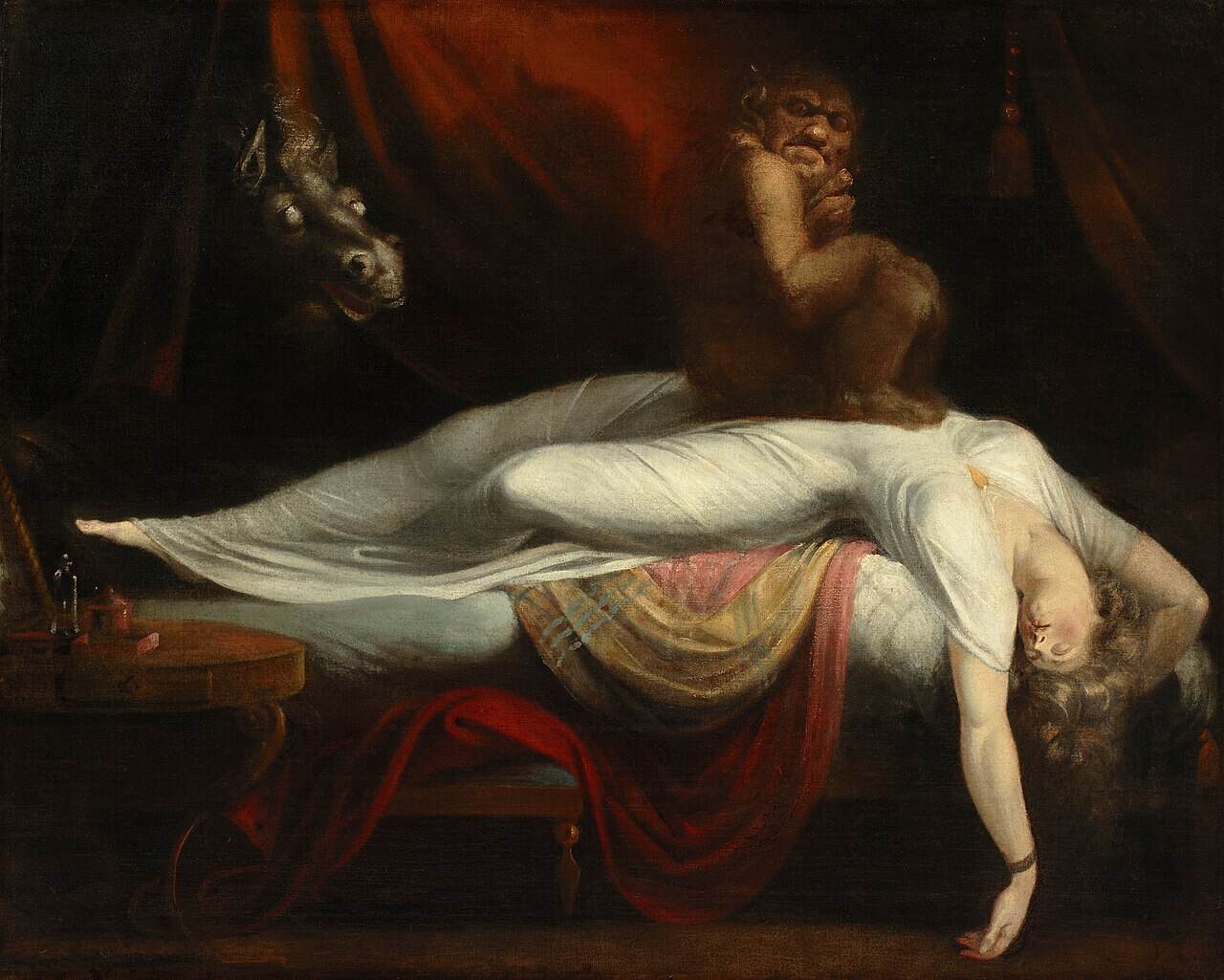
Sleep paralysis is the obvious example. You surface from a dream with your body still immobilized while the dream imagery continues to play. Frozen and scared, your mind fills in the blanks and treats the dream as real. Roughly a quarter to half of Americans have experienced it at least once.
The last piece of the puzzle is personality. Some folks who lean toward magical thinking and maintain a looser sense of where they end and everyone else begins tend to report far more of these experiences. Believing at this point tends to come before seeing.
Maffeo, however, notes that belief alone won’t conjure a ghost, but when combined with one of the other triggers, the experience can feel vividly real.
Sources: Pew Research, Cambridge University Press, Live Science, Wake Forest University, NYP, Science Direct, NIH