
The deepest spot of the Mariana Trench, Challenger Deep, has an explosive history of underwater eruptions no one expected at depths exceeding 20,000 feet, and scientists think magma rising between the Pacific and Philippine Sea tectonic plates might be part of the reason the trench plunges so far.
A team led by Robert Stern of the University of Texas at Dallas reached that conclusion after sending the remote-controlled vehicle Jason/Medea down the trench wall near Challenger Deep, about 6.8 miles below the Pacific surface.
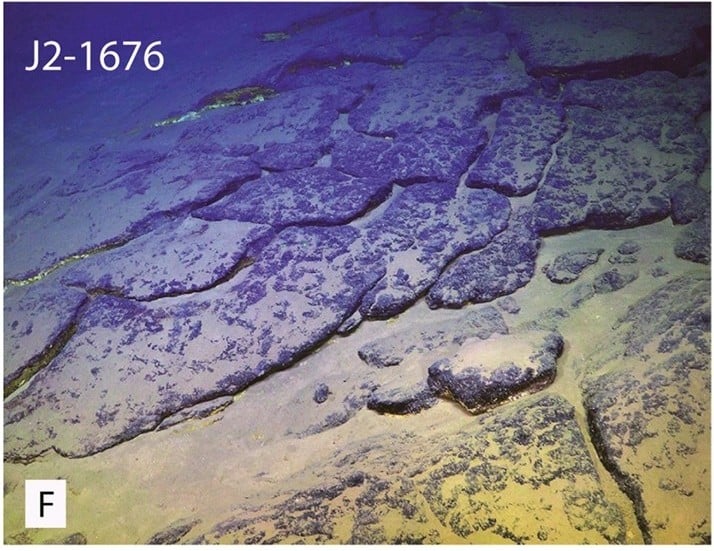
The robot cannot reach the seafloor itself (it can only dive to about four miles), but it was able to survey a long stretch of the wall and recover the unexpected volcanic deposits.
There, it found layers of rock left behind by explosive eruptions. “Explosive volcanism near trenches is unusual, so we were very surprised,” Stern said in a statement.
Normally, the water pressure down there should make eruptions like that close to impossible. The rocks, Stern noted, are “the deepest pyroclastic rocks documented to date from anywhere in the ocean.”
The researchers haven’t yet tracked down where the eruptions happened. The rocks were fused together by heat, though, so the pyroclastic flows probably didn’t get far before they cooled.
The team’s study, published in Frontiers in Earth Science, suggests hot, partly melted rock has pushed up very close to the edge of the trench. If that’s right, the two plates that meet there may be barely holding onto each other, letting the Pacific Plate dive down at a sharper angle. The sharper the dive, the deeper the trench.
The team would like to see more, but its equipment only goes so far. Nobody on the project could look at anything deeper than about four miles.
“Only Chinese scientists and some wealthy entrepreneurs now have research tools capable of working down to the bottom of the Challenger Deep,” Stern explained.
Sources: Frontiers in Earth Science, National Deep Submergence Facility, Daily Mail