
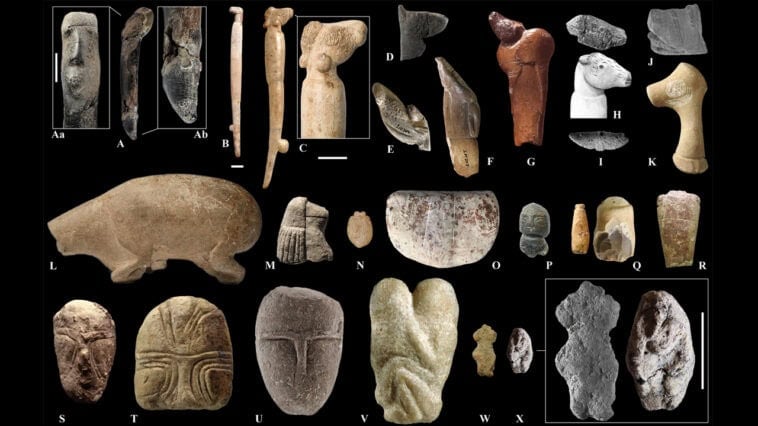
For thousands of years, scientists have tried to piece together when humans first began creating art, but a remarkable discovery is challenging what we thought we knew. Archaeologists have uncovered tiny clay figures dating to around 15,000 years ago, showing that ancient people shaped objects into art long before many early civilizations emerged. Keep reading to learn what researchers found and why these ancient creations are changing our understanding of the past.
Tiny sculptures from a pre-farming world
Published in the journal PLOS One on November 11, the study Modelling symbols among the first-sedentary communities: Emergence of clay figurines in Epipaleolithic Southwest Asia examined 154 prehistoric clay artifacts from three ancient settlements in present-day Israel to trace the earliest known roots of figurative clay art in the region.
The research, which was led by Laurent Davin alongside Leore Grosman and Anna Belfer-Cohen, found that long before agriculture reshaped daily life in the Middle East, early communities were already turning soft clay into miniature reflections of the world around them. Dating between 15,000 and 11,500 years ago, these small sculptures represent the oldest known clay figurine-making tradition in the region.
Among the discoveries are figures modeled after birds, mammals, and human forms, some still carrying faint traces of red and orange pigment. One fragment even appears to capture the distinct facial markings of a mountain gazelle, showing that prehistoric artists paid close attention to natural details.
Rethinking the timeline of clay art
Until now, historians and archaeologists largely believed that clay figurines became widespread during the Neolithic period, alongside the rise of farming around 11,500 years ago. The newly analyzed artifacts push that timeline back by thousands of years, placing the craft squarely within the era of the Natufians, which is a society of hunter-gatherers who were among the first humans to settle into permanent villages before farming existed.
While researchers already knew that Natufian communities carved figurines out of bone and stone, working with clay reveals a broader, more experimental artistic culture than experts previously realized. Rather than emerging suddenly with agriculture, many symbolic and creative traditions of the Neolithic world appear to have taken root much earlier.
Young hands in prehistoric workshops
Beyond changing the timeline of prehistoric art, the discovery offers clues about how creative traditions developed and spread among early human communities.
Researchers believe some of the objects may contain evidence that children participated in making the figurines. This raises the possibility that artistic techniques and cultural knowledge were passed from adults to younger generations long before farming became part of everyday life.
“These discoveries change how we understand the beginnings of artistic expression in the first villages of humanity. Thousands of years before agriculture and pottery emerged, people were already using clay to create figures, as part of their beliefs and knowledge of the natural world. What is particularly fascinating is the evidence that children were involved in making these objects, suggesting that creativity and cultural knowledge were shared across generations,” said Davin.
The discovery provides a rare glimpse into the creative lives of people who lived thousands of years before the rise of farming communities. It also suggests that artistic expression was already an important part of human culture long before pottery and agriculture transformed the way people lived.
Source:
PLOS One