
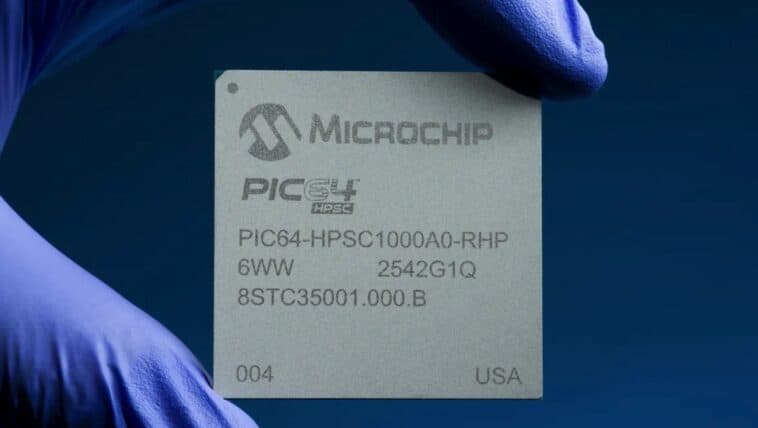
NASA has teamed up with Microchip Technology to build a new generation of space processors that could deliver up to 100x more computing power than what spacecraft use today. The goal isn’t just faster missions but more autonomous ones.
The agency partnered with Microchip Technology Inc. to develop a next-generation system-on-a-chip (SoC) for space missions. Instead of separating computing and networking into different systems, this chip combines everything into one unit. That means more processing power, fewer components, lower cost and complexity, and better energy efficiency.
Why space chips are so far behind (until now)
Most space missions don’t use modern processors. They use older, slower chips that are extremely reliable.
That is because in space, radiation can break electronics. Now, repairs aren’t possible and failures can end entire missions. So, agencies prioritize stability over speed.
This new chip is trying to balance both.
Built for different parts of space
NASA is developing two versions of the chip. One is a radiation-hardened version for deep space missions like the Moon and Mars while the other is a radiation-tolerant version for satellites closer to Earth.
The deep space version is designed for long-duration missions where reliability is critical. However, the other version is aimed at commercial use, like satellites in low Earth orbit.
Speed aside, the actual upgrade here is autonomy. These chips could allow spacecraft to analyze images on their own, make navigation decisions, and adjust operations without waiting for instructions from Earth.
NASA has already experimented with this idea. For clarify, the Perseverance rover uses onboard computing to compare satellite data with what it sees in real time, helping it figure out exactly where it is on Mars.
This new chip takes that concept much further.
Designed to adapt in real time and can scale
One of the most interesting features of this processor is scalability, as operators can turn off parts of it when they’re not needed to save power.
NASA has done this before, even on the nearly 50-year-old Voyager 1, where engineers shut down instruments to extend its life. This new system builds that flexibility directly into the hardware.
Another notable feature is its ability to scale across entire spacecraft systems. Multiple units can connect together using advanced networking (like space-grade Ethernet), effectively boosting computing power across the entire spacecraft.
That opens the door to more complex missions, better data processing in space, and less reliance on Earth-based systems. If missions are going to get farther, longer, and more complex, the kind of intelligence NASA is building the foundation for isn’t optional anymore.
Source: Tom’s Hardware