
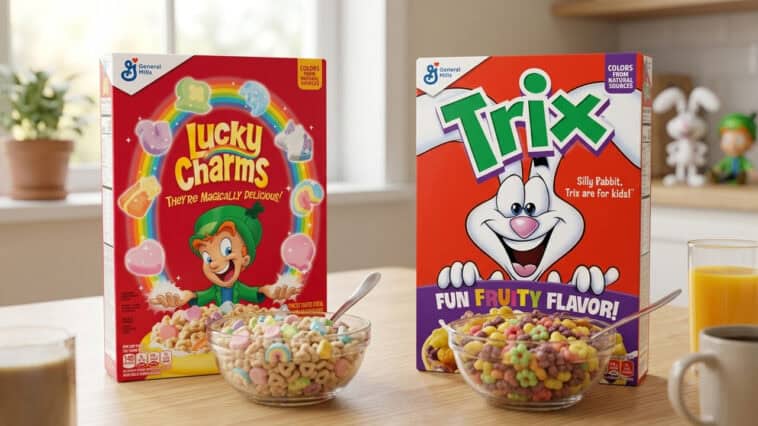
Lucky Charms and Trix are getting a major makeover, but this time, the change is happening behind the colorful cereal pieces. Food giant General Mills has hit a massive milestone by stripping artificial colors from its entire U.S. cereal lineup. But given the company’s famous history of backpedaling when loyal fans demanded the return of Trix’s neon, nostalgic hues, can this ambitious health-conscious recipe change actually last, or will consumer backlash force another high-profile retreat? Read on to discover what this means for your favorite breakfast classics and how General Mills plans to overhaul the rest of your pantry by 2027.
A sweeping shift in the breakfast aisle
The removal of certified colors — also known as synthetic color additives — marks a defining moment for General Mills. With iconic breakfast staples like Lucky Charms and Trix officially made with alternative coloring, the company has fulfilled a major pledge on its path toward cleaner ingredient labels.
According to Bethany Quam, president of Big G Cereal at General Mills, the transition is all about keeping pace with modern grocery shoppers. “As the leader in cereal, General Mills is focused on giving people what they are looking for from the brands they know and love,” Quam said. “This achievement reflects how we are evolving with consumer needs while continuing to offer food that tastes great, delivers quality and provides value.”
This cereal milestone follows an earlier achievement when the company successfully eliminated synthetic dyes from all of its K-12 school foods.
Will history repeat itself?
While the move aligns with growing health trends, long-time shoppers might feel a sense of déjà vu. General Mills embarked on a similar mission nearly a decade ago, rolling out dye-free versions of favorites like Cocoa Puffs, Reese’s Puffs, Golden Grahams, and Trix.
Back then, the original dye-free Trix — which replaced vivid synthetic dyes with plant-based alternatives — lost its signature bright red, blue, and yellow hues, resulting in a noticeably muted palette. Nostalgic fans voiced their frustration across social media, leading the company to backtrack shortly after. By 2017, General Mills reintroduced “Classic Trix” to grocery shelves alongside the natural version to satisfy shoppers who missed the vibrant look and familiar taste of their childhood.
However, a public backlash and corporate retreat are far less likely this time around. Regulatory tides have turned sharply, with a growing wave of state and federal legislation banning or restricting artificial food dyes across the country. As synthetic additives face increasing legal scrutiny and tighter bans, food manufacturers are under heavy pressure to adapt permanently — meaning those neon colors are likely gone for good, no matter how nostalgic consumers get.
Beyond the cereal box: what’s next by 2027
General Mills isn’t stopping at the breakfast table. Eliminating certified colors across all U.S. cereals pushes 90% of the food manufacturer’s retail offerings across the finish line, but a full transformation is right around the corner.
The company announced it remains strictly on track to remove synthetic color additives across its entire U.S. retail portfolio by the end of 2027. This broader phase-out will extend to other grocery staples, including popular fruit snacks and baking mixes.
Alongside ingredient updates, General Mills is doubling down on health-focused innovation. The company plans to launch more than twice as many products tailored to evolving consumer nutrition preferences compared to two years ago — focusing heavily on higher protein, added fiber, and recognizable, trusted ingredients.
Sources:
General Mills
Fox News