
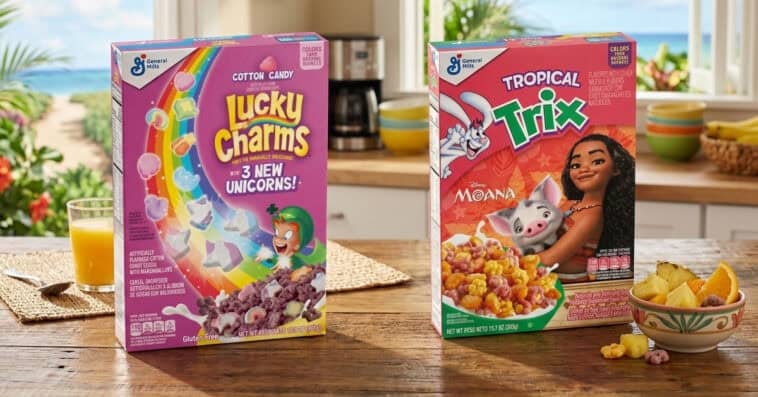
If your morning bowl of Lucky Charms or Trix looks a little different lately, you’re not imagining it. General Mills is following through on its promise to revamp its most iconic cereals, swapping long‑standing artificial dyes for colors drawn straight from nature. The result? A breakfast bowl that feels familiar but plays by entirely new rules. This summer, both Lucky Charms and Trix are debuting bold new variations, ditching certified synthetic colors in favor of naturally sourced hues. Keep reading to discover how these natural makeovers are redefining the cereal aisle and what this bold change means for your next spoonful.
Lucky Charms and Trix bring more magic to the cereal aisle
General Mills is injecting a fresh dose of imagination into the breakfast aisle with two vibrant new releases that prove “natural” doesn’t have to mean “boring.” This summer, the brand is debuting Lucky Charms Unicorn Cotton Candy and Tropical Trix featuring Disney’s Moana, both of which swap synthetic dyes for colors derived from natural sources.
Lucky Charms Unicorn Cotton Candy
This gluten-free treat reimagines the classic “Magically Delicious” formula with a sweet cotton candy profile. The bowl is packed with 19g of whole grains and essential nutrients, but the real stars are the three new, enchanting unicorn-shaped marshmallows. By utilizing natural colorants, this version offers a more mindful way to indulge in a childhood favorite without sacrificing the sparkle.
Tropical Trix featuring Disney’s Moana
In a special collaboration with Disney, Trix is heading to the Pacific. This Moana-inspired cereal delivers a refreshing, fruit-forward tropical flavor that transports fans straight to the islands. Beyond the bold taste, each serving is fortified with calcium and key vitamins, making it a versatile choice for a quick breakfast or an afternoon snack.
These launches represent more than just new flavors; they signify a major shift in how General Mills approaches its “Family Favorites” portfolio. By prioritizing plant-based hues over certified synthetics, the company is meeting the growing demand for cleaner labels while maintaining the playful spirit of its iconic brands.
“Whether it’s discovering new ways to make the magic of Lucky Charms even more enchanting or bringing on-screen experiences to our cereal bowls, we’re always looking for ways to make breakfast-time moments more memorable,” said Megan Brooks, Business Unit Director of Family Favorites Cereals at General Mills. “These cereals showcase the kind of creativity fans love, while also reflecting the progress we’re making to remove certified colors from our cereal portfolio.”
Why Lucky Charms and Trix are ditching synthetic dyes
This transition marks a significant milestone in General Mills’ long-term strategy to modernize its breakfast lineup, a move increasingly shaped by a tightening legal landscape. The company is currently on track to remove all certified synthetic colors from its U.S. cereal portfolio by summer 2026, with a broader commitment to eliminate them from its entire U.S. retail catalog by the end of 2027.
While General Mills frames this as an effort to meet “evolving consumer needs,” the shift is also a proactive response to landmark legislation and regulatory pressure.
- The California Food Safety Act: California recently became the first state to ban several additives, including Red Dye No. 3, effective January 1, 2027. Additionally, the California School Food Safety Act (signed in 2024) prohibits schools from serving foods containing six specific synthetic dyes—including Red 40 and Yellow 5—by the end of 2027.
- Attorney General Action: In 2025, General Mills faced a Civil Investigative Demand from the Texas Attorney General, who investigated the company for allegedly misrepresenting cereals containing petroleum-based dyes as “healthy.”
By reformulating now, General Mills is essentially future-proofing its brands to ensure they remain compliant with these emerging state laws while avoiding the patchwork of different labeling requirements across the country.
Source: General Mills