
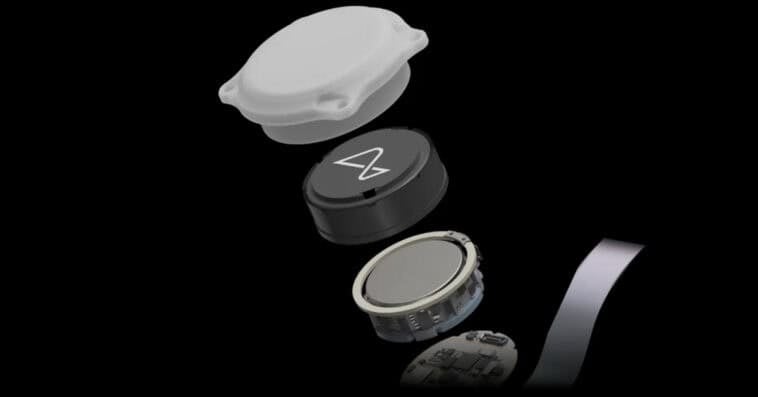
For millions of people living with blindness, the possibility of seeing again has long seemed out of reach. Now, Elon Musk is making one of his boldest claims yet, saying Neuralink’s experimental brain implant could one day restore vision by sending visual information directly to the brain —without relying on damaged eyes or optic nerves. If the technology lives up to its promise, it could redefine how blindness is treated and open the door to a future once thought impossible. Here’s what Musk revealed, how the device works, and where the breakthrough stands today.
How Neuralink’s vision implant is designed to work
Neuralink is preparing to take one of its biggest steps yet after Musk announced that the company plans to begin testing its first vision-restoring brain implant in humans within the next six to 12 months. If successful, the experimental device could allow people who are completely blind — including those born without sight — to perceive visual images by sending signals directly to the brain.
The announcement marks a major expansion of Neuralink’s ambitions. While the company’s brain-computer interface (BCI) — a system that creates a direct connection between the brain and a computer — has so far focused on helping people with paralysis control digital devices using only their thoughts, the next phase aims to restore one of humanity’s most important senses.
According to Musk, the technology will not attempt to repair damaged eyes, retinas, or optic nerves. Instead, it is designed to communicate directly with the brain’s visual cortex — the region responsible for processing images — effectively bypassing the eye altogether.
Directly stimulating the brain
Speaking about the company’s plans, Musk said Neuralink hopes to begin its first vision implant procedures within the next few years.
“We’re going to implant the first vision devices,” Musk said during a Y Combinator event. Even if you’re 100% blind from birth, we’re going to write directly to your visual cortex… and you’re going to see.”
The approach relies on electrically stimulating the visual cortex so the brain can interpret artificial signals as images. Rather than restoring eyesight through the eyes themselves, the implant would translate visual information into neural signals that the brain recognizes.
Although the concept has generated significant excitement, Neuralink has not yet published peer-reviewed scientific data demonstrating that the technology can restore vision in humans. The company has, however, received U.S. regulatory approval to conduct early human trials of its BCI technology.
From medical miracle to superhuman sight
Restoring basic vision to individuals who have lived without it would be a historic medical victory. But Musk’s vision doesn’t stop at biological recovery — it ventures further into human enhancement.
In the long run, Musk claims the technology won’t just replicate natural human sight, but completely outpace it. Future iterations could offer crisp, high-definition visual resolution alongside the ability to perceive invisible frequencies of light across the electromagnetic spectrum.
“And that’s just the beginning… In the long term, you’ll have ultra-HD resolution and real superpowers: you’ll see in infrared, ultraviolet, and even radar. Literally like a superhero,” he added.
These theoretical capabilities shift Neuralink’s identity from a purely therapeutic medical device to an augmentation platform. Being able to visualize thermal signatures (infrared) or navigate dense darkness via radar-like perception could transform fields ranging from deep-sea navigation and industrial safety to defense.
However, neuroscientists caution that reaching these sci-fi milestones will require massive leaps forward in hardware power efficiency, complex data processing, and neuroplasticity — the brain’s ability to adapt and make sense of entirely new streams of sensory data.
A new chapter for BCIs
Neuralink’s announcement represents a significant shift in the company’s long-term vision. Previous human trials have centered on enabling people with severe paralysis to interact with computers, smartphones, and other digital devices using thought alone. Expanding into sensory restoration could broaden the potential medical uses of BCIs.
Musk summed up his vision for the technology with another bold prediction:
“The future is no longer science fiction. It’s Neuralink.”
The road ahead: hype vs. reality
Despite the optimism, significant hurdles remain before these claims transition from press conferences to clinical reality. Restoring functional sight is widely considered one of neuroscience’s most intricate puzzles, and any brain-implant technology must clear rigorous regulatory reviews focused on long-term safety.
Neuralink maintains that its immediate priority remains strict safety and efficacy for its initial human recipients. If these upcoming trials go according to plan, the world may soon witness whether thought-driven, artificial vision can truly bridge the gap between human biology and futuristic technology.
Sources:
Y Combinator
Republic World
Mobi Health News