
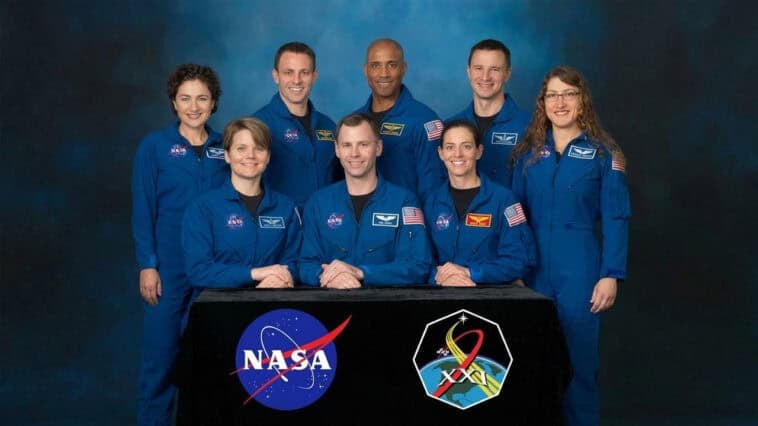
Ever dreamed of ditching your 9-to-5 desk job for a commute off the planet? NASA is officially accepting applications for a position that pays around $164,000 to live and work on the Moon. But before you dust off your résumé and pack your bags for the lunar surface, there’s a catch: the space agency is hunting for candidates with extraordinary credentials, requiring far more than standard workplace skills to land a spot in humanity’s next frontier. From strict physical hurdles to elite technical demands, read on to discover what it actually takes to make the cut, and whether you have what it takes to join NASA’s next generation of lunar explorers.
A six-figure ticket off the planet
If the promise of living on the Moon isn’t enough motivation to submit a resume, the compensation package certainly helps. NASA is offering selected candidates a starting salary of $164,395 per year—more than double the U.S. national average salary of $64,220.
For those looking to step into humanity’s most elite workforce, the clock is ticking: applications will remain open until 11:59 p.m. EST on December 3.
“The window is open. The mission is waiting. And the only thing missing from the greatest adventure humanity has ever embarked upon is you,” said NASA Deputy Administrator Matt Anderson in a recruitment statement.
NASA has a competitive selection process
Getting selected for NASA’s astronaut program is no easy task. The agency last accepted applications in 2024, eventually choosing just 10 candidates from a pool of more than 8,000 applicants.
Since the beginning of the U.S. space program in the mid-20th century, NASA has selected 370 individuals for astronaut training. The newest recruits will join the agency’s 32-member active astronaut corps and prepare for a wide range of demanding assignments.
NASA announced its latest recruitment drive on X, sharing a promotional video featuring astronauts Jessica Meir, Andre Douglas, Deniz Burnham, Randy Bresnik, Kayla Barron, Jack Hathaway, and Chris Williams. The campaign carries a simple but exciting tagline: “The Universe Is Calling.”
Do you want to be an astronaut?
Applications are now open to join NASA’s astronaut corps. Join us as we expand the frontiers of discovery in low Earth orbit, on the Moon, and beyond — apply by Dec. 3: https://t.co/laY2ExWiGO https://t.co/GzZl3yRy0i
— NASA (@NASA) November 7, 2026
However, answering that call requires much more than a passion for space exploration.
What qualifications does NASA require?
Anyone hoping to become a NASA astronaut must first meet some demanding educational and professional requirements. Applicants must be U.S. citizens and hold a master’s degree in a science, technology, engineering, or mathematics (STEM) field from an accredited institution.
Qualifying subjects include engineering, biological science, physical science, and computer science. Those without a completed master’s degree may still qualify if they have completed at least two years of work toward a doctoral program.
But an advanced education alone won’t be enough. Candidates must also have at least three years of related professional experience and provide five strong references to support their applications.
NASA also requires applicants to pass its long-duration astronaut flight physical. Beyond academic and physical qualifications, the agency looks for individuals with excellent leadership, teamwork, and communication skills.
In other words, candidates must demonstrate that they can handle the technical challenges of spaceflight while working effectively with others in demanding environments.
Life in space comes with serious challenges
Even for those who meet NASA’s strict requirements, the realities of space travel can be difficult to imagine. Future astronauts must be prepared for extended deep-space deployments, where isolation and separation from family and friends become part of everyday life.
NASA describes missions lasting 12 months or longer as involving “extreme isolation, austere living conditions, and separation from loved ones.”
These conditions demand considerable mental and emotional resilience. Astronauts must remain focused, adaptable, and capable of making important decisions even when they are far from the comforts of home.
While the prospect of exploring the Moon or eventually traveling to Mars may sound exciting, the experience also involves sacrifices that not everyone would be willing to make.
Selected candidates face two years of intensive training
After applications are reviewed, NASA’s selection board will invite the highest-scoring candidates to the agency’s Johnson Space Center in Houston for initial interviews. Approximately half of those interviewed will be invited back for a second round of screening.
Those who ultimately make the cut will report to Johnson Space Center for two years of intensive astronaut training. The program is designed to prepare recruits for the many challenges they could encounter during future space missions.
Their training will cover everything from piloting T-38 high-performance jets and operating robotic arms to conducting spacewalks and managing operations aboard the International Space Station.
Astronaut candidates will also study lunar geology and develop the technical skills needed to support NASA’s upcoming exploration missions.
For the agency, the goal is to prepare a new generation of explorers capable of supporting its return to the Moon and eventual crewed journeys to Mars.
“For those who apply, becoming a NASA astronaut is more than a career opportunity,” said Scott Tingle, chief astronaut and chair of the Astronaut Selection Board at NASA’s Johnson Space Center in Houston. “It is a chance to join a legacy of explorers who have pushed the boundaries of discovery and play a role in the missions that will shape humanity’s future in space.”
With a six-figure salary, an opportunity to explore beyond Earth, and a chance to contribute to some of humanity’s most ambitious space missions, NASA’s latest recruitment drive offers an extraordinary career path. However, only candidates who can meet the agency’s demanding standards will have a shot at joining its next generation of astronauts.
Source:
New York Post