
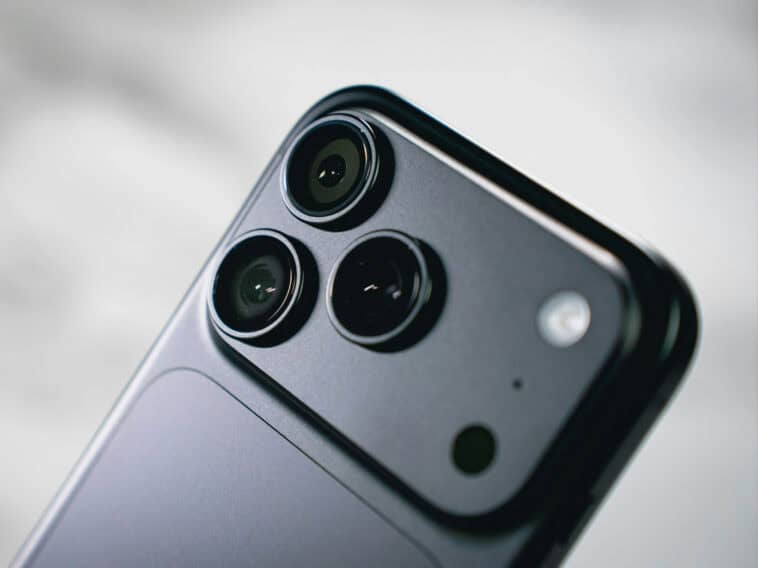
AI can now make a fake photo look almost indistinguishable from the real thing. Instead of trying to figure out the fake later, Apple now has a feature through which your iPhone can prove the photo was real in the first place.
At its iPhone 18 launch event, the company introduced Apple Reference Image, a new camera feature for the iPhone 18 Pro and iPhone 18 Pro Max that creates a verifiable record of what the camera actually captured.
Your iPhone can create a digital receipt for a photo
When Reference mode is manually activated, the iPhone 18 Pro’s main camera captures signed data directly from its image sensor. That information is then processed using Apple’s Private Cloud Compute to create what Apple describes as an unalterable reference image. The reference image appears alongside the normal photo in the Photos app.
Keep in mind that modern phone cameras don’t simply take a picture and save whatever the sensor sees. They process the image through a pile of computational photography tricks before you ever see it. According to Apple, this makes proving a photo’s authenticity complicated. If you want to establish that an image really came from a camera, you need to account for the data from the sensor and the software processing that turns it into the final picture.
Reference Image is essentially Apple putting a verifiable trail around that process. If the photo is later edited, the original reference can be compared with the altered version.
It’s not an AI detector
Apple Reference Image does not look at some random image from the internet and announce that it is AI-generated. Instead, it helps prove the origin of photos captured using the feature.
That makes it particularly useful for photojournalists, photographers and news organizations documenting events where the authenticity of an image matters. Someone covering a protest, natural disaster or breaking news event could have a way to demonstrate that an image originated from their iPhone camera.
And because the system is designed around the captured image rather than the photographer’s identity, Apple says it can help verify authenticity without revealing personal information about the person who took the photo.
Apple is also joining the AI watermarking party
Beyond Reference Image as a way to make the AI-photo mess slightly easier to navigate, Apple is also pointing to image metadata and support for SynthID, Google’s invisible watermarking technology.
SynthID works differently. Instead of proving that a camera captured an image, it can help identify content created or edited by generative AI by embedding an invisible digital watermark into it. Google DeepMind developed SynthID, and the technology is already used across Google’s generative AI products. OpenAI also uses it for images generated through ChatGPT, Codex and its API.
You have to turn the feature on
Reference Image is not something that automatically runs on every photo. Photographers have to manually activate the special Reference mode, and the feature is restricted to the iPhone 18 Pro’s main camera.
Also, keep in mind that the feature won’t be available everywhere at launch. According to Apple, it will initially be unavailable in China because of “regulatory requirements.” In the European Union, iPhone 18 Pro users won’t initially be able to capture Reference Images, although devices running iOS 27, iPadOS 27 or macOS 27 will still be able to develop and view them.
Apple is also making APIs available across iOS, iPadOS and macOS 27 so that third-party apps will eventually be able to access Reference Images.
Sources: Gizmodo, Independent