
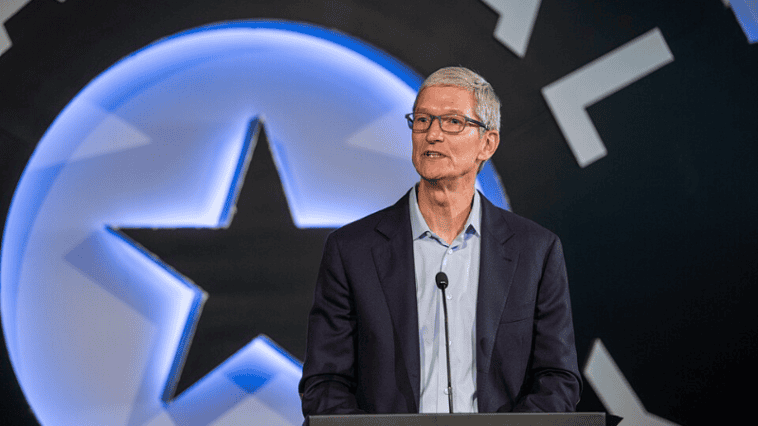
Apple’s products are about to get more expensive, and Tim Cook has finally said so out loud.
The outgoing chief executive, who is set to step down as CEO in September after 15 years and transition to executive chairman, told the Wall Street Journal that price increases have become unavoidable due to a steep climb in the cost of memory chips, which he called unsustainable.
Apple had been swallowing those costs to keep prices steady for shoppers, he said, but that approach has run its course: “We definitely need memory pricing and supply to return to reasonable levels for consumer products. That’s the bottom line,” Cook concluded while declining to say when the increases would hit and which devices they would touch. The iPhone 18, therefore, due in September, remains an open question on pricing.
The double crunch on supply chains
Memory chips seem to be the primary driver. They’re typically treated as an afterthought, one of the cheapest components in a smartphone, but their price has more than doubled since October 2025. The reason will sound familiar to most all: AI. The technology’s hunger for chips has given data centers first claim on supply, leaving phones and laptops to fight over what remains, but at higher prices.
Making matters worse is a second, odder factor. Regional fighting involving Iran has disrupted the world’s helium supply, and because helium is critical to certain chip manufacturing processes, it has landed yet another cost on an already tight supply chain.
Apple is far from alone in feeling the pinch. Omdia, a tech research firm, expects the typical smartphone to cost about 20% more globally in 2026, a record high. Apple’s next phones could be up to $150 dearer than the iPhone 17, according to Omdia analyst Chiew Le Xuan, in part due to planned hardware for new AI features. Competitors have already responded by nudging prices up, cutting back on deals, or trimming specs to guard their margins.
The same warning keeps surfacing across the industry. TSMC, which manufactures the most advanced chips for Apple, Nvidia, and AMD, has recently refused to rule out raising its own prices, citing inflation. Samsung has similarly highlighted how memory shortages could drive up electronics costs.
The impact of it all has already extended beyond phones, with Sony raising the PlayStation 5’s price this year and Nintendo lifting the Switch 2 from September.
For all the cost pressure, Apple doesn’t seem to be hurting. First-quarter sales in 2026 rose 17% year on year, driven largely by strong demand in China, where the iPhone 17 has sold well since its launch in September 2025. The company has also been making smaller price adjustments, dropping its cheapest Mac Mini and increasing that model’s entry price by roughly $200.