
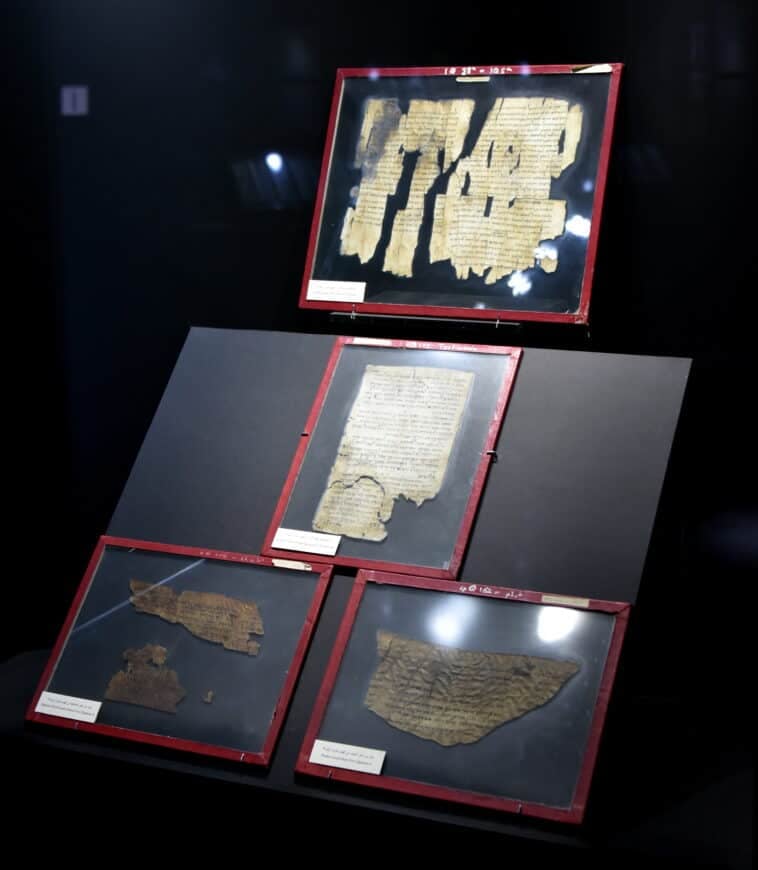
The Dead Sea Scrolls are basically the ultimate historical cold case, and scientists are now using artificial intelligence to solve the mystery.
The multi-millennium-old history confusing archeologists
Found hanging out in desert caves back in the 1940s, these 2,000-year-old texts gave us a massive look into ancient history. But while experts have spent decades translating what they say, they’re still clueless about one major detail: Where the heck were they actually made?
Artificial intelligence taking the lead
To finally get answers, historians are stepping aside for artificial intelligence. Led by Professor Mladen Popović from the University of Groningen, the project isn’t trying to decode the text anymore. Instead, they are treating the manuscripts like forensic crime scene evidence—using machine learning and advanced physics to look at the physical “DNA” of the scrolls.
Forensic AI tech meets ancient history
Since you can’t mishandle a fragile, millennia-old piece of papyrus, the team is relying on a pretty wild tech stack that won’t actually damage the relics.
At the center of the project is AI handwriting profiling. Building on a previous project called “The Hands That Wrote the Bible,” the team uses machine learning to analyze microscopic quirks in the handwriting. The AI can actually identify the unique “fingerprint” of individual scribes, tracking who wrote what.
AI researcher Maruf Dhali is building algorithms that will sort through massive amounts of chemical data collected from the ink, parchment, and papyrus. To get that data safely, the University of Southern Denmark is bringing in non-destructive gear, like X-ray fluorescence (XRF) and multispectral imaging, to scan the chemical makeup of the ink without laying a finger on it. If the AI finds a group of scrolls with the exact same chemical signature, it proves they came from the same tech-hub workshop or scribal network.
Checking the global database
The plan is to run up to 250 scrolls through this high-tech gauntlet. To make sure the AI knows what it’s looking at, they are doing something completely new.
They are comparing the Qumran papyri directly against ancient papyri sourced from Egypt and other locations across the Judean Desert. By mapping the regional differences in how paper and ink were made back then, the AI will be able to pinpoint where these documents were actually written.
Don’t expect an answer in your feed tomorrow
The project is slated to run for five years, and archaeological data is notoriously messy. So, expect a wait before the results arrive.
AI is reshaping how we view history
The introduction of AI marks a clear change in how we look at history. By treating these scrolls not just as static stories but as physical objects embedded with chemical data, AI is proving that it isn’t just building the future, it is also decoding our past.
Source: Arkeonews