
A mysterious new object has appeared in orbit, and evidence suggests it came from one of China’s most secretive spacecraft. With the U.S. Space Force now confirming that an unidentified payload was deployed by the enigmatic Shenlong space plane, fresh questions are swirling about what exactly was released — and why. As experts race to track the object and decode its purpose, the latest development is adding another layer of intrigue to a mission shrouded in secrecy and fueling concerns about the increasingly complex competition unfolding high above Earth.
A radar ping in the dark
The discovery came in the quiet morning hours. At 02:30 UTC on June 22, 2026, the southern sky radars of LeoLabs, a commercial space intelligence firm, flagged something unusual passing over New Zealand.
An unlisted object had suddenly appeared right next to China’s robotic Shenlong space plane.
“This object did not correlate to any other object in our catalog. It was first observed by our Tracker radar in New Zealand,” LeoLabs reported on X.
The firm quickly mobilized its global network to piece together what happened. Using its advanced analytical platform, LeoLabs Delta, the team confirmed they weren’t looking at random space junk. “Following additional observations across our global network and analysis via LeoLabs Delta, we have independently cataloged this object and assessed with high confidence that it was released from the Chinese space plane,” the company stated.
Shortly after, renowned satellite tracker Jonathan McDowell confirmed that the U.S. Space Force had officially logged the mystery payload into the military’s space registry.
Tracking the ‘Divine Dragon’
Shenlong, which translates to “Divine Dragon,” is one of the most closely guarded secrets in modern aerospace. It was recently blasted into space on February 6, 2026, hidden atop a Long March 2F rocket launched from the remote Jiuquan Satellite Launch Center in the Gobi Desert. Like its three previous flights, the exact objectives of this fourth mission were never made public.
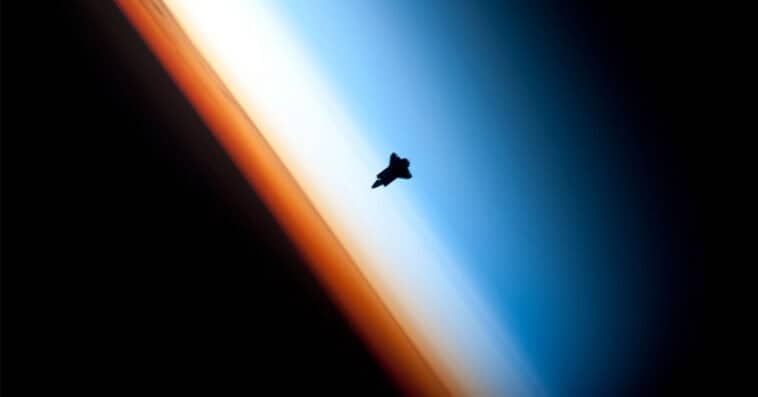
What we do know is that Shenlong operates much like a miniaturized, autonomous version of NASA’s retired space shuttles. It launches vertically on a massive rocket but uses wings to glide back down and land horizontally on a conventional desert runway.
Because images of the craft are restricted to blurry, long-range telescope snapshots captured by amateur skywatchers on the ground, experts look for clues in its design. Ground-based imagery has previously revealed what appear to be solar arrays — panels used to harvest sunlight for power —extending from the vehicle, suggesting it is built for long-duration missions.
Shenlong’s previous unusual activity
The latest mystery object is not the first unusual event linked to Shenlong.
In June 2024, skywatchers reported that the spacecraft may have released a small companion satellite — often referred to as a subsatellite — or jettisoned unnecessary hardware near the conclusion of its mission.
Several months earlier, observers initially believed Shenlong had ejected six separate objects into orbit. Further analysis later determined that those objects were debris left over from the launch rather than newly released payloads.
The new frontier of space warfare
While releasing a sub-satellite might sound harmless, the technology required to do so holds immense tactical value. In previous flights, Shenlong has demonstrated an ability to perform rendezvous and proximity operations (RPOs).
What is an RPO? Rendezvous and Proximity Operations refer to the highly complex orbital mechanics required for a spacecraft to deliberately maneuver close to, and stay alongside, another object in space.
On paper, RPOs are vital for peaceful, cooperative space tasks — like a robotic arm approaching a broken satellite to refuel or repair it. However, the same technology can easily be weaponized. In a conflict, an “inspector” spacecraft capable of stealthily cozying up to a rival nation’s multi-billion-dollar military or communication satellite could spy on it, jam its signals, or physically disable it.
This celestial shadow-boxing is already happening. Just recently, two Russian satellites engaged in a tense orbital dance, maneuvering within a mere 10 feet (3 meters) of one another.
The United States is playing the same game. The U.S. Space Force operates its own highly secretive reusable space plane, the Boeing X-37B, which features a remarkably similar design and mission profile to Shenlong. Official military artwork has openly hinted that the U.S. is refining its own close-proximity capabilities.
Mystery remains unresolved
For now, the exact nature and purpose of the newly released object remain unknown. Whether it represents another small satellite, a piece of expendable equipment, or part of a larger experiment, the deployment adds another chapter to the growing intrigue surrounding Shenlong. As more nations develop increasingly sophisticated spacecraft, activities once considered rare are becoming an increasingly important part of the evolving competition in space.