
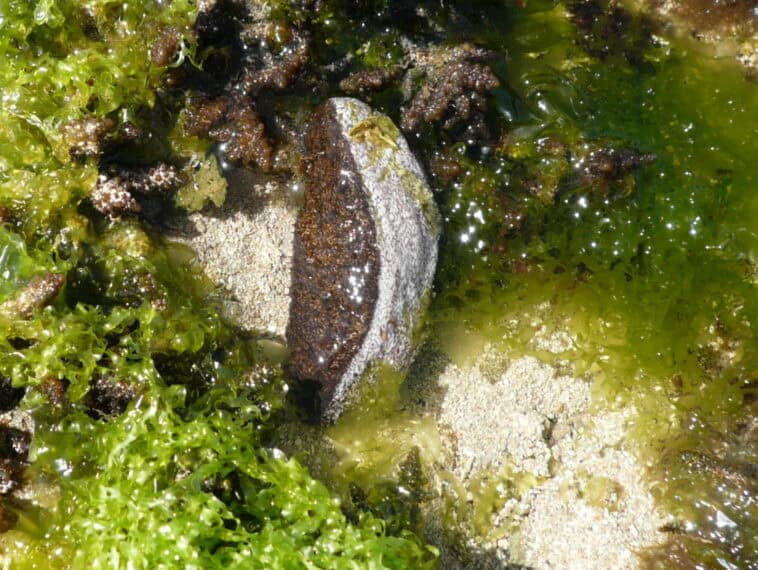
It is safe to say we usually think of life as an all-or-nothing package. An animal is either a complete and functioning organism, and if one part is cut off, it dies. And that is if the animal survives the injury that led to the loss of parts of its body. Well, that was the case until scientists studying the deep blue sea discovered a bizarre, “real-life zombie” creature that completely shatters that understanding.
Meet Psolus fabricii, known as the scarlet sea cucumber, a marine invertebrate inhabiting the cold waters of the North Atlantic and Arctic that is rewriting the rules of cellular biology.
A chance lab accident sparks a massive discovery
While sea cucumbers are already famous for their impressive healing skills like their ability to replace lost internal organs, researchers previously assumed any detached tissue would quickly perish. That long-held belief was challenged by a happy accident in the lab when a researcher accidentally broke off some tube feet from a sea cucumber, and the tiny appendages stuck to the glass of the tank.
Instead of dying off or decaying, as you would expect, those detached fragments kept living. Intrigued by the result of the mishap, Canadian scientists led by Sara Jobson removed additional sections from the animal’s body, tentacles and tube feet, placing them directly into flowing natural seawater. Even though the water was teeming with microbes where tissue normally decays, the severed parts shocked researchers by healing their wounds within days. Their cells kept dividing, organizing and showing active immune and metabolic functions.
“That rich environment full of bacteria and all this organic matter was actually feeding them and allowing this tissue to heal and grow,” said Rachel Sipler, a senior research scientist at Bigelow Laboratory for Ocean Sciences in Maine.
Surviving for years without a mouth
What is even more mind-boggling is how these isolated pieces managed to sustain themselves over an extended period without a mouth or a digestive system. The parts were able to survive by absorbing amino acids directly from the surrounding seawater, using the organic matter and bacteria in the environment to feed themselves and heal. When researchers tested sea stars and sea urchins with the same experiment, their tissue broke down within weeks or months, proving the scarlet sea cucumber possesses genuinely unique biological superpowers.
While the severed parts did not grow into brand-new sea cucumbers or reproduce, they continued functioning independently as living tissue for more than three years. Researchers eventually stopped the experiment to publish their findings, but the tissue still showed zero signs of aging or decay.
“We haven’t grown a new, complete sea cucumber yet, but we are seeing pretty stunning growth and diversification of cells literally years after this tissue was removed,” Sipler added. “It’s like a lizard that loses its tail. We know some lizards can grow new tails; we’re talking about whether the tail can grow a new lizard.”
What this means for the future of human medicine
By challenging the boundary between organismal life and cellular autonomy, this discovery is forcing scientists to rethink what it truly means for tissue to be alive. Sipler and her team plan to examine the cells’ DNA further to see if they are truly immortal. In the meantime, understanding how these resilient sea cucumber cells manage to survive, heal and function for years may eventually guide future breakthroughs in human tissue repair, advanced wound healing and maybe even combating cellular aging.
It may eventually turn out that the secrets to our own future medical recoveries might just be hiding in the depths of the ocean.
Sources: New York post, Science Advances