
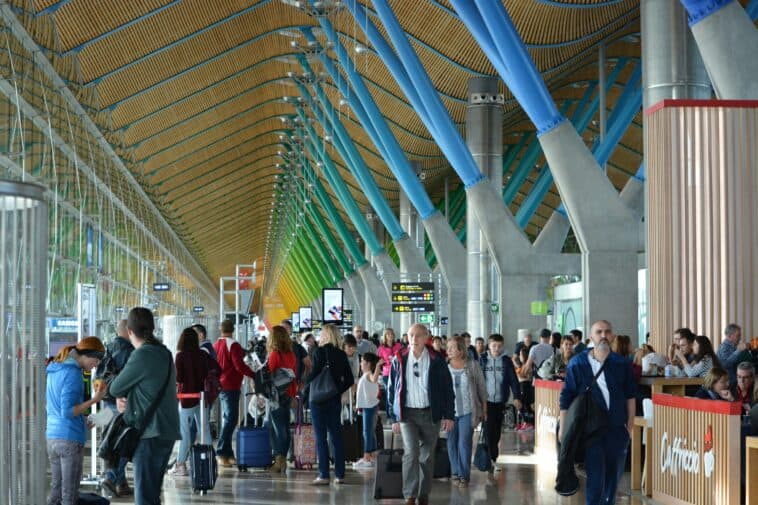
When you step into an airport terminal, you expect a few minor hiccups, and sometimes they could even be a delayed boarding call or a gate change. What nobody expects is an abrupt, coast-to-coast freeze on every departing flight in the United States. That’s exactly what happened on Friday afternoon. That scenario unfolded, leaving over a million travelers stranded across the country and raising immediate questions about the technology running behind the scenes.
The timing of a major AI rollout
The chaos struck just three days after the Federal Aviation Administration (FAA) announced a massive expansion of its $875 million artificial intelligence system. The AI program, known as SMART, spans across all 22 air traffic control centers nationwide. Promoted as a way to trim delays, save fuel and smooth out air travel, the rollout had already drawn pushback from the National Air
Traffic Controllers Association. The association’s opposition to the program stemmed from the fact that its members were left out of designing and testing the platform.
Is the AI system at fault?
When intermittent radar and telecommunications issues hit facilities nationwide at 3:36 p.m. ET on Friday, the FAA ordered a rare nationwide ground stop out of an abundance of caution while more than 3,500 planes were in the air. Because of the close timing, suspicion quickly turned toward the brand-new AI software. Federal officials have, however, come out to debunk that claim.
Both the FAA and Air Space Intelligence, the contractor overseeing the rollout, stressed that SMART only suggests flight routes to human controllers and had nothing to do with the outage.
Sean Duffy points to another culprit
Transportation Secretary Sean Duffy pointed the finger at decades-old air traffic control infrastructure and outdated routers getting overloaded.
“We had intermittent communication and intermittent radar, which is why we shut the airspace down,” Duffy said.
While Duffy noted that air traffic controllers did not lose all communication, he stressed that U.S. airports were running on an “incredibly old air traffic control system.”
Everyday flyers and pro athletes grounded
Regardless of what caused the technical breakdown, the ripple effects were felt immediately across terminals and sports arenas alike.
Marking only the second nationwide ground stop since September 11, 2001, the pause forced air traffic controllers to safely land thousands of airborne jets while halting all departures.
At major hubs like New York’s LaGuardia Airport, departure boards lit up with hundreds of cancellations and delays, leaving frustrated passengers facing multi-day rebookings or preparing to sleep on terminal floors.
Even major professional and college sports schedules got caught in the crossfire ahead of a busy weekend slate. NBA franchises like the Brooklyn Nets and Memphis Grizzlies faced travel disruptions in New Orleans, while the NHL’s San Jose Sharks saw their flight to Utah held up before eventually getting cleared to depart later that evening.
The long road back to normal
Although the FAA officially lifted the nationwide ground stop at 8:15 p.m. ET, allowing airlines like Delta and international carriers from Australia and Mexico to begin resuming flights, getting the skies back on schedule is going to take some time. With planes and flight crews scattered out of position, officials warned travelers to expect lingering delays and cancellations as airlines work through the backlog.
This emergency ground stop, the first since the 2023 safety system failure, should be a stark reminder that even in an era of rapidly developing AI upgrades, keeping modern air travel running smoothly still depends heavily on reliable foundational tech.
Sources: TMZ, Fox Business, Fox News