
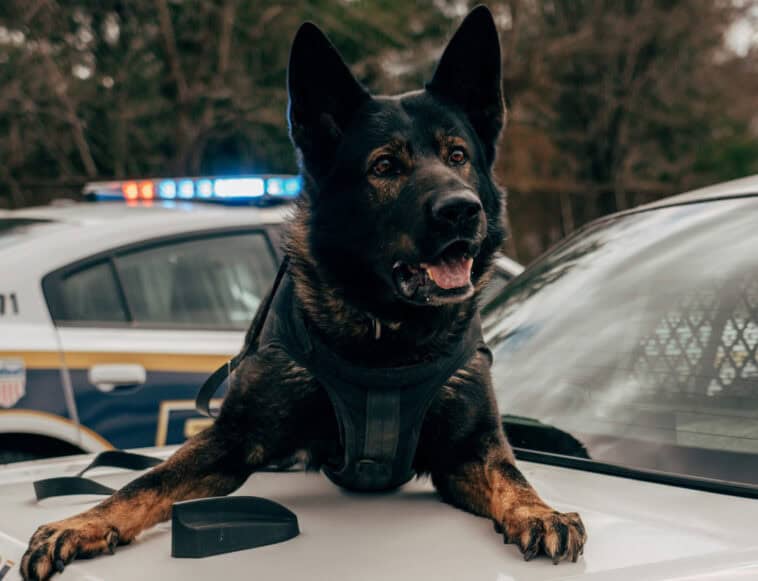
Silicon Valley has a new defense-tech obsession, and it has four legs. Warhound, a startup backed by some of the biggest names in venture capital, wants to clone and genetically edit working dogs for the U.S. military. The goal is to make them stronger performers, extend their working lives and potentially change how military dogs are bred.
The company has raised $200 million and reached a reported valuation of roughly $1.2 billion, according to the Financial Times. Among its investors is In-Q-Tel, the investment firm established by the CIA to fund technologies relevant to intelligence and national security.
Meet Warhound, the startup betting big on canine DNA
Warhound was conceived by Palmer Luckey, co-founder of defense-tech company Anduril, and Ben Lamm, CEO of Colossal Biosciences, the biotech company known for its controversial claims about bringing back extinct animals. The plan is to identify high-performing working dogs, preserve their genetic material, clone them and edit their DNA to improve traits such as longevity and performance. Anduril is also expected to supply body armor and what Warhound calls “cybernetics” for the animals.
“Man’s best friend deserves man’s best tech,” Luckey stated.
Despite helping dream up the venture, Luckey won’t hold equity in Warhound or run its operations. That responsibility falls to David Spirk, a former U.S. Marine who served as the Pentagon’s first chief data officer and later worked as a senior adviser at Palantir.
The investor list is just as notable. Alongside In-Q-Tel are Sequoia Capital, Cathie Wood’s Ark Invest, Lux Capital and Franklin Templeton.
Why the military wants genetically upgraded dogs
Beyond creating superdogs, the U.S. military has a supply problem. Most American military working dogs are bred overseas, particularly in Europe. A 2021 study by the U.S. Naval Postgraduate School estimated that around 90% of the working dogs examined in its research had been bred outside the United States. The Pentagon’s own breeding programin Texas has historically supplied only a fraction of the demand.
Warhound believes cloning and genetic engineering could help close that gap while improving the dogs’ performance and working lives.
Lamm has also framed the project as an animal-welfare effort. His argument is that too many dogs fail to complete training, and breeding animals with more suitable genetic traits could reduce that number, potentially sparing dogs and their handlers unnecessary strain.
Not Colossal Bioscience’s first rodeo
Colossal is no stranger to ambitious genetic experiments. In April 2025, the company announced that it had produced three animals it called “dire wolves” using around 20 edits to gray wolf cells. The announcement attracted enormous attention and considerable scientific criticism over the company’s claims. Warhound is now bringing that same appetite for genetic engineering into defense.
If these dogs are bred to work longer, perform better and survive more demanding conditions, the next challenge may be figuring out how to price, regulate and take responsibility for the animals those companies create.
Source: Insurance Business