

If you’ve ever found yourself wondering just how long human technology (and biology) might actually let us hang around, look no further. Because science finally has an answer for you, and the numbers are mind-blowing.
Scientists have uncovered the ultimate hard limit on human longevity, revealing that humans could theoretically live up to 190 years old. And if you think humans can still do better, then you may be right. Under the right conditions, some people could push past that and live up to a staggering 627 years old.
The silent villain behind growing old
As we get older, our bodies accumulate countless forms of biological wear and tear that we collectively bundle together and call “aging.” At the microscopic level, this includes everything from the gradual shortening of telomeres, the protective “caps” on the ends of our DNA strands, to our cells losing their ability to clear out waste and garbage.
While these biological breakdowns are tough on the body, scientists from the Skolkovo Institute of Science and Technology in Russia discovered that one specific, inevitable process will ultimately bring our lives to an end even if we manage to cure every single other sign of aging.
Enter somatic mutations
Every single time a cell divides in your body, there is a chance for tiny errors or “typos” to occur in your DNA sequence. Our cells are normally fantastic at catching and repairing these mistakes, but they aren’t 100% perfect.
Over time, these random genetic mutations accumulate. Most of these somatic mutations are harmless on their own. However, as they stack up, two major problems happen. They can trigger dangerous, cancer-causing genetic changes in the body. Let’s say we hit the jackpot and medical science figures out a way to keep cancer completely at bay, the mutations themselves eventually wear down our organs.
Once somatic mutations reach a critical tipping point, they impair standard cell function, degrade tissues, and inevitably lead to organ failure.
Modeling the ultimate biological hard limit

The Skolkovo researchers didn’t actually set out to find the hard limit of human life when they started their project. Instead, they wanted to build a model that could measure how all these different biological processes collectively contribute to aging.
During their research, they hit a glaring question. What would be the lifespan of a human who has overcome all aging mechanisms except somatic mutations?
To answer that, lead author Dr. Dmitrii Kriukov and his team constructed a model of human aging driven purely by somatic mutations to estimate how this single process gradually depletes cells across our body’s tissues.
“Our model estimates how this process alone affects lifespan by slowly depleting cells across tissues,” explains Dr. Kriukov.
The results set a strict theoretical limit on how far medical science can push human longevity.
190 years vs. the dream of immortality
If medical science invented a perfect anti-aging treatment that wiped out every hallmark of aging except somatic mutations, the researchers’ model estimates that average human lifespans would jump to between 146 and 194 years old (averaging out to roughly 150 to 190 years).
To put that into perspective, that is roughly double the current average life expectancy in the UK, which currently sits at 83 for women and 79 for men.
Bad news for longevity enthusiasts
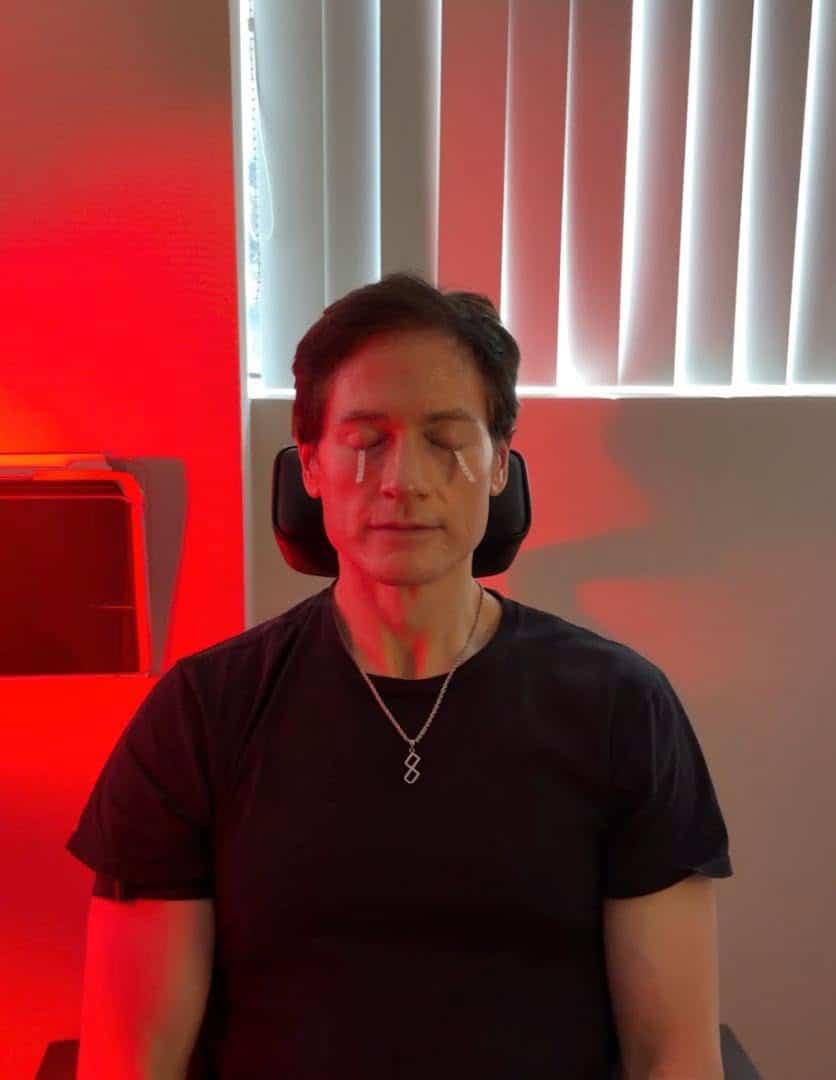
However, the research findings deliver a direct reality check to radical longevity enthusiasts and biohackers chasing literal immortality.
Take tech entrepreneur Bryan Johnson, for instance. Johnson reportedly spends $2 million a year on a hyper-intense anti-aging routine and publicly claims that “we may be the first generation who won’t die.” Meanwhile, scientists in ongoing medical trials are actively working to turn back the biological clock on damaged eye cells to rejuvenate tissue and restore vision.
While cell-rejuvenation breakthroughs are impressive, the Russian study indicates that pursuing total immortality through medical tools is essentially a dead end. Even with a hypothetical “perfect” anti-aging drug, somatic mutations form an insurmountable wall.
“It’s not a verdict of inevitability,” says Dr. Kriukov, “but it does highlight that somatic mutations, while surprisingly weak as a standalone ageing driver, may become critical when combined with other mechanisms.”
Where anti-aging treatments could actually work
While the researchers don’t expect everyday humans to start blowing out 150 birthday candles anytime soon, their data isn’t all bad news—it actually maps out where future anti-aging treatments can be most effective.
The team found that not all cells in the human body age at the same speed:
- Skin and liver cells: These cells continuously replace old cells with new ones and are capable of keeping this replenishment cycle going for an exceptionally long time.
- Brain and heart cells: Unlike skin or liver cells, heart and brain cells are largely irreplaceable. As a result, they continuously accumulate somatic mutations uninterrupted as the decades tick by.
By targeting irreplaceable tissues like those in the brain and heart, researchers believe future anti-aging therapies could focus their power where the body needs help the most. We might not live forever, but doubling our current lifespan is definitely a pretty decent compromise.
Sources: Daily Mail, Science Alert