
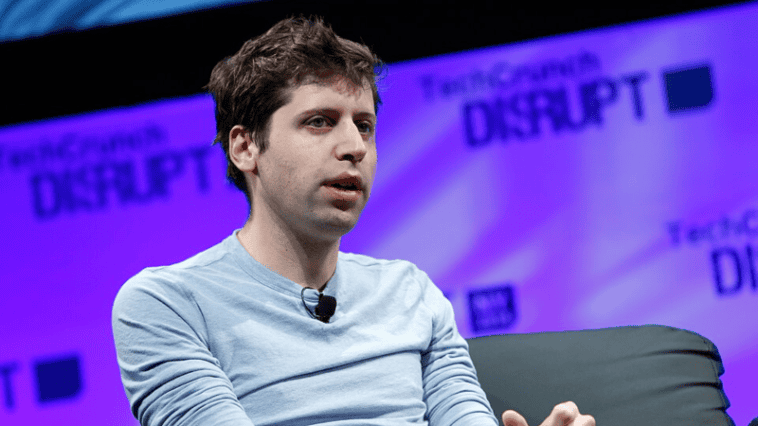
Sam Altman, CEO of OpenAI, has dropped a comparison that’s hard to swallow.
Firing off 38,000 messages to ChatGPT, he said, consumes roughly the amount of water it would take to grow one almond.
He floated the claim on the launch episode of the new weekly series Sources with Alex Heath podcast, where Heath, a tech journalist, features candid conversations with AI and tech leaders.
His other assertion is that a data center uses water just like an office building would, citing the example of water used by people running sinks, toilets, and so forth.
The math doesn’t hold water
The intended takeaway is that AI barely drinks anything or that AI uses up as many resources as any normal, everyday thing. Perhaps there’s a sliver of truth to the claim, but almost nothing solid backs the number up. Moreover, it quietly sidesteps the bigger issue at hand.
Water is the sharpest knife pointed at AI right now; naturally, as the head of the biggest generative AI platform, Altman must blunt it. The thirst of data centers is the main case against the tech he’s staked his career on, to the point that people have gotten mad enough to joke about mailing their pee to data centers.
The trouble with the almond line is that it is difficult to verify. CalMatters reports that experts say the public information on water use is so limited it’s impossible to verify Altman’s numbers.
That’s no surprise, considering how no two data centers are alike. Water use can swing wildly with factors such as outdoor temperature, the cooling setup, how long the prompt is, how hard the model has to think, or what it ultimately produces. Then there’s the fact that politicians pushing for transparency keep getting brushed off over fears of “rigid reporting requirements.”
The scale of the problem, though, isn’t really up for debate. A United Nations University Institute for Water, Environment and Health (UNU-INWEH) report projects that AI data centers’ water use will reach an amount equal to the drinking needs of 1.3 billion people in Sub-Saharan Africa by 2030, which, needless to say, is a concerning figure.
At the same time, the report makes clear that “Low carbon is not automatically low-water or low-land, and evaluating sustainability through a single metric can hide trade-offs and shift burdens onto places already facing water stress or land pressure.”
Essentially, although the almond portrays a nice, tidy picture, it begs the harder question: where the water actually comes from.
Sources: UNU-INWEH, Information Technology and Innovation Foundation, arXiv, Sources Podcast (YouTube), SFGATE, UNILAD Tech