
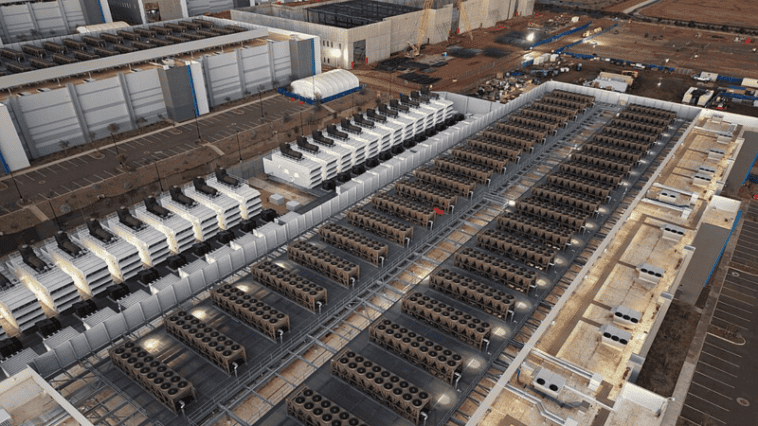
An industrial developer wants to build a data center in Hazle Township, Pennsylvania, and it’s offering every household in town $10,000 to go along with it. A lot of them are saying no.
NorthPoint Development mailed letters to the township’s 4,500 households this summer while it chases approvals for a project in the Pocono foothills, according to the Wall Street Journal. The checks could be spent on “whatever you want.” Altogether the offer comes to $45 million.
That’s real money in a place where the average household earns about $60,000. It’s six months of rent on a two-bedroom or a long stretch of groceries.
Neighbors worry about the noise and the lights. Some are also uneasy about feeding the AI boom, which they fear will wipe out jobs.
The company also plans to spend another $120 million on the township over 15 years, with some of it going toward a local police department. It sponsored free rides at the town’s Italian festival, too.
Not everyone is turning the money down. Charlie Leshko, a retired maintenance worker living in a seniors residence, said it could go toward a car or a down payment.
“$10,000 don’t come along every day,” he said. “I always wanted to have my own house.”
Hazle Township isn’t alone. A Gallup poll in May found Americans would sooner live near a nuclear plant than a data center. Texas Gov. Greg Abbott paused data center approvals, New York Gov. Kathy Hochul ordered a moratorium on large ones, and Pennsylvania Gov. Josh Shapiro banned nondisclosure agreements between state agencies and what he called “predatory” developers.
Sources: Gallup, Office of The Texas Governor, Governor Kathy Hochul, Commonwealth of Pennsylvania, NYP, WSJ