

Just when you thought your monthly streaming bill had settled, Netflix has quietly made another move — and this time, every U.S. subscriber is affected. Without much fanfare, the platform has rolled out new pricing across all its plans, with increases that may seem small at first glance but could add up faster than you expect. Keep reading to discover how much more you will actually be paying and when it will hit your account.
Netflix implements new U.S. fee structure
Netflix is once again asking its American audience to dig a little deeper into their pockets. As of Thursday, March 26, 2026, the streaming pioneer has quietly adjusted its subscription fees across the board, marking the second such increase in just over a year. While the company maintains that the hikes are necessary to fuel its ever-expanding content library, the timing may still sting for households managing multiple digital subscriptions.
The new monthly subscription fees
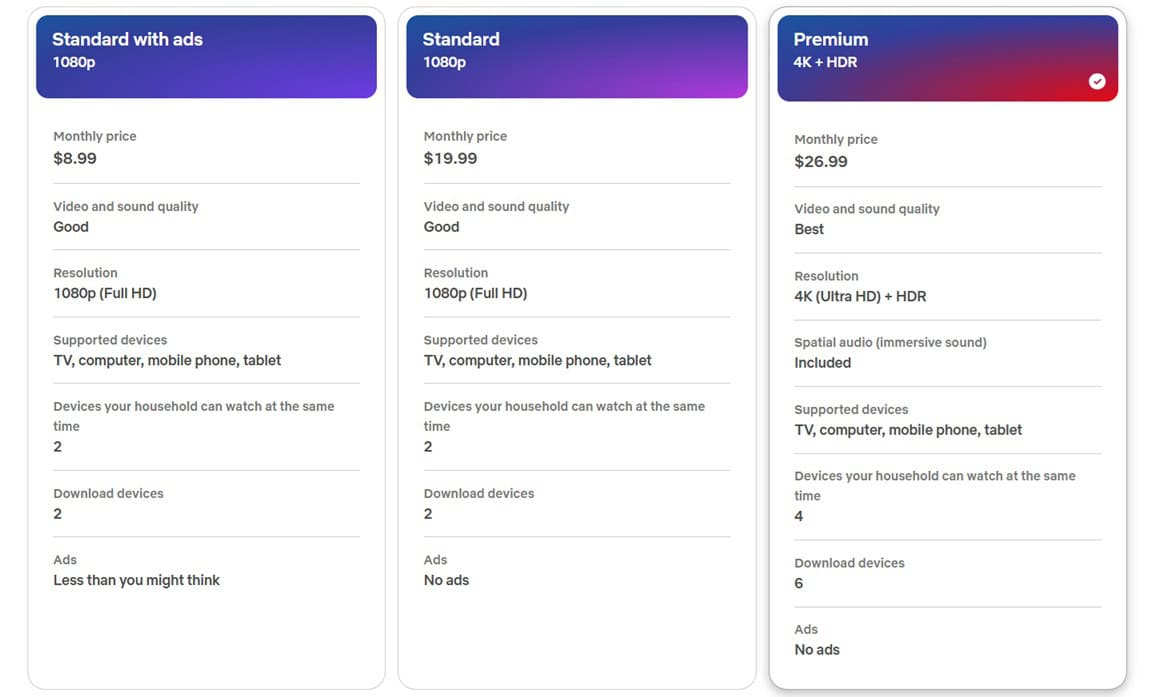
New members signing up today will see the updated rates immediately, while current subscribers can expect a 30-day heads-up via email before the new pricing hits their billing cycle. Here is how the tiers currently stand:
- Standard with Ads: Now $8.99 (previously $7.99)
- Standard (Ad-Free): Now $19.99 (previously $17.99)
- Premium (4K/Ultra HD): Now $26.99 (previously $24.99)
Here’s a look at how the three plans compare in the image below:
Previous price hikes
To understand how we reached these prices, we have to look back at the January 2025 hike. Before that shift, the ad-supported tier was still a modest $6.99, and the Premium plan sat at $22.99. That 2025 adjustment was particularly notable because it was the first time Netflix raised the price of its “budget” ad-tier since its inception.
Before the 2025 increase, Netflix had actually maintained price stability for nearly three years for its Standard tier. However, once the floodgates opened in early 2025, the company shifted to a more aggressive annual cadence. By comparing the two most recent hikes, it’s clear that Netflix is no longer afraid to test the ceiling of what users are willing to pay for 4K streaming — a luxury that has climbed nearly $7 in total since 2023.
Why your Netflix bill is climbing
Netflix’s latest price hike isn’t just a random corporate cash grab; it’s a calculated pivot toward a much broader entertainment identity. By framing these increases as a reinvestment strategy, the company is signaling that your monthly fee now covers far more than just scripted series. With a massive $20 billion budget earmarked for original productions, Netflix is pivoting toward a one-stop-shop model that includes high-stakes live events, an expanding library of video podcasts, and a burgeoning gaming division. This aggressive self-funding comes on the heels of Netflix walking away from a massive $83 billion bid to acquire Warner Bros., choosing instead to bet on its own internal ecosystem rather than a massive industry merger.
Despite the subscription creep that has seen fees rise twice in a short window, Netflix remains the gold standard for retention. While other platforms struggle with “churn” — users who cancel as soon as a show ends — Netflix subscribers are remarkably loyal, consistently giving the service the lowest cancellation rate in the business. It seems that for most viewers, the convenience of the interface and the breadth of the library still outweigh the sting of a few extra dollars a month.
The industry-wide great upsell
If you feel like your digital wallet is being squeezed from all sides, you aren’t imagining it. This trend isn’t exclusive to Netflix, because the era of the cheap streaming bundle has officially ended. Across the board, major players are tightening their belts and testing consumer limits.
From Disney+ and Hulu to Max, Peacock, and Apple TV+, virtually every major streamer has bumped its monthly rates within the last year. Perhaps most frustrating for viewers is the trend of “de-tiering.” For example, Prime Video recently moved to charge a premium for ad-free viewing while simultaneously stripping 4K/Ultra HD access from its base offering. It seems that the industry has shifted its focus from gaining new users at any cost to squeezing maximum profit out of its existing base.
For the modern viewer juggling four or five different apps, the math is changing. What once felt like a bargain compared to traditional cable is now beginning to mirror those old, bloated bills. As 4K quality and ad-free experiences become luxury add-ons rather than standard features, streamers are forcing a tough choice: pay a premium for the experience you’re used to, or accept a downgraded version of the service you love.
Source: Tom’s Guide