
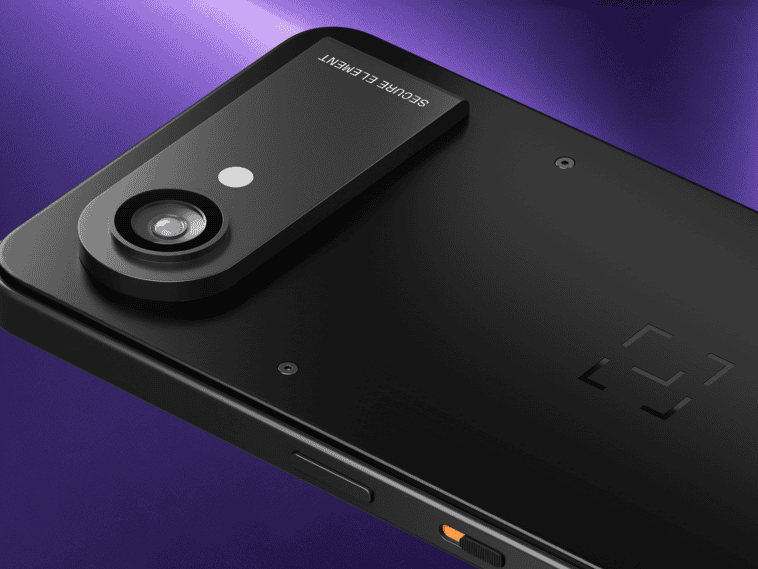
Your phone can hold your money, private messages, passwords and AI assistants that act on your behalf. That is convenient until something gets access that shouldn’t. Ledger’s answer is Ledger Atom, a security device designed to protect sensitive digital activity while still running everyday apps.
Announced in Paris on October 15, the device combines Android’s app ecosystem with Ledger’s security-focused operating system. It is designed to let you use familiar apps while moving sensitive actions, such as approving crypto transactions or authorizing an AI agent, into a separate, protected environment. And it comes with a physical privacy switch that cuts power to its cameras and microphone at the hardware level.
Your phone does a lot
Ledger is pitching Atom as a companion to your smartphone, not a replacement. The idea is to give your most sensitive digital activity its own security layer instead of trusting your everyday phone to handle everything.
That concern isn’t coming out of nowhere. Ledger cites Google’s threat intelligence research on the growing use of zero-day vulnerabilities, FBI cybercrime figures and crypto security data to make its case for stronger protection. According to the company, more than $11 billion was lost to cybercrime in 2025, while compromises involving crypto software wallets reached 158,000 cases.
Ledger Atom is built around two operating systems. Android open source gives it access to everyday apps, while Ledger OS handles security-sensitive operations using a secure element chip. A field-programmable gate array (FPGA) helps bridge the two environments, and a bar at the top of the screen tells users which mode they’re in.
In Standard Mode, you can use ordinary apps. When it’s time to approve a sensitive action, Secure Mode provides a separate environment intended to prevent everyday apps from accessing or interfering with the approval process.
The AI agents can make suggestions but users still approve the actions
One of Atom’s more interesting features is its planned integration with OpenClaw, an AI agent platform. AI agents can handle tasks on a user’s behalf, but giving them access to accounts, identity information or payment tools creates another problem of what happens when an agent makes a mistake or gets manipulated.
Ledger’s Agent Intent system is designed to keep an agent from holding a user’s private keys. An agent can read information and propose an action, but sensitive actions must be physically approved on a Ledger Atom or compatible Ledger signer before they execute. The company says Agent Intent is available now for compatible Ledger signers, with direct OpenClaw integration announced alongside Atom. OpenClaw will also come preinstalled on Atom.
A kill switch for cameras and microphones
The physical privacy switch is one of Atom’s easiest features to understand. It cuts power to the cameras and microphone at the circuit level, rather than merely telling software not to use them. According to Ledger, those components are also automatically powered down in Secure Mode, regardless of the switch’s position.
Atom also supports GPG/OpenPGP encryption for messages. The idea is to encrypt a message before it passes through the messaging app, so that app never sees the readable version. Decryption takes place on another Ledger Atom in Secure Mode.
Built for crypto, with a post-quantum pitch
Ledger is also positioning Atom as its most capable signing device yet. Users will be able to initiate transactions through Ledger Wallet and approve them in Secure Mode on the device’s Trusted Display. The platform, according to Ledger, will support buying, selling, swapping, and earning yield through third-party services available in Ledger Wallet.
Kraken is exploring support ahead of Atom’s launch, while Solana Mobile has announced Ledger as its first hardware expansion partner. The Solana Seeker app is planned to come preinstalled, giving users access to Solana apps and services, subject to availability and the necessary certifications.
The device is also described as quantum-ready, with post-quantum cryptography based on NIST standards integrated into its security architecture. Ledger has also revealed that Atom will add anti-tampering measures to its packaging and hardware, including ways to detect if the enclosure or display has been opened.
The $849 question
Ledger Atom reservations are open for a limited Founder’s Edition run at $849, with a $100 fully refundable deposit. The company says reservations include a $50 Bitcoin voucher and three months of Ledger Recover at launch. The standard price after launch is expected to be $899.
The device is expected to become available in summer 2027, subject to product certifications, including FCC certification in the United States. That means buyers are reserving a product that is still months away from shipping, and some features or third-party app availability may depend on approvals and partnerships being finalized.
The important question is whether people want a dedicated device for approving transactions, encrypting messages and controlling AI agents badly enough to pay smartphone-level money for it. Ledger is betting that, as AI tools gain more access to our digital lives, a physical approval step will be more of a necessity.