
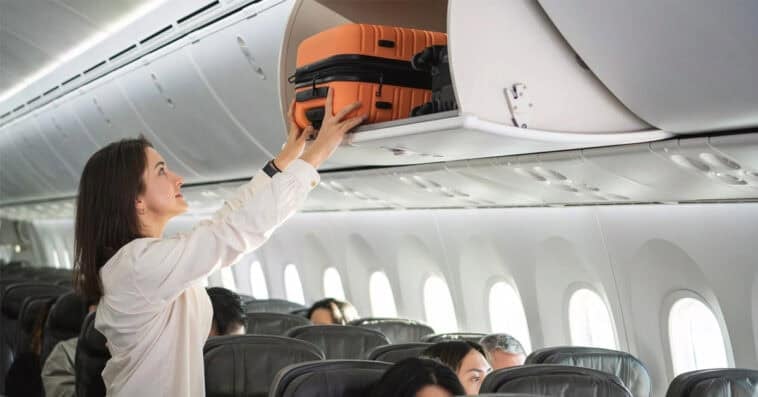
A budget airline’s promise of cheap fares is facing backlash after travelers learned that even overhead bin space could soon come with an extra charge. Jetstar is introducing a new policy that turns a once-standard part of flying into a paid add-on, leaving many passengers questioning how far airlines will go to increase fees. As frustration grows online, travelers are demanding answers about the new baggage rules, who will be affected, and what this change could mean for the future of low-cost air travel.
Jetstar’s new carry-on rules put a price on overhead storage
Budget airline travel has long been built around low-ticket prices and optional extras, but Jetstar is adding a new item to the list of services passengers may need to pay for: access to the overhead bins.
The Australian low-cost carrier is introducing Priority Carry-on, a prepaid add-on that gives passengers the ability to store a larger carry-on bag in the overhead compartment while also receiving early boarding privileges.
Passengers who do not purchase the option will still be allowed to bring smaller personal items, such as purses, laptop bags, and backpacks, as long as they fit under the seat in front of them.
Jetstar CEO Stephanie Tully said the change is designed to improve the boarding process and reduce delays.
“By giving customers an underseat bag with the option to add Priority Carry-on, we can make better use of overhead locker space, streamline boarding and help more flights depart on time,” she said.
The airline said the policy was developed after feedback from both passengers and crew members who reported frustrations caused by crowded overhead compartments and the process of weighing bags at boarding gates. Jetstar believes the new system will create a smoother experience by managing cabin baggage more efficiently.
Travelers and lawmakers push back
While Jetstar says the new fee is meant to improve efficiency, the announcement has triggered criticism from some travelers and Australian officials.
Opposition senator Bridget McKenzie criticized the move on social media, describing the fee as a “cash grab” and accusing the airline of looking for another way to collect additional revenue from passengers.
Australia’s Transport Minister Catherine King has also weighed in, saying travelers should clearly see all potential fees before purchasing tickets to avoid unexpected costs at the airport.
King acknowledged Jetstar’s argument that the change could help keep base fares affordable but said the airline would need to prove that passengers benefit from the new approach.
What passengers need to know
Jetstar says the updated carry-on rules will apply to flights departing from February 2, 2027. Under the new system, passengers traveling with only a small personal item that fits beneath the seat in front of them can continue flying without paying any additional carry-on fee.
However, travelers who want to bring a larger cabin bag that requires overhead storage will need to purchase Priority Carry-on, a paid add-on that includes overhead bin access and priority boarding. Prices will start at A$25 (about US$17.6), added on top of the ticket fare and any other optional services selected during booking.
The new policy also changes baggage allowances. Passengers who pay for Priority Carry-on will be able to bring overhead bags weighing up to 22 pounds, an increase from the previous 15-pound limit. At the same time, Jetstar says the updated system will eliminate the need for some gate bag-weighing procedures, which the airline believes will help speed up boarding.
For travelers, the trade-off is clear: they may receive more flexibility with cabin baggage weight limits and a smoother boarding process, but access to overhead storage will no longer be included for free.
The growing cost of budget air travel
Jetstar’s latest policy reflects a broader trend in the low-cost airline industry, where carriers increasingly rely on extra fees for services that were once included in ticket prices.
Budget airlines commonly generate additional revenue through charges for checked luggage, larger carry-on bags, seat selection, priority boarding, and other optional services. Critics argue that these add-ons can make advertised fares appear cheaper than the actual cost of a trip.
Consumer advocates have also raised concerns that travelers may not fully understand the final price of a flight until they reach the checkout stage, when multiple fees are added.
A new test for budget travel
The debate surrounding Jetstar’s policy comes down to a familiar question for budget travelers: Is the low advertised fare still a good deal once all the extras are added?
Supporters say optional fees allow airlines to keep base prices lower by letting passengers pay only for the services they need. Critics argue that essential travel features are slowly becoming hidden costs.
As Jetstar moves forward with the new baggage system, passengers will be watching closely to see whether the change delivers a smoother flying experience — or simply makes budget travel more expensive.
Source:
Briefs Finance