
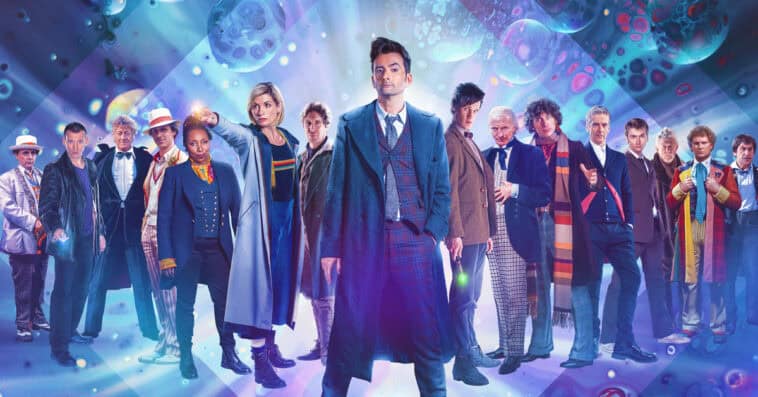
Has the TARDIS reached the end of the line? Doctor Who fans are growing increasingly concerned after a series of surprising developments rocked the long-running sci-fi franchise. With the show’s annual Christmas special officially scrapped and acclaimed showrunner Russell T Davies stepping away from the series once again, speculation is swirling about the future of one of television’s most beloved programs. As rumors of cancellation spread across social media, many are asking the same question: Is Doctor Who facing its biggest crisis yet, or is there more to the story than fans realize?
The truth behind the canceled Doctor Who Christmas special
Concerns about the future of Doctor Who intensified this week after the BBC confirmed that a previously announced Christmas special will no longer move forward. The festive episode, which had been unveiled in 2025 as a bridge between seasons, was originally intended to keep the iconic sci-fi franchise on screens while plans for its next chapter took shape.
Instead, the broadcaster has opted to focus its resources on developing the show’s long-term future. The BBC revealed that it is now inviting production companies to compete for the opportunity to co-produce future installments of the series, signaling a significant shift behind the scenes.
According to a BBC spokesperson, this business move shouldn’t be mistaken for a white flag. Rather, it “underpins the BBC’s continued commitment to Doctor Who.”
In a statement, the corporation acknowledged that the move may disappoint fans but emphasized that it was made with the show’s longevity in mind. “This decision was not taken lightly, and we know it will be disappointing for fans,” the BBC said. “But in order to set the show up for future series, it was decided that, rather than bridge the gap with a one off special, we are choosing to push forward to invest in the long-term future of the show which ensures that when the Tardis lands once more, it does so in all its glory.”
Russell T Davies bids farewell once again
Adding to the uncertainty surrounding the franchise is the departure of Russell T Davies, the acclaimed writer and producer who played a pivotal role in Doctor Who’s modern success.
Davies, who famously revived the series in 2005 after its 16-year television absence, returned as showrunner in 2022 to oversee a new era of adventures that included anniversary specials and Ncuti Gatwa’s tenure as the Doctor.
Announcing his departure on Instagram, Davies sought to reassure fans that the show’s future remains bright despite the major transition. “And so [it’s a] GOODBYE from me to Doctor Who but HELLO to a big new future for the show, as the BBC announces it’s putting the show out to tender,” he wrote on Instagram.
Davies also addressed speculation surrounding the canceled Christmas episode, revealing that it had been conceived as a contingency plan while the franchise’s future remained uncertain. “We only cooked that up to guarantee a future when no one knew what would happen, but now we do know, there’s no need for it,” he explained. “You’ll have to wait a bit longer for new Doctor Who… but you’ll be waiting for more Doctor Who than a one-off. So it’s worth it!”
The departing showrunner further clarified that development on the special never progressed beyond the announcement stage. “For the record: there was no script, I never wrote it, and no actor was ever approached to play the next Doctor,” added Davies.
The end of the Ncuti Gatwa era
The latest developments arrive just months after Doctor Who concluded a landmark chapter in its history.
The most recent season aired in May 2025 and marked the end of Ncuti Gatwa’s run as the Time Lord. After starring in two seasons, Gatwa exited the role in a dramatic finale that left viewers with more questions than answers.
The episode concluded with the Doctor’s regeneration and the unexpected return of Billie Piper, who became a household name among fans for portraying Rose Tyler alongside Christopher Eccleston and David Tennant during the show’s revival era.
Her surprise appearance immediately sparked speculation that she could become the next Doctor. However, the BBC declined to confirm her role, stating only that “just how and why she is back remains to be seen.”
That mystery remains unresolved, leaving fans eagerly awaiting official word on who will pilot the TARDIS next.
A new production era begins
Doctor Who has undergone significant changes in recent years. Since 2023, the series has been produced in partnership with Cardiff-based company Bad Wolf, while a separate agreement with Disney+ helped fund and distribute the show internationally.
The Disney partnership brought Doctor Who to a wider global audience, but the arrangement concluded in 2025 after 26 episodes. The entertainment giant is no longer involved with the franchise, prompting another period of transition for the long-running series.
The BBC stressed that Doctor Who remains a key part of its programming strategy and that the decision to open future production opportunities to competitive tender reflects both regulatory requirements and the broadcaster’s ongoing commitment to the show.
Meanwhile, a previously announced Doctor Who animated series aimed at younger audiences on CBeebies remains in active production, ensuring that the Whoniverse will continue expanding even as the flagship drama undergoes its transformation.
More than six decades of time travel
Few television properties can match Doctor Who’s longevity. First debuting in 1963, the series ran for 26 years before ending in 1989. Its return in 2005 under Davies sparked a remarkable resurgence that transformed the show into a global phenomenon.
Over the past two decades, actors including Christopher Eccleston, David Tennant, Matt Smith, Peter Capaldi, Jodie Whittaker, and Ncuti Gatwa have each brought their own interpretation to the role of the Doctor. Behind the camera, showrunners such as Davies, Steven Moffat, and Chris Chibnall have guided the franchise through multiple creative eras.
Now, with Davies stepping aside once again and the BBC preparing for a new production model, Doctor Who finds itself at another crossroads. Yet if the show’s six-decade history has proven anything, it is that regeneration has always been part of its DNA.
As Davies himself put it, the future remains wide open: “Will they keep the theme tune? Will they lose the blue box? Will they bring back the Drahvin?! It’s all up for grabs, which is so Doctor Who, exciting and unpredictable and new! Here comes the future.”
Source:
BBC