
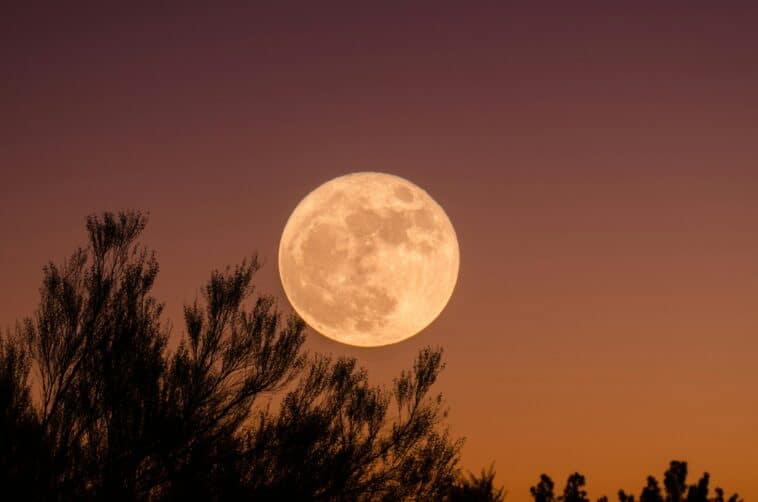
If you are looking for an excuse to bundle up and step outside after dark, the night sky is putting on quite a show. November’s Full Beaver Moon is arriving right before Thanksgiving, and it happens to be a supermoon that kicks off a run of three consecutive supermoons spanning November, December and January.
Leading with the November Beaver Moon
November’s full moon is known as the Beaver Moon, arriving just days before the Thanksgiving holiday. In case you are wondering how November’s full moon gets its quirky nickname, the story is pretty much obvious from the name. According to early Native American, Colonial American and European folklore, traditional names applied to the entire lunar month rather than just a single night.
This is the exact time of year when beavers finish laying up sufficient food stores and take shelter in their lodges for the long winter ahead. During the North American fur trade, it was also the prime season to trap beavers for their thick, winter-ready pelts.
When to look up for peak brightness
While the moon officially reaches peak illumination on Tuesday, Nov. 24 at 9:53 A.M. EST, you do not need to set a morning alarm to enjoy it. Because it appears nearly full on the surrounding evenings, stargazers can catch the bright display tonight, Nov. 23, as well as Tuesday evening on Nov. 24. Checking your local moonrise time will give you the best shot at seeing it climb above the horizon.
Tips for watching it rise
To get the best view, find a spot with a clear view of the eastern horizon and check your local moonrise time so you do not miss it. Arriving a little early is a smart move, and while the moon is easily visible to the naked eye, bringing binoculars can make the view even better.
Other traditional names for November’s moon
Other traditional names have also captured the seasonal shift toward colder weather. According to folklore, the Tlingit called it the Digging or Scratching Moon for animals foraging for nuts and bears digging winter dens. The Dakota and Lakota called it the Deer Rutting Moon while the Algonquin used Whitefish Moon. The Cree, Assiniboine and Anishinaabe called it the Frost Moon or Freezing Moon.
Why supermoons shine brighter and bigger
A supermoon happens when the moon reaches perigee, which is when the moon is at its closest point to Earth in its orbit. Because it sits closer than usual, it can appear up to 8% larger in diameter and 16% brighter than a typical full moon.
Extra perigee perks and tides
Being near perigee and full also gives coastal waters a gentle boost, creating modest perigean spring tides or king tides. Whether you step out tonight, tomorrow night or Wednesday evening, these evenings will make for great skywatching moments to enjoy with your family, friends or even neighbors.
Sources: People, The Old Farmer’s Almanac