
If you think archaeologists need actual bones or teeth to uncover the secrets of ancient humans, you may have to check that thought because DNA testing has evolved more than you know. Scientists are getting astonishingly good at reading history straight from the ground beneath our feet, and a fascinating new breakthrough just proved we do not need physical fossils to piece together our deep past.
Unlocking genetic secrets from plain sediment
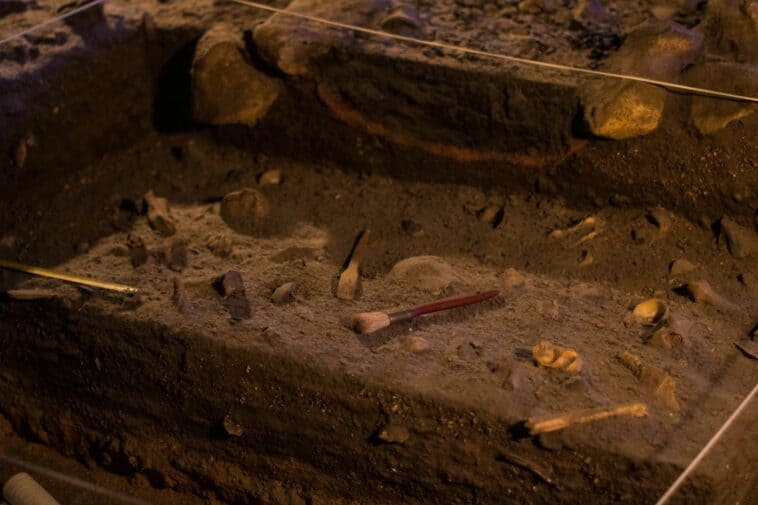
In a study published in Science Advances and led by researchers at the University of Vienna, experts successfully extracted ancient human nuclear DNA from a tiny scoop of cave dirt. The sediment sample, which weighed no more than a few grains of rice, was collected from Spain’s El Mirón Cave.
The wild and most interesting part is that the specific layer of dirt where the sample was found contained zero human bones, teeth or fossils. Instead, the genetic material was likely shed thousands of years ago from the skin, hair or blood of ancient people who took shelter in the cave roughly 22,000 years ago during the absolute coldest stretch of Europe’s last ice age.
To pull off this genetic miracle, the team had to sift through more than a billion DNA fragments and sequence the tiny dirt sample roughly 100 times to isolate genuine human traces from modern contamination.
What the cave dirt reveals about Ice Age humans
Because skeletons from this particular era are exceptionally rare, this sedimentary DNA (or sedaDNA) effectively doubles the available genetic evidence for researchers. Unlike mitochondrial DNA that only tracks maternal lines, nuclear DNA comes from both parents, giving scientists a much clearer look into ancient lineages.
The findings revealed that the DNA came from a mix of individuals, showing more male traces than female. The genetic data suggests these cave inhabitants belonged to a western ancestry group characterized by dark skin, hair and eyes.
Rewriting the story of ancient European populations
When lead author Pere Gelabert and the team compared the El Mirón nuclear DNA to older European samples—like a 31,000-year-old French individual and a 25,000-year-old tooth from northern Spain—they noticed something unexpected and fascinating at the same time. While those older remains showed signs of eastern ancestry, the 22,000-year-old cave dirt sample displayed strictly western lineage traits.
This key detail argues against any major population replacement in southwestern Europe between 30,000 and 20,000 years ago, pointing instead to a continuous local population. It turns out our ancient ancestors left their stories scattered in the soil.
SedaDNA, game changer
SedaDNA is completely transforming archaeology and changing how scientists study deep history in several major ways:
- Archaeologists can now extract ancient human genetic material straight from plain cave dirt without fossils or human remains.
- Because human skeletal remains from certain periods, like the last ice age, are rare, analyzing sediment effectively doubles the available genetic evidence for researchers.
- The fact that experts are no longer strictly limited by a patchy fossil record opens up new pathways to study how ancient humans lived as a society.
- SedaDNA brings a new level of processual research to modern archaeology by offering insights into ancient mobility, diets and lineages directly from the soil.
As archaeologists continue to expand their research, sedaDNA will be applied rapidly across diverse archaeological sites, providing deeper insights into ancient migrations, diets and family histories without ever needing a physical fossil.
Sources: ScienceAlert, Around Prague