
Archaeologists in Egypt have found a bronze signet ring engraved with a depiction of the long-lost Lighthouse of Alexandria, also known as the Pharos, one of the Seven Wonders of the Ancient World.
The ring turned up during underwater excavations at Antirhodos, a sunken island off Egypt’s Mediterranean port city of Alexandria that once held a royal palace visited by Mark Antony and Cleopatra.
The European Institute for Underwater Archaeology, which ran the dig with Egypt’s Ministry of Tourism and Antiquities, calls the ring the “first of its kind known to exist.” Franck Goddio, the institute’s founder, said in a statement that finding it in “the legendary palace of the island of Antirhodos, that once upon a time was a center of power” adds to its importance.
The lighthouse, called Pharos after the island it stood on, was built in the third century B.C.E. and stood somewhere between 330 and 430 feet tall. At the time, only the Great Pyramid of Giza was taller. It guided ships past a dangerous sandbank along Egypt’s coast for more than a thousand years until earthquakes knocked it into the sea in the 14th century.
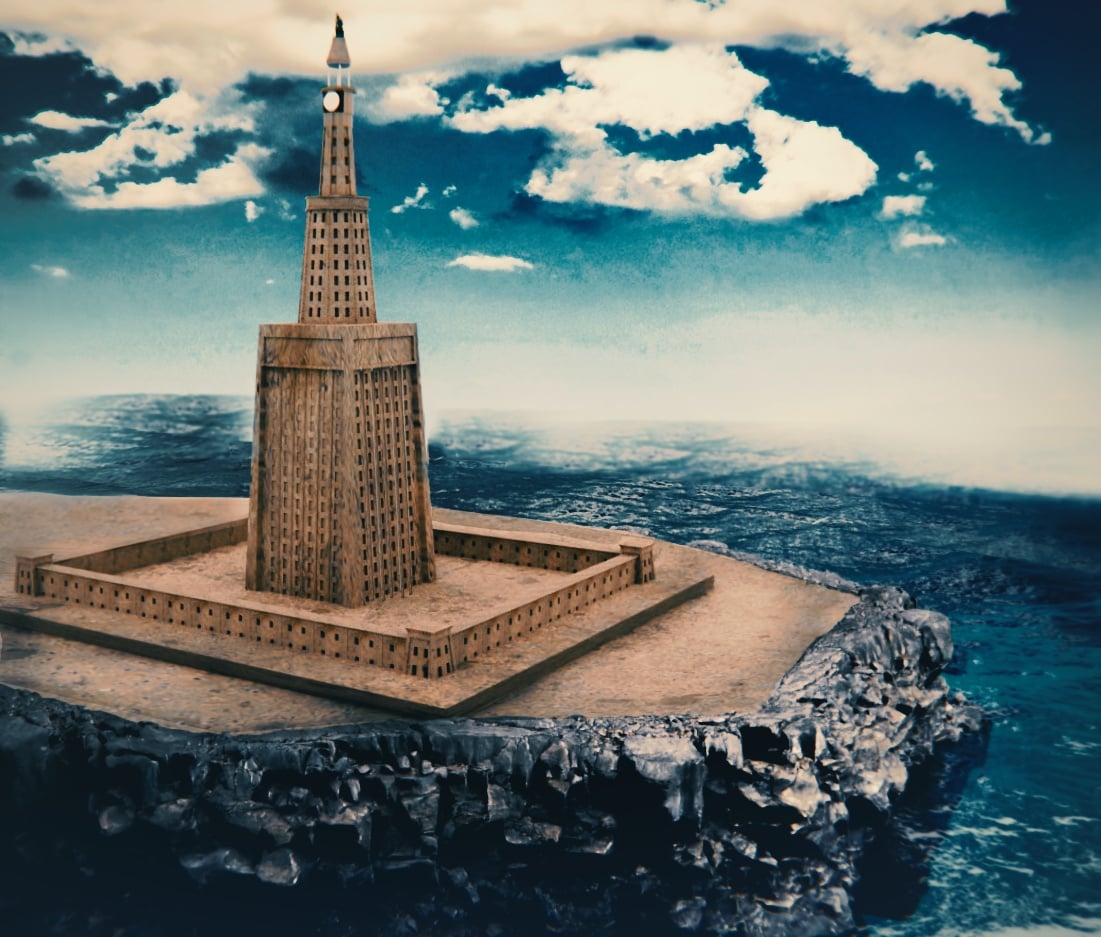
The image engraved on the ring looks much like the version stamped on Egyptian coins from the second century C.E. The coins show the lighthouse rising in three levels, with a square base, an eight-sided middle, and a round top. Because written accounts from the period tend to contradict each other, the coins have been historians’ best reference.
Officials have not assigned the ring a precise date or identified its owner, so the similarity to the coins does not prove it belongs to the same period.
In ancient Egypt, officials used signet rings to sign legal documents, and owning one was a sign of status. Goddio’s team thinks Antirhodos may have housed offices involved in running the lighthouse.
Other finds from the site, including oil lamps, amphorae, tableware, and pieces of glass dating from the fourth century B.C.E. to the fourth century C.E., underscore the island’s long administrative and residential use.
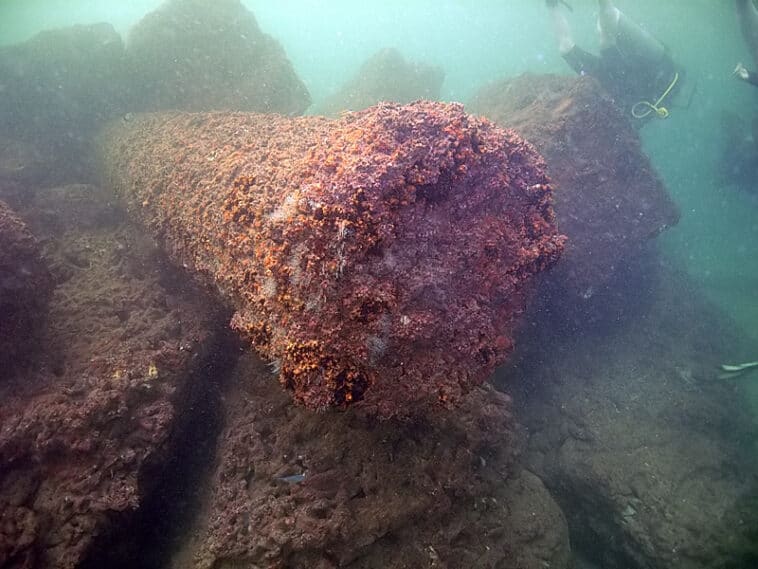
Very little of the actual lighthouse itself survives. Most of what’s left is stone blocks and the metal clamps that once joined them, spread across the seabed at its original site off Pharos.
Sources: Franck Goddio, Sada Elbalad English, Businesswire, Smithsonian Magazine