
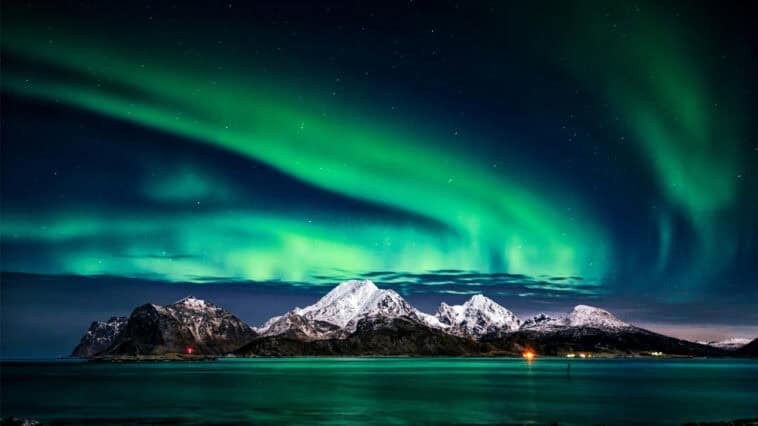
A powerful solar storm could give skywatchers across 10 U.S. states a chance to witness the breathtaking northern lights, with the colorful display potentially appearing farther south than usual. The National Oceanic and Atmospheric Administration (NOAA) forecasts increased aurora activity, raising hopes for a spectacular show after strong geomagnetic storm conditions over the weekend. But where are the best chances of seeing the Aurora Borealis, and what should you do to catch a glimpse of the glowing sky? Read on to discover which states could get a front-row view and how to improve your chances of spotting this dazzling natural phenomenon.
Which states could see the Northern Lights?
Skywatchers in several northern U.S. states may have a chance to see the aurora borealis on Monday night, October 12, according to NOAA. The forecast points to areas near the Canadian border, although visibility will depend on local conditions.
The potential viewing areas include northern Washington, northern Idaho, most of Montana, nearly all of North Dakota, much of Minnesota, northern Wisconsin, and Michigan’s Upper Peninsula. Parts of northern South Dakota and northern Wyoming could also fall within the forecast viewing zone.
Alaska has an even stronger outlook, with NOAA indicating a high likelihood of aurora activity across much of the state.
However, being in the forecast area doesn’t guarantee a clear view. Cloud cover, local light pollution, and changing aurora conditions can all affect whether observers get to see the colorful display.
How to get the best view of the Aurora Borealis
The right location can make a big difference when trying to spot the northern lights. NOAA experts recommend heading as far north as possible and choosing a spot with an unobstructed view of the sky.
For the best chance of seeing the aurora, consider these tips:
- Find a dark location: Get away from city lights, streetlamps, and other sources of artificial illumination that can make the display harder to see.
- Look toward the north: Choose a vantage point with a clear view of the northern horizon, particularly if you are watching from the southern edge of the forecast area.
- Check the moon and weather: Dark skies generally offer better viewing conditions, so nights without a bright full moon can be more favorable. Clear skies are also essential.
- Stay out late: The hours before and after midnight are generally good times to watch for aurora activity, although the display can appear at other times.
The time of year can also influence the chances of seeing the northern lights. Geomagnetic activity often increases around the spring and autumnal equinoxes, which occur in March and September, respectively. These seasonal patterns can create additional opportunities for skywatchers, though they do not guarantee a stronger display on any particular night.
Can you photograph the Northern Lights with a smartphone?
You do not necessarily need an expensive camera to capture the aurora borealis. According to a photographer interviewed by National Geographic, smartphones can produce impressive northern lights photos when used with the right settings and equipment.
If you plan to photograph the display, a few adjustments can help improve your results:
- Enable night mode: This setting allows the camera to collect more light, helping reveal colors and details that may be difficult to capture in dark conditions.
- Turn off the flash: A phone’s flash will not illuminate the distant aurora and can create unwanted light in the foreground.
- Use RAW format if available: RAW images preserve more image information than standard compressed photos, giving you greater flexibility when adjusting brightness, color and contrast later.
- Keep your phone steady: A tripod or another stable surface can help prevent blur during longer exposures.
Patience is also important. The aurora can change in brightness and shape from one moment to the next, so take several photos and experiment with different exposure settings if your device allows it.
With a dark viewing location, clear skies, and a little preparation, observers in the forecast area may have an opportunity to witness one of nature’s most striking light displays. Checking NOAA’s latest aurora forecast before heading outside can help you decide when and where to look.
Source:
Forbes