
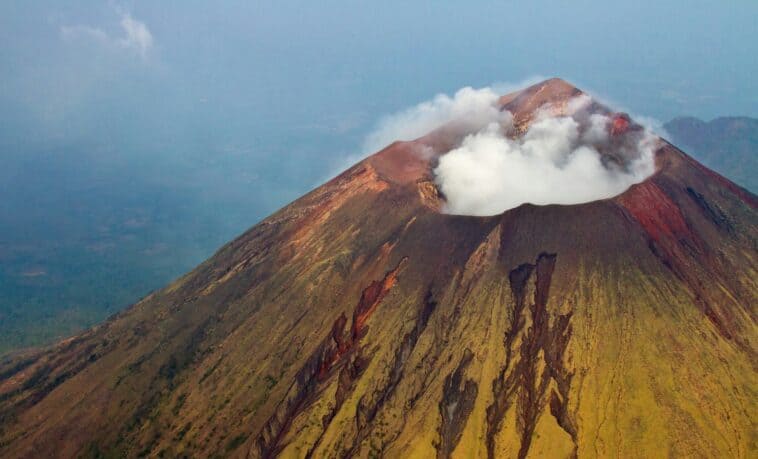
A volatile volcano in Nicaragua is stirring deep below the surface, and scientists are keeping a close eye on its complex underground plumbing. Masaya volcano, famous for hosting a fiery lava lake nicknamed the “Mouth of Hell,” is actively refilling with magma.
Because the active caldera sits just 20 kilometers (12 miles) from Managua, Nicaragua’s capital, roughly 2 million people and thousands of monthly tourists are living right near this fiery giant.
Giving the “Mouth of Hell” a satellite checkup
To figure out what was brewing underground, researchers from Pennsylvania State University led by geoscientist Lizzie Johnson analyzed Sentinel-1 satellite radar images taken every 12 days over a six-year period from 2018 to 2024. By tracking minor shifts on the volcano’s surface, the team mapped out the movement of molten rock hidden far beneath.
Their findings, published in Geophysical Research Letters, revealed a fascinating two-stage shift in the Masaya Central Reservoir, located just north of the active Santiago crater:
- Deflation (2018–2022): The ground shifted about 3 centimeters (1.2 inches) away from the satellite, indicating that the earth was sinking as magma drained away.
- Inflation (2022–2024): The ground began rising again, signaling that fresh magma is moving in and replenishing the subterranean reservoir.
A complex underground plumbing system
While the main reservoir was busy refilling, the satellite data picked up something else intriguing. The area directly surrounding the Santiago crater continued to sink across the entire six-year study.
According to the team, this independent movement points to a second, shallower magma chamber lurking about 200 meters (656 feet) below the surface that was draining while the deeper chamber inflated. This proves Masaya’s internal network is far more complex than a single pool of lava.
Should locals be worried?
Masaya has a history of moving between gentle Hawaiian-style lava flows and explosive eruptions. While it hasn’t produced a major lava flow since 1772, it has triggered several small explosions over recent decades, along with persistent degassing that spews sulfur dioxide and causes acid rain.
The good news? The researchers emphasize that these underground movements do not suggest any imminent threat or cataclysmic eruption for the surrounding community. We don’t need to fear the “Mouth of Hell” blowing its top anytime soon.
However, long-term monitoring remains essential so scientists can track these subterranean shifts and help keep nearby residents safe.
Sources: New York Post, ScienceAlert