
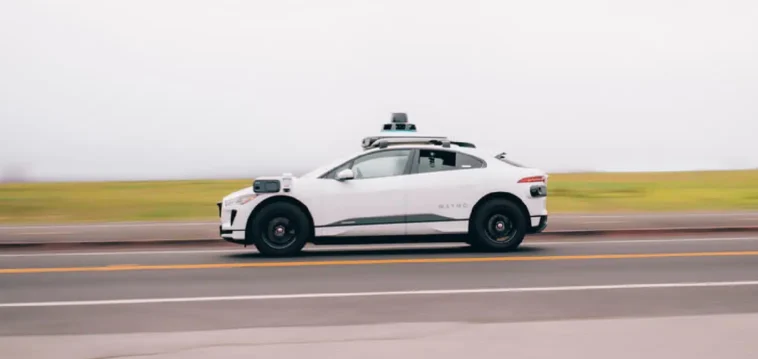
Americans cannot buy Chinese electric cars as a result of high tariffs and security restrictions aimed at Chinese tech. Waymo, however, has been importing them at the Port of Los Angeles by the thousands.
The vehicles in question, the Zeekr CM1e, are small electric vans that Waymo calls the Ojai, and they are built by a subsidiary of China’s automotive brand, Geely Auto.
Since 2024, more than 3,200 of them have come through the port, over 2,600 arriving this year alone, according to U.S. Customs Bills of Lading data compiled by the trade research firm ImportGenius. It’s worth noting that Waymo is not named on the paperwork, but Zeekr has no other U.S. partner, making the robotaxi company the almost certain destination.
A pricey loophole
The tariff on Chinese-built EVs currently sits at 127.5%. At the CM1e’s $39,000 cost in China, that would push the cost of each imported van to nearly $89,000 before Waymo bolts on its autonomous driving hardware, which alone probably runs past $10,000.
These economics explain why the Ojai caught the industry off guard. When Waymo began deploying the periwinkle-colored vans in Los Angeles and San Francisco in late May, saying only that it had “more than 100” on the road, most observers figured the fleet would top out under 1,000.
Waymo now confirms that it is currently operating over 300 Ojais across its early access service areas in San Francisco, Los Angeles, and Phoenix. The company is already active in 11 cities so far with plans to scale the vehicle as a central component of its expansion into dozens of new cities.
The Arizona assembly line
There’s a second hurdle beyond cost. To satisfy US security rules aimed at Chinese firms, the Zeekrs arrive stripped of their sensors and computing systems. Waymo installs all of that tech at its plant in Mesa, Arizona.
“The technology that collects data and makes our vehicles autonomous—the software, sensors, and computing systems—is developed in the US. Waymo installs the autonomous driving technology on stripped-down, disconnected OEM-provided vehicles in our Arizona manufacturing facility,” Waymo spokeswoman Sandy Karp told PCMag.
The arrangement dates to late 2021, well before the tariffs landed. At the time, the van was styled in Sweden with Geely-backed Volvo Cars.
That early commitment is paying off as Waymo races to expand. Its fleet stood at around 3,900 units last month, mostly dominated by Jaguar I-Paces, which are no longer in production. While modified Hyundai Ioniq 5s built in Georgia are on the way, the company is already booking more than 500,000 paid rides a week as it is aiming for a million by year’s end.
Ojai has advantages beyond availability. Its sliding doors on both sides, a flat floor, and more cabin room than the Jaguars make it easier to enter and exit. The van also runs Waymo’s sixth-generation hardware, which the company says costs half as much as the previous version. Last week Waymo added Google’s Gemini chatbot to the fleet, which allows riders to adjust the temperature or ask the car to pull over by voice.
Competition is already arriving, however. Amazon’s Zoox, for instance, just received federal clearance to run its purpose-built robotaxis, which have no steering wheel, pedals, or mirrors, starting in Las Vegas.
Sources: Waymo (Partnership Announcement), USTR, Ojai Rider Deployment, NHTSA, Forbes