
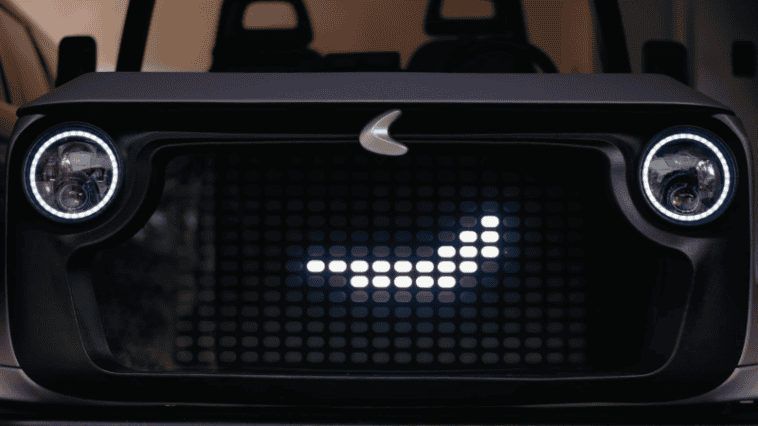
A new electric car can hold a conversation, stream a user’s favorite shows, and even slip away to park itself while the owner heads inside. Priced at just $15,000, the vehicle hits a wall on the freeway, however, as it is classified as a low-speed model which is banned from highways.
Chip Motors, the Miami-based startup behind it, calls the car a “life utility vehicle.”
Up close, Chip looks more like a golf cart with big ambitions, tops out at 25 mph, and offers roughly 100 miles of range.
The car can charge from an ordinary wall outlet or a quicker 240-volt line, but it is built strictly for short hauls and makes no pretense of being otherwise.
A backseat driver with boundaries
The voice assistant is the part that raises an eyebrow. Unlike typical systems that stay silent until prompted, this one takes the initiative. In a company demonstration, the system states, “We have 40 miles of range left. There is a fast charger 3 miles away on your right. Should I reroute us there and pre-condition the battery?”
Its helpfulness seemingly goes beyond battery range. It can detect a tire quietly losing air before the driver does, and as the car pulls up to the house, it might offer to switch on the living room AC or lift the garage door, essentially smoothing over the small chores of walking in the door.
The feature Chip keeps showing off is Valet Mode, where owners can step out, and the empty car goes off to look for a spot on its own or even have it drive itself home if users want to stay put.
It sounds like full robot autonomy behind the wheel, but it isn’t. At least not yet. When the service debuts in early 2027, trained human operators in the US will handle the driving remotely by watching through the car’s cameras and radar. The car moves on its own this way only when the seats are empty, however.
Built for the neighborhood
The 25 mph limit is a deliberate feature that keeps the vehicle off highways and freeways. So it’s left with doing ordinary errands like school pickups, grocery runs, and the odd trip a couple of streets over.
The cheap price may come back to bite, though. Filed as a low-speed vehicle, the Chip is likely ineligible for California’s MyFirstEV rebate, a $3,500 incentive for first-time buyers of highway-capable electric cars and trucks.
The program is a strange beast besides. Tesla, for instance, never got the special treatment California handed its homegrown companies, Rivian and Lucid. Only Tesla’s base Model 3 and Model Y qualify under the price limits.
It appears that even established EV makers must navigate a patchwork of rules that often leaves buyers and smaller players on the outside.
Sources: Electrek, California Legislative Information, InsideEVs, Governor Gavin Newsom, NewYorkPost