
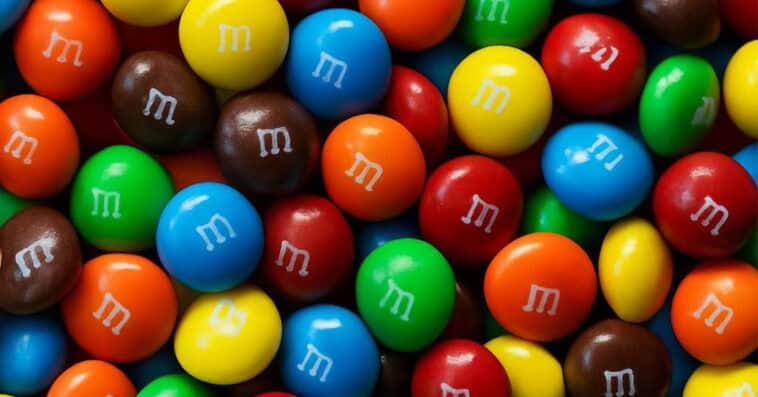
For generations, M&M’s fans have recognized the colorful candy by its signature rainbow of hues. But that familiar lineup is about to look a little different. As the iconic brand moves to eliminate artificial dyes, two beloved colors are quietly disappearing from the mix — at least for now. With dye-free M&M’s set to hit shelves in August sporting just four colors, the change marks a major shift for one of America’s most recognizable treats and raises questions about what comes next for the candy’s classic look.
M&M’s finally get a natural makeover
Mars is preparing to launch a new version of M&M’s without artificial dyes this August, marking one of the company’s most significant recipe changes in decades. The move aligns with the broader “Make America Healthy Again” initiative championed by Health and Human Services Secretary Robert F. Kennedy Jr., who has been urging food manufacturers to eliminate synthetic ingredients from their products.
Although the candy giant has successfully recreated several familiar colors using natural ingredients, the transition has come with an unexpected challenge: not every hue has proven easy to replace.
Why blue and brown M&M’s are missing
Colors such as red and yellow can be achieved through ingredients derived from natural sources like beets and turmeric. Replicating blue, however, has turned out to be far more complicated.
Mars has relied on spirulina extract, a concentrated powder derived from blue-green algae, to mimic the blue and brown shades found in traditional M&M’s. But the ingredient carries a steep price tag.
While turmeric can typically be purchased in bulk for between $9 and $11 per pound, spirulina is considerably more expensive. Standard forms of the supplement can cost as much as $20 per pound, and the highly concentrated version commonly used in food coloring can exceed $100 per pound.
Beyond the cost issue, the ingredient has also created manufacturing headaches. According to The Wall Street Journal, the thick consistency of spirulina extract has clogged spray nozzles and caused residue to accumulate inside production equipment, raising concerns about efficiency and food safety.
Millions spent to preserve a classic
The technical and financial hurdles have placed Mars in a difficult position as the company races to introduce its reformulated candies ahead of M&M’s 85th anniversary celebrations.
According to The Wall Street Journal, Mars invested millions of dollars searching for suitable alternatives. At one point, executives reportedly considered releasing a simplified mix featuring only red, orange, and yellow candies. However, the company ultimately decided against the idea because “the sunset vibes were too strong.”
Anton Vincent, president of Mars Wrigley North America, acknowledged the challenge of updating one of the world’s most recognizable treats.
“The replacement effort was a daunting situation,” Vincent told the Journal, adding, “you’re messing with an 85-year-old icon.”
A plan years in the making
Mars first announced plans to phase out artificial colors in 2016. However, the company later reversed course after determining that consumers showed little interest in the change.
The conversation shifted dramatically nearly a decade later as Kennedy intensified efforts to push food manufacturers toward natural ingredients. In 2025, Mars renewed its commitment to eliminating synthetic dyes, becoming one of several major companies pledging to reformulate portions of their product portfolios.
Kennedy has repeatedly argued that artificial food dyes contribute to broader public health concerns.
“When we look at these nine specific food dyes, the science shows a clear, undeniable link to behavioral disruptions in our kids and long-term cancer risks. We are systematically clearing them out,” he said during a 2025 press conference alongside West Virginia Gov. Patrick Morrisey.
That same year, West Virginia became the first state to enact a sweeping ban on the sale of foods containing major artificial dyes.
Wider crackdown on petroleum-based food dyes
Mars is among 27 companies that have committed to removing certain artificial colors as part of the Health and Human Services Department’s campaign to reduce the use of petroleum-based dyes in the U.S. food supply.
At the federal level, the agency has already revoked Food and Drug Administration authorization for four additives: brominated vegetable oil (BVO), Red Dye No. 3, Citrus Red No. 2, and Orange B.
Kennedy has also urged manufacturers to phase out six additional color additives — Red 40, Yellow 5, Yellow 6, Blue 1, Blue 2, and Green 3.
Health officials have pointed to animal studies that associated several synthetic dyes with increased cancer risks and long-term behavioral problems. In the case of Red Dye No. 3, the FDA cited the Delaney Clause — a provision requiring the agency to prohibit substances shown to cause cancer in humans or animals — when it moved to ban the ingredient in 2025 after studies linked it to tumor development in laboratory rats.
As Mars moves forward with its dye-free debut, consumers will soon discover whether a slightly less colorful bag of M&M’s can still deliver the same appeal that has made the candy a household favorite for generations.
Sources:
The Wall Street Journal
FOX Business