
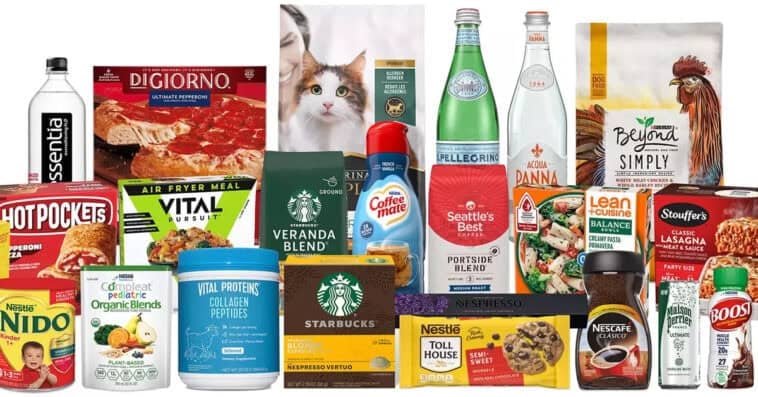
The bright, nostalgic foods sitting in your pantry right now might look exactly the same as they always have, but their recipes have officially changed. Nestlé has quietly executed a massive, sweeping overhaul of its U.S. lineup, scrubbing every trace of artificial dyes and rolling the new, natural recipes directly onto grocery store shelves. Swapping ingredients without ruining the taste is a high-stakes gamble — and it leaves the rest of the food industry scrambling to keep up. Read on to find out how Nestlé cracked the code on natural coloring, and why the race to clean up America’s favorite comfort foods just kicked into overdrive.
Nestlé completes removal of artificial dyes across US portfolio
Nestlé USA has officially eliminated all certified artificial colors from its U.S. food and beverage lineup, marking the culmination of a multi-year reformulation effort aimed at simplifying ingredients and aligning with shifting consumer expectations. The company confirmed that its goal — first outlined as part of a broader clean-label push — has now been fully achieved by mid-2025.
In a June 2025 update, the maker of Nesquik and DiGiorno said more than 90% of its U.S. portfolio had already transitioned away from synthetic dyes, with the remaining products either reformulated or updated using alternative coloring solutions designed to preserve the familiar taste and appearance of its brands.
Years of gradual reformulation
Nestlé emphasized that the change was not an overnight decision, but the result of years of incremental adjustments across its product lines.
“This work didn’t happen overnight,” Marty Thompson, CEO of Nestlé USA, wrote in a blog post. “In fact, it builds on years of progress and the ongoing commitment of teams across our business to evolve recipes while protecting what people know and love.”
Since taking over as CEO of Nestlé USA in January 2025, Thompson has overseen accelerated reformulation efforts. Among the examples cited by the company was the Nesquik team’s rapid shift to natural color sources for its strawberry-flavored products, along with the transition of more than 20 beverages in the Nestlé Vitality foodservice range within just five months—without changes to taste or quality, according to the company.
Nestlé said reformulated products are now beginning to appear on retail shelves as part of a phased rollout.
Industry pressure and regulatory momentum
Nestlé’s sweeping recipe changes did not happen in a vacuum. The food and beverage sector is facing a rapidly evolving regulatory landscape, driven by a combination of federal pressure and strict state-level legislation.
Nationally, the momentum shifted following targeted scrutiny from the White House and Health and Human Services Secretary Robert F. Kennedy Jr. At the same time, individual states began enforcing legal mandates that effectively forced major manufacturers to rethink their nationwide supply chains.
The state-level catalyst: Landmark legislation like the California Food Safety Act (banning Red Dye No. 3 statewide) and the California School Food Safety Act (prohibiting six major synthetic dyes, including Red 40 and Yellow 5, from public school meals) established a strict new standard.
The logistical reality: Because splitting supply chains by state is highly inefficient, these regional laws have accelerated national reformulations across the entire consumer packaged goods industry. The
Industry response: Nestlé is part of a broader domino effect. Competitors like General Mills, Kraft Heinz, and The Campbell’s Company have all vowed to eliminate synthetic dyes from various portfolios, while major grocers like Target have begun limiting the shelf space allocated to cereals containing artificial colors.
A broader shift toward ‘cleaner’ labels
For Nestlé, the elimination of artificial colors is also a piece of a much larger, decade-long strategy to simplify ingredient decks and enhance transparency. Consumer preferences have shifted heavily toward “clean-label” options, forcing a broader re-evaluation of how classic comfort foods are made.
Beyond artificial dyes, the company is actively cutting sugar where possible and has successfully reduced the use of high-fructose corn syrup to less than 1% of its overall U.S. product lineup. Production has shifted toward expanding clean-label lines like Natural Bliss dairy creamers, alongside new, highly targeted innovations like the Vital Pursuit line, designed specifically to meet the nutritional needs of consumers taking GLP-1 medications.
Ultimately, the company views this sweeping transition as an ongoing necessity to maintain its foothold in American homes.
“We know people expect more from the products they bring into their homes — great taste, trusted quality, ingredients they feel good about and value that fits their lives,” Thompson said. “Earning that trust isn’t a one-time action. It means continuing to listen, evolve and be clear about where we’re making progress. It also means anticipating where consumer expectations are headed — and making changes today to meet them. That’s what this work is about.”
Source:
Food Dive