
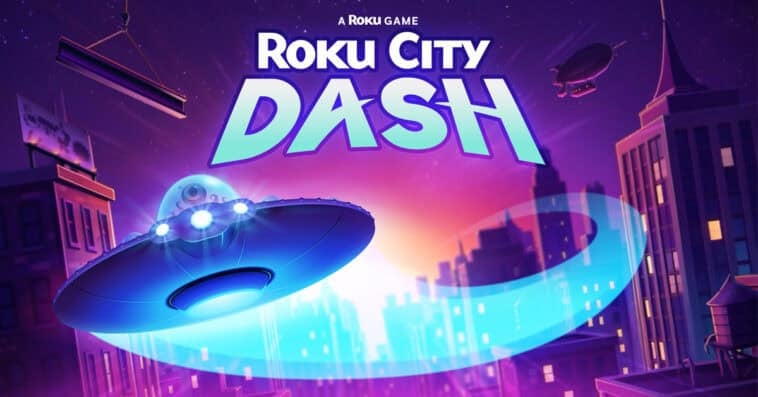
Roku’s familiar cityscape has long been a calming backdrop for viewers waiting between shows, but now it’s stepping into a completely different role. The company has transformed its iconic Roku City screensaver into an interactive dash game where streamers can race through neon-lit streets, weaving between buildings, and chasing momentum in a fast-paced challenge. What was once passive eye candy is now a playable experience hidden in plain sight. Keep reading to discover how Roku’s familiar skyline might suddenly become your next high-score obsession between streaming sessions.
The gamification of Roku City
Last April 20, the most famous idle screen in streaming officially became a digital playground. Roku unveiled Roku City Dash, an original gaming experience that transports viewers directly into the heart of its vibrant, purple-hued metropolis. This isn’t just a visual update; it is a retro-inspired side-scroller that challenges streamers to navigate the skyline they’ve spent years watching from a distance. By introducing a competitive high-score system, Roku has transformed its passive screensaver into a household destination where family members can battle for the top spot on the leaderboard.
In Roku City Dash, the tranquil charm of Roku City is replaced with speed and challenge. Players navigate through the city’s glowing streets and towering landmarks while trying to survive as long as possible without crashing into obstacles. Along the way, they can spot familiar monuments from the screensaver alongside hidden Easter eggs that reward exploration and quick reflexes. The game leans into a retro arcade feel, encouraging repeat playthroughs as users try to beat their own scores— or compete with others at home for bragging rights.
A passion project for the streaming community
The move to make Roku City interactive wasn’t a random decision — it was a response to a decade of fan theories and viewer requests.
“Our users have a deep passion for all things Roku City, and starting today, we are delivering a feature they’ve asked for over many years,” said Lisa Holme, Head of Content, Roku Media, in a press release last month. “Roku City Dash invites our users to fly through Roku City, passing iconic monuments they know and love, plus special Easter eggs, as they vie for a high score by avoiding obstacles. The game is a fun way for us to celebrate our beloved town, build on our platform’s interactivity, and invite users to spend time with Roku in a new way.”
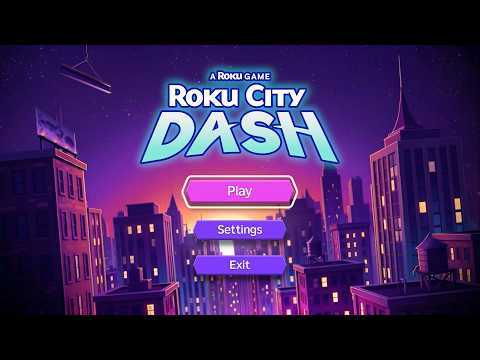
To jump into the action, users don’t need to navigate complex menus. Roku City Dash is seamlessly integrated into the ecosystem; it can be launched by selecting a specific interactive building directly within the screensaver or via a dedicated tile on the Roku Home Screen.
The expansion of the Roku City universe
This launch represents a significant shift in Roku’s strategy to move beyond simple content streaming and into engagement-driven entertainment. This interactive push follows in the footsteps of other successful platform features, such as:
- Roku Daily Trivia: A fast-paced daily challenge for pop-culture buffs.
- Roklue: A quarterly investigative game that keeps users coming back for seasonal puzzles.
- Live from Roku City: A creative initiative that uses the screensaver as a virtual stage.
The screensaver has recently hosted massive cultural moments, including a headline performance by Demi Lovato and a themed celebration for the musical Wicked: For Good. By adding a playable layer to this dynamic stage, Roku is ensuring that the television remains the centerpiece of the home, even when nothing is actually being “watched.”