
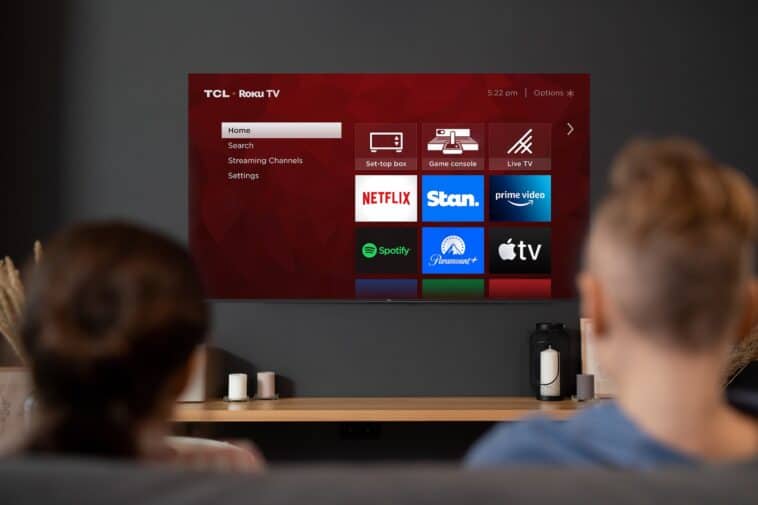
For decades, cable TV was the undisputed king of the living room. Now, when people turn on their TV, instead of landing on a channel, they land on a home screen full of options and recommendations. For a lot of people, that home screen says “Roku.”
Roku announced Thursday that its platform is now used in more U.S. homes than traditional cable TV. According to the company, it has officially surpassed 100 million streaming households worldwide, a milestone hit in April. As defined by the company, “streaming households” are the number of distinct user accounts streaming on its platform within a 30-day period.
Let’s look into how Roku got here.
Where Roku’s win came from
Roku’s growth isn’t coming from one device. It’s coming from everywhere. The platform runs on Roku streaming sticks and boxes, Roku-branded TVs, and TVs made by partner manufacturers using Roku OS.
All of them feed into the same system: the Roku home screen.
Roku says its platform now acts as the starting point for TV viewing, not just a tool to access apps. That’s a savvy play, given how much of a chaos streaming can be these days. There are too many apps and too many subscriptions to keep up with. But Roku keeps things simpler with features like platform-wide Search, the Live TV Guide, curated destinations, and Roku Voice. And as an icing on the cake, there is free content sitting next to paid content.
According to the company, it offers 500+ free live channels in the U.S., with thousands of on-demand titles, and access to major streaming services from a single home screen.
Its free streaming hub, The Roku Channel, also offers originals, including “The Great American Baking Show” and “The Reunion: Laguna Beach.”
All these aid the platform’s popularity. Per measurement firm Comscore, 44% of total streaming hours on connected-TV devices in the U.S. in the fourth quarter of 2025 went to Roku. It was then followed by Amazon Fire TV (14%), Samsung (12%), and Google (5%).
The bigger play: ads and subscriptions
The Roku Channel, is now one of the top ad-supported apps on the platform, according to Nielsen data.
With 100 million households on lock, Roku is a key platform for advertisers trying to reach streaming audiences and streaming services looking to acquire subscribers. Its system allows users to discover content and sign up for subscriptions. They can also manage services in one place.
According to Comscore, Roku drives more than three times the engagement of the next leading TV OS in the U.S. And the plan is to continue to expand personalization features, international markets, and new content offerings. Recently, it launched Howdy, a low-cost, ad-free subscription priced at $3/month in the U.S. and Mexico, aimed at budget-conscious viewers. And there is more to come, as Roku continues to sit right between viewers and everything they watch.
Source: ROKU