
For years, Artemis III was expected to mark humanity’s long-awaited return to the Moon’s surface, but NASA has now confirmed a dramatic change in plans. The mission will no longer include a crewed lunar landing, opting instead for a high-stakes orbital rehearsal designed to test critical systems before astronauts attempt to touch down on the Moon. While the dream of returning to the lunar surface is still alive, the unexpected shift has left many wondering what challenges behind the scenes forced NASA to delay such a historic milestone. Read on to discover why the agency is taking a more cautious approach — and why this detour may be the key to preventing the mission from ending in disaster.
NASA turns Artemis III into critical Earth orbit test mission
NASA is fast-tracking a new flight plan for next year’s Artemis III mission. Instead of heading for the lunar surface, this crewed mission will stay in Earth orbit to serve as a critical “test drive” for rendezvous and docking maneuvers between NASA’s Orion spacecraft and lunar landers being developed by Blue Origin and SpaceX. Since announcing in February that Artemis III would serve as a preparatory mission before astronauts attempt to land near the Moon’s South Pole, NASA engineers have been reviewing different flight plans and operational strategies aimed at reducing risks ahead of Artemis IV — the mission now expected to return Americans to the lunar surface.
“While this is a mission to Earth orbit, it is an important stepping stone to successfully landing on the Moon with Artemis IV. Artemis III is one of the most highly complex missions NASA has undertaken,” said Jeremy Parsons, acting assistant deputy administrator for NASA’s Moon to Mars Program. “For the first time, NASA will coordinate a launch campaign involving multiple spacecraft integrating new capabilities into Artemis operations. We’re integrating more partners and interrelated operations into this mission by design, which will help us learn how Orion, the crew, and ground teams all interact together with hardware and teams from both lander providers before we send astronauts to the Moon’s surface and build a Moon Base there.”
What to expect from the revamped Artemis III mission
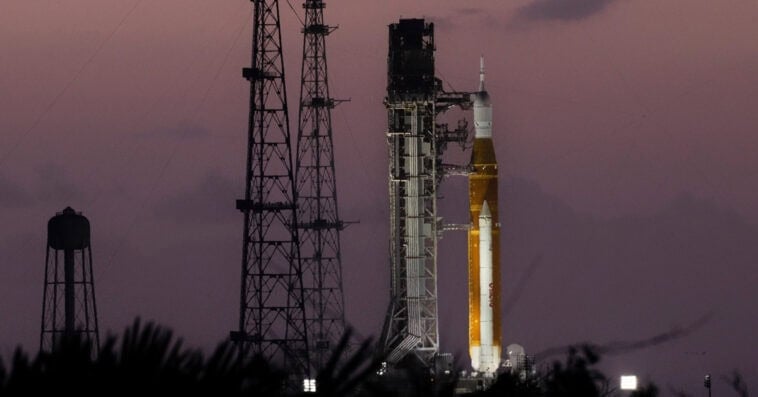
NASA’s redesigned Artemis III mission will focus on testing the key technologies and systems needed before astronauts can safely land on the Moon in a future mission. The flight will begin with the powerful Space Launch System (SLS) rocket launching the Orion spacecraft and its four-person crew from NASA’s Kennedy Space Center in Florida. Unlike previous mission plans, the rocket will not carry its usual interim cryogenic propulsion stage. Instead, NASA will use a non-powered “spacer” that matches the size and weight of the upper stage to help simulate the rocket’s normal configuration during launch.
Once Orion reaches orbit, its European-built service module will fire its engines to place the spacecraft into a stable low Earth orbit. NASA says this approach improves mission flexibility and creates more launch opportunities for the mission’s multiple moving parts, including Orion, SpaceX’s Starship human landing system test vehicle, and Blue Origin’s Blue Moon Mark 2 lander pathfinder.
NASA is also working closely with SpaceX and Blue Origin to finalize how the mission will operate. While some details are still being determined, astronauts may potentially enter at least one of the lander test vehicles during the flight.
The Artemis III crew is expected to spend more time aboard Orion than the astronauts on Artemis II, allowing NASA to further test the spacecraft’s life support systems. The mission will also mark the first in-space demonstration of Orion’s docking system. Data gathered during the flight will help NASA prepare for future Moon missions by improving spacecraft rendezvous procedures, habitat planning, and surface mission operations. Before returning home, Orion will also test an upgraded heat shield designed to support safer and more flexible reentry conditions for future deep-space missions.
What comes next for Artemis III
In the coming weeks, NASA will finalize the details of the Artemis III flight, including the selection of astronauts and the specific length of the mission. A major focus will be testing Axiom Space’s new AxEMU spacesuits to see how they interface with the lunar landers before they are used on the Moon.
Because the mission stays in Earth orbit, NASA is looking for innovative ways to maintain ground communications without relying on the Deep Space Network. The agency is also inviting international and domestic partners to send small CubeSat satellites along for the ride.
NASA says Artemis III is part of a broader “Golden Age” of exploration, with astronauts set to take on increasingly complex missions aimed at expanding lunar science, supporting future economic activity in space, and laying the groundwork for a sustained human presence on the Moon — and eventually, the first crewed missions to Mars.
Source: NASA